 NL·0775
Herbarium of the Nature Library
- Name
- Ursus arctos
- Family
- Ursidae
- Native to
- Northern Eurasia and northwestern North America; isolated populations in the Pyrenees, Apennines, Carpathians, Caucasus, Himalaya, Karakoram and Hindu Kush
- Habitat
- Boreal forest, Tundra, Temperate forest, Alpine meadow
Brown bear
Ursus arctos
Also calledBhūrā bhālū (Hindi/Urdu) · Grizzly (North American English) · Oso pardo (Spanish) · Urso-pardo (Portuguese) · Medved' (Russian) · Higuma (Japanese) · Xióng 熊 (Chinese)
The most widespread bear, from Spain and Scandinavia across Siberia to Alaska and the Rockies, including the grizzly and the giant Kodiak bear. In South Asia it survives as the pale, rare Himalayan brown bear (U. a. isabellinus) of Deosai, Ladakh and the Karakoram, a lineage genetically distinct from other brown bears.
The brown bear is a large bear native to Eurasia and North America. Of the land carnivorans, it is rivaled in size only by its closest relative, the polar bear, which is much less variable in size and slightly bigger on average. The brown bear is a sexually dimorphic species, as adult males are larger and more compactly built than females. The fur ranges in color from cream to reddish to dark brown. It has evolved large hump muscles, unique among bears, and paws up to 21 cm (8.3 in) wide and 36 cm (14 in) long, to effectively dig through dirt. Its teeth are similar to those of other bears and reflect its dietary plasticity. Wikipedia
What it can do
- iHibernates for up to 7 months without eating, drinking or urinating
- iiCan smell carcasses from several kilometres away
- iiiSalmon-eating bears carry marine nitrogen into forests when they drag fish inland
In the field
Field marks
- aSilhouette: prominent shoulder hump (digging muscle) and a dished face in profile
- bCoat ranges from near-black to blond; Himalayan bears are sandy-reddish or pale
- cShort, round ears
- dTracks: hind print up to ~30 cm with long claw marks 5 cm or more ahead of toes, toes in a fairly straight row; signs include dug-out marmot burrows and overturned rocks
- Not to be confused with
- American black bear and Asiatic black bear lack the shoulder hump, have a straighter face profile, larger ears and short curved claws. In the Himalaya, the Asiatic black bear has a white chest crescent.
- Where to see it
- Deosai National Park (Gilgit-Baltistan, Pakistan); Katmai and Denali (Alaska); Yellowstone (USA); Kamchatka (Russia); Shiretoko (Hokkaido); Cantabrian Mountains (Spain); Finnish–Russian border hides
- When
- Active roughly April–November; best viewed at salmon runs (July–September) and on Deosai in July–August
Listen
Looking for field recordings…
Life & habits
- Diet
- Omnivore: grasses, roots, berries, nuts, insects, salmon, rodents and large mammals; Himalayan bears dig marmots and graze alpine plants
- Habitat
- Forest, tundra, alpine meadows and high plateaus
- Size
- Highly variable: about 80–600 kg; coastal Alaskan and Kodiak males are largest
- Lifespan
- About 20–30 years in the wild
Solitary except mothers with cubs and gatherings at food sources such as salmon falls. Excavates its own winter den on slopes.
Where it lives
Recorded sightings
—
geo-referenced records in GBIF, from museums, herbaria and field observers.
Native range
Northern Eurasia and northwestern North America; isolated populations in the Pyrenees, Apennines, Carpathians, Caucasus, Himalaya, Karakoram and Hindu Kush
Drag the globe to turn it. Dots are where records exist, not a range map; darker means more records.
In the old herbals & bestiaries
Woodcuts and engravings matched from the Source Library’s scanned books by name. Plates marked “relative” show a close kin rather than this exact species. Click a plate to read the page it came from, with translation.


In the stacks
Searching the stacks…
Every page naming Ursus arctos in the Biodiversity Heritage Library →
Marginalia
The Ainu of Hokkaido held the iyomante ceremony to send a bear's spirit back to the gods. The Greek name Arktos for the bear gave us 'Arctic', the land beneath the Great Bear constellation.
Curiosity
Deosai National Park was created in 1993 largely to protect Pakistan's Himalayan brown bears, which numbered only around 20 there at the time.
Kinship
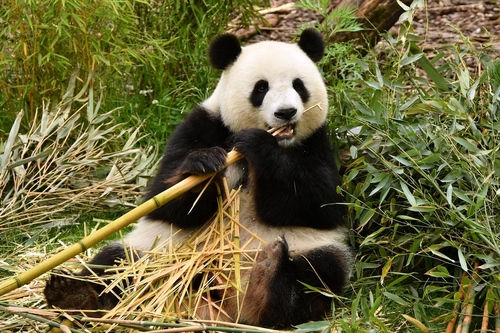
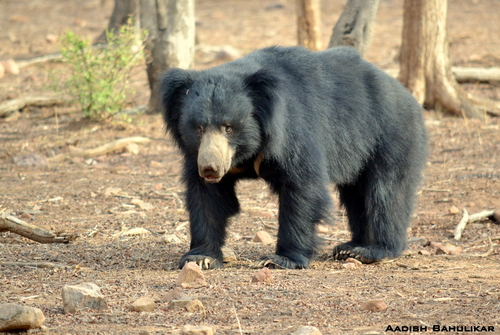
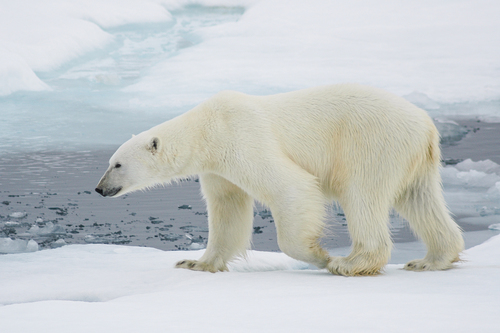
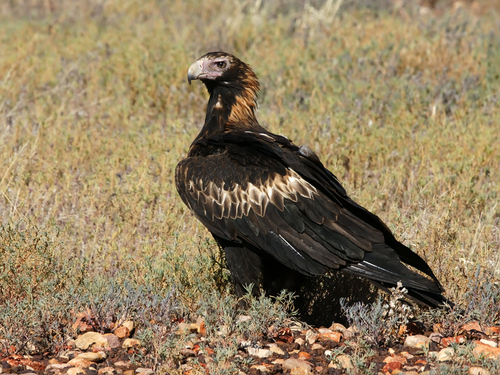
Photographs: iNaturalist contributors under the licences shown. Records: GBIF.org. Historical plates: Source Library (CC BY-SA 4.0; originals public domain). Summary text: Nature Library editors and Wikipedia (CC BY-SA). Medicinal and edibility notes are historical and educational, not advice. iNaturalist taxon 41641.