 NL·0312
Herbarium of the Nature Library
- Name
- Vulpes bengalensis
- Family
- Canidae
- Native to
- India, Pakistan, Nepal and Bangladesh, from the Himalayan foothills to Tamil Nadu
- Habitat
- Short grassland, Semi-arid scrub, Farmland
Bengal fox
Vulpes bengalensis
Also calledLomṛī (Hindi/Urdu) · Indian fox
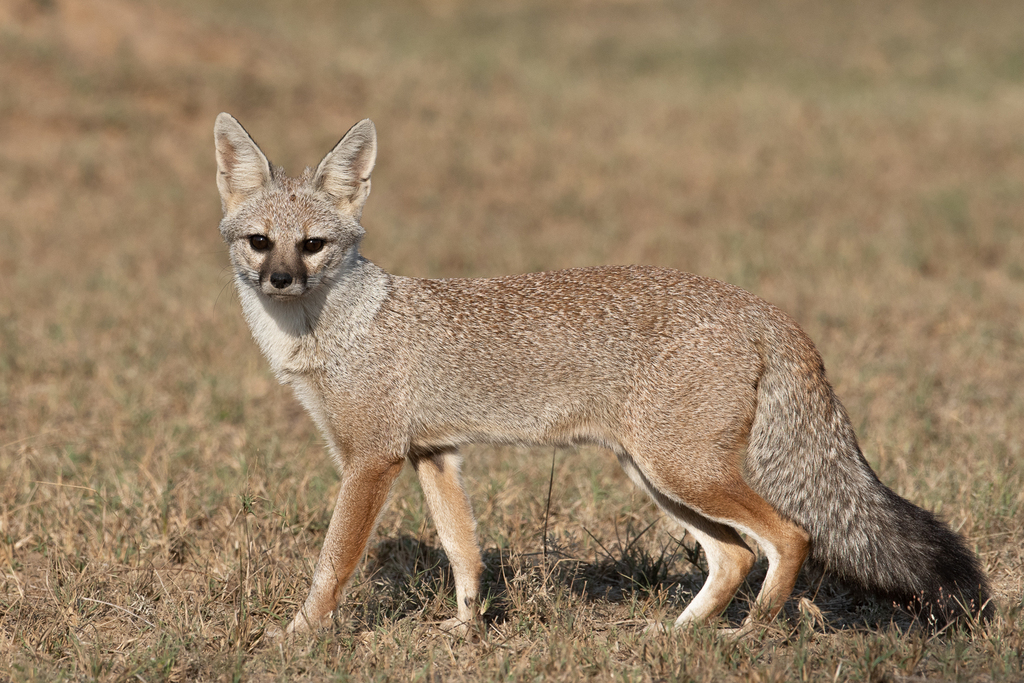
A small, slender fox of open plains, found only on the Indian subcontinent. It favours short grassland and semi-desert, avoiding dense forest, and hunts insects and rodents mostly at dusk and night.
The Bengal fox, also known as the Indian fox, is a fox endemic to the Indian subcontinent from the Himalayan foothills and Terai of Nepal through southern India, and from southern and eastern Pakistan to eastern India and southeastern Bangladesh. Wikipedia
What it can do
- iDigs complex dens with several entrances, reused over many years
- iiEats large numbers of rodents, termites and crop pests
- iiiPairs bond and both parents provision the pups
In the field
Field marks
- aSmall, long-legged grey fox with rufous legs
- bBushy tail with a distinct black tip
- cDark smudge on the muzzle in front of the eyes; ears dark-backed
- dSigns: dens with several entrances on low mounds in open ground, with scats full of insect parts and seeds
- Not to be confused with
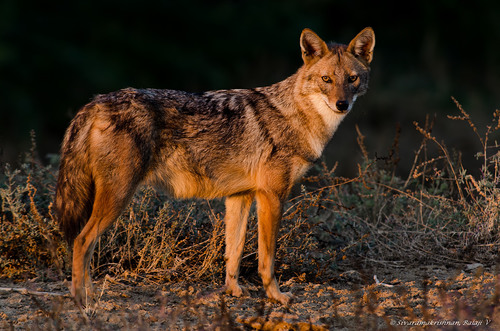
- Red fox (desert subspecies in the Thar and Pakistan) is larger, redder above and has a white tail tip. Golden jackal is larger, heavier, and has a less bushy tail without a black tip.
- Where to see it
- Velavadar Blackbuck National Park and Little Rann of Kutch (Gujarat); Tal Chhapar and Desert National Park (Rajasthan); Rollapadu (Andhra Pradesh); Deccan grasslands around Pune and Bengaluru
- When
- Resident; pups visible at dens around March–May
Listen
Looking for field recordings…
Life & habits
- Diet
- Omnivore: insects, rodents, reptiles, birds' eggs and fruits such as ber and neem
- Habitat
- Open short grassland, scrub and semi-desert; avoids dense forest and steep terrain
- Size
- Body 45–60 cm plus a 25–35 cm tail; 2–4 kg
- Lifespan
- About 6–8 years in the wild
Rests in dens through the heat of day and is most active at dusk and early morning; pups are born in the dry season, around February–March.
Where it lives
Recorded sightings
—
geo-referenced records in GBIF, from museums, herbaria and field observers.
Native range
India, Pakistan, Nepal and Bangladesh, from the Himalayan foothills to Tamil Nadu
Drag the globe to turn it. Dots are where records exist, not a range map; darker means more records.
In the old herbals & bestiaries
No plate in the Source Library names this exact species, so these show its closest relatives as the old naturalists drew them: same genus, or the same kind of animal. Click a plate to read the page it came from, with translation.


In the stacks
Searching the stacks…
Every page naming Vulpes bengalensis in the Biodiversity Heritage Library →
Marginalia
Foxes and jackals play the cunning roles in the Panchatantra and Jataka tales. The species was described by George Shaw in 1800, hence the name, though it is now rare there.
Curiosity
Despite its name, the Bengal fox is now scarce in Bengal itself; its strongholds are the dry grasslands of western and peninsular India.
Kinship
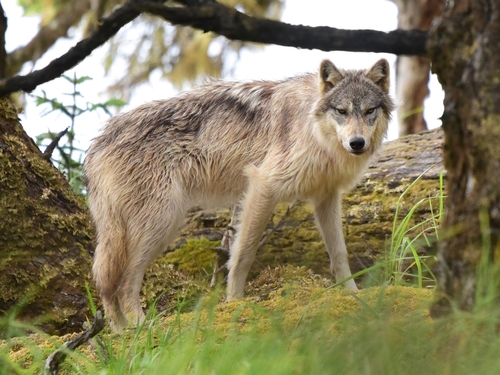
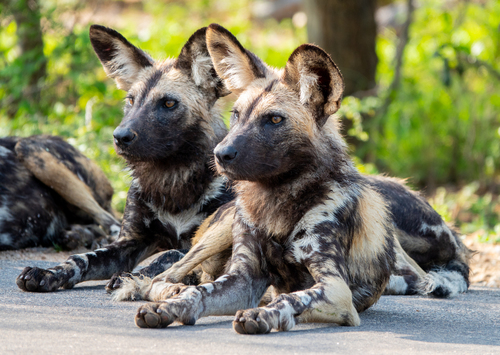

Fact-checked: 1 correction made to this sheet. Photographs: iNaturalist contributors under the licences shown. Records: GBIF.org. Historical plates: Source Library (CC BY-SA 4.0; originals public domain). Summary text: Nature Library editors and Wikipedia (CC BY-SA). Medicinal and edibility notes are historical and educational, not advice. iNaturalist taxon 42056.