 NL·0314
Herbarium of the Nature Library
- Name
- Vulpes vulpes
- Family
- Canidae
- Native to
- Across the Northern Hemisphere (Europe, Asia including northern South Asia, North Africa, North America); introduced to Australia
- Habitat
- Temperate forest, Grassland, Desert, Tundra, Farmland, Urban
Red fox
Vulpes vulpes
Also calledLomṛī (Urdu/Hindi) · Ruvāh (Persian) · Tha'lab (Arabic) · Zorro rojo (Spanish) · Raposa-vermelha (Portuguese) · Kitsune (Japanese) · Renard roux (French)
The most widely distributed wild carnivore on Earth, from the Arctic to the deserts of Pakistan and the suburbs of London. Its South Asian forms include the pale desert fox of the Thar and Balochistan and the thick-furred Himalayan red fox. Introduced in Australia, it has helped drive many small marsupials to extinction.
The red fox is the largest of the true foxes, and the most widely distributed member of the order Carnivora. It is present across the entire Northern Hemisphere, including most of North America, Europe and Asia, as well as parts of North Africa. Its range has expanded alongside human settlement, with the species having been introduced to Australia, where it preys on native small and medium-sized rodents and marsupials. The red fox is listed as of least concern on the IUCN Red List. Because of its impact on native species, it is included on the list of the "world's 100 worst invasive species". Wikipedia
What it can do
- iHears rodents moving beneath snow and dives on them in a high arcing pounce
- iiCaches surplus food and relocates it later by memory and smell
- iiiAdapts to cities, raising cubs under sheds and in railway embankments
In the field
Field marks
- aRusty-orange coat with white throat and black-backed ears
- bBlack 'stockings' on the lower legs
- cLong, bushy tail usually with a white tip
- dTracks: neat oval prints about 5 cm long in a near-straight line; strong musky scent at scent posts and dens
- Voice
- Vixens give an eerie, drawn-out scream in winter; both sexes use a sharp triple bark, 'wow-wow-wow'.
- Not to be confused with
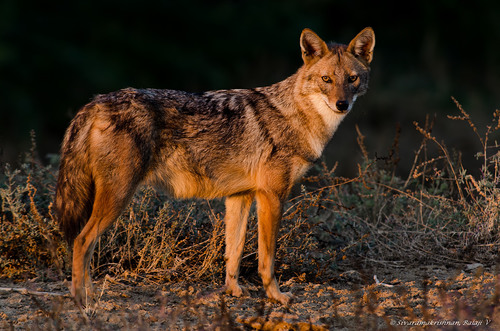
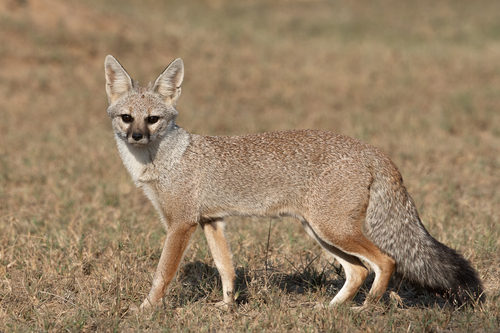
- Bengal fox is smaller and greyer with a black (not white) tail tip. Golden jackal is larger, greyer, with a shorter tail and longer legs. Arctic fox is smaller-eared and white or blue-grey.
- Where to see it
- Cities such as London and Bristol; Deosai and Khunjerab (Pakistan) and Ladakh for Himalayan foxes; Desert National Park and the Rann of Kutch for desert foxes; Hokkaido (Japan)
- When
- Resident; cubs at dens April–June; vixen screams in mating season, December–February
Listen
Looking for field recordings…
Life & habits
- Diet
- Omnivore: rodents, rabbits, birds, insects, earthworms, fruit and scavenged food
- Habitat
- Almost any habitat with cover, from tundra to desert to city centres
- Size
- Body 45–90 cm, tail 30–55 cm; 3–14 kg; desert forms smallest
- Lifespan
- Usually 2–4 years in the wild; up to about 14
Mostly nocturnal and crepuscular. Pairs share a territory and may be helped by non-breeding young from previous litters.
Where it lives
Recorded sightings
—
geo-referenced records in GBIF, from museums, herbaria and field observers.
Native range
Across the Northern Hemisphere (Europe, Asia including northern South Asia, North Africa, North America); introduced to Australia
Drag the globe to turn it. Dots are where records exist, not a range map; darker means more records.
In the old herbals & bestiaries
Woodcuts and engravings matched from the Source Library’s scanned books by name. Plates marked “relative” show a close kin rather than this exact species. Click a plate to read the page it came from, with translation.


In the stacks
Searching the stacks…
Every page naming Vulpes vulpes in the Biodiversity Heritage Library →
Marginalia
In Japan the kitsune is the messenger of the rice deity Inari, and fox statues guard thousands of Inari shrines. The medieval European beast-epic of Reynard the Fox satirised courts and clergy.
Curiosity
The Soviet geneticist Dmitry Belyaev bred tame foxes from 1959; within decades they wagged tails, had floppy ears and piebald coats.
Kinship
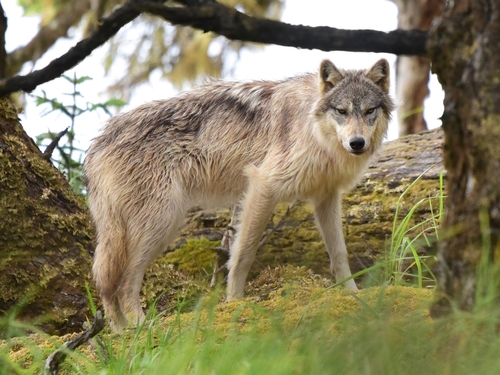
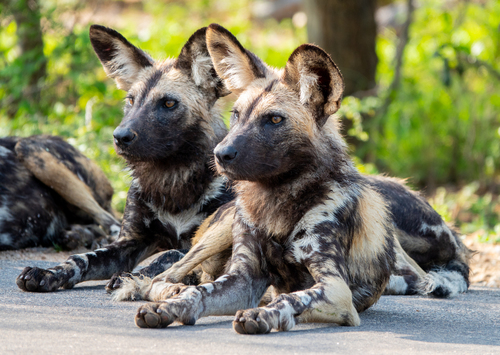
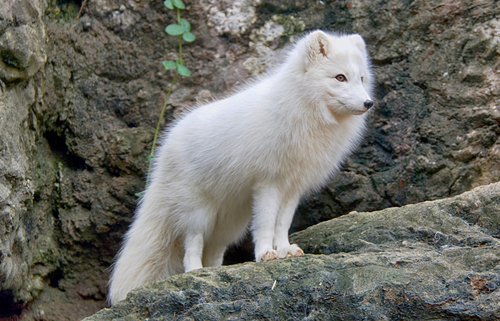
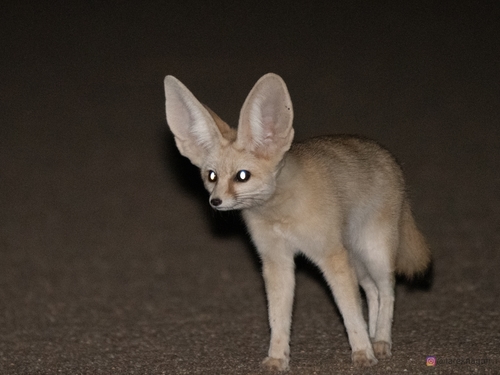
Photographs: iNaturalist contributors under the licences shown. Records: GBIF.org. Historical plates: Source Library (CC BY-SA 4.0; originals public domain). Summary text: Nature Library editors and Wikipedia (CC BY-SA). Medicinal and edibility notes are historical and educational, not advice. iNaturalist taxon 42069.