 NL·0267
Herbarium of the Nature Library
- Name
- Xylocopa violacea
- Family
- Apidae
- Native to
- Southern and Central Europe, North Africa, West and Central Asia
- Habitat
- Mediterranean scrub, Gardens, Woodland edge
Violet carpenter bee
Xylocopa violacea
Also calledAbeille charpentière (French) · Holzbiene (German) · Abejorro carpintero (Spanish) · Bhanwra (Hindi, for carpenter bees)
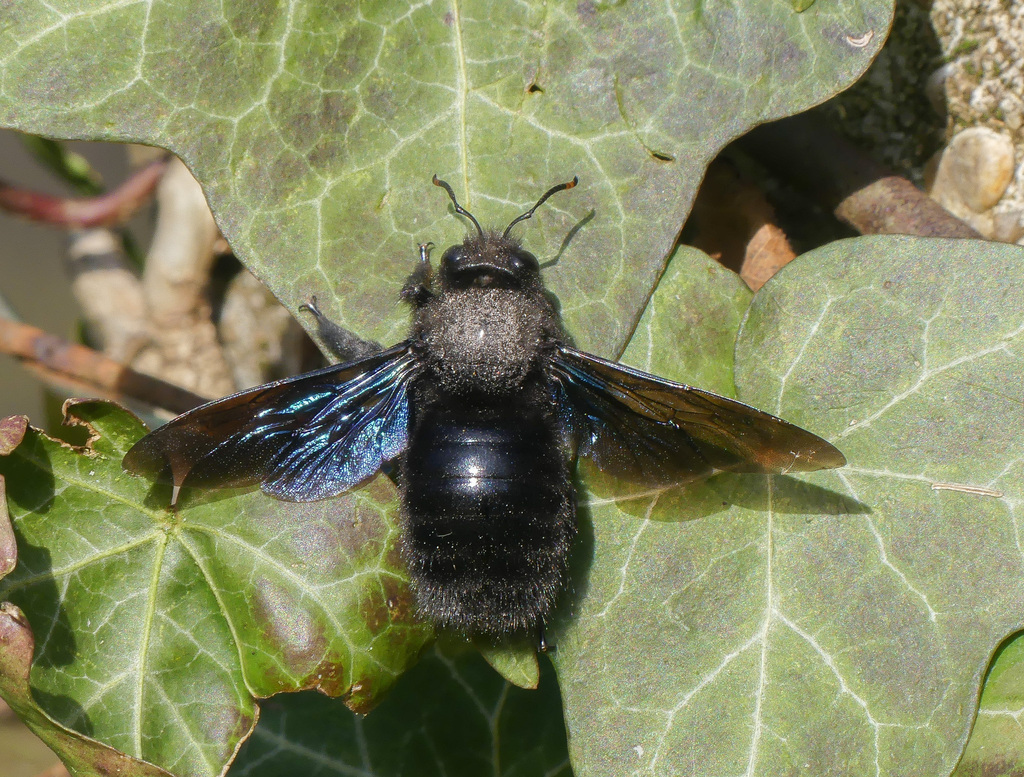
Europe's largest bee, glossy black with violet-tinted wings. Females carve nest tunnels into dead wood with their jaws.
Xylocopa violacea, the violet carpenter bee, is the common European species of carpenter bee, and one of the largest bees in Europe. It is also native to Asia. Wikipedia
What it can do
- iExcavates nest tunnels in dead wood using strong mandibles
- iiBuzz-pollinates some flowers
- iiiRobs nectar by slitting holes at the base of long flowers
- ivAdults overwinter and can live about a year
In the field
Field marks
- aLarge, stout bee, 2–3 cm, glossy black with a blue-violet sheen
- bDark wings with a strong violet iridescence
- cLoud, heavy flight between flowers
- dBores round holes in dead wood
- Voice
- A deep, loud drone
- Not to be confused with
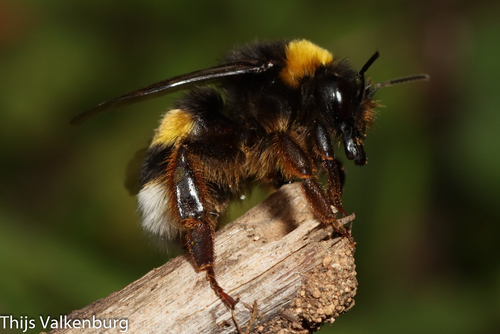
- Other European carpenter bees (X. valga, X. iris) look similar and need close study to separate. Bumblebees are furrier with coloured bands.
- Where to see it
- Warm gardens, vineyards and old wooden structures in southern and central Europe
- When
- Adults overwinter and emerge in spring (usually Apr–May); new adults appear in late summer
Listen
Looking for field recordings…
Life & habits
- Diet
- Nectar and pollen from many plants, e.g. wisteria, lavender and legumes
- Habitat
- Warm, open areas with dead wood
- Size
- 2–3 cm
- Lifespan
- About one year
A solitary female builds a row of cells in her tunnel, each sealed with chewed wood pulp and stocked with pollen.
Where it lives
Recorded sightings
—
geo-referenced records in GBIF, from museums, herbaria and field observers.
Native range
Southern and Central Europe, North Africa, West and Central Asia
Drag the globe to turn it. Dots are where records exist, not a range map; darker means more records.
In the stacks
Searching the stacks…
Every page naming Xylocopa violacea in the Biodiversity Heritage Library →
Marginalia
In recent decades it has spread north into Britain and the Netherlands with warming climate.
Curiosity
Despite its size and loud buzz, it is docile, and males have no sting.
Kinship



Photographs: iNaturalist contributors under the licences shown. Records: GBIF.org. Historical plates: Source Library (CC BY-SA 4.0; originals public domain). Summary text: Nature Library editors and Wikipedia (CC BY-SA). Medicinal and edibility notes are historical and educational, not advice. iNaturalist taxon 124145.