- Animals
- ›Arthropods
- ›Hexapods
- ›Insects
- ›Winged and Once-winged Insects
- ›Dragonflies and Damselflies
- ›Relict Dragonflies
- ›Relict Dragonflies
- ›Epiophlebia
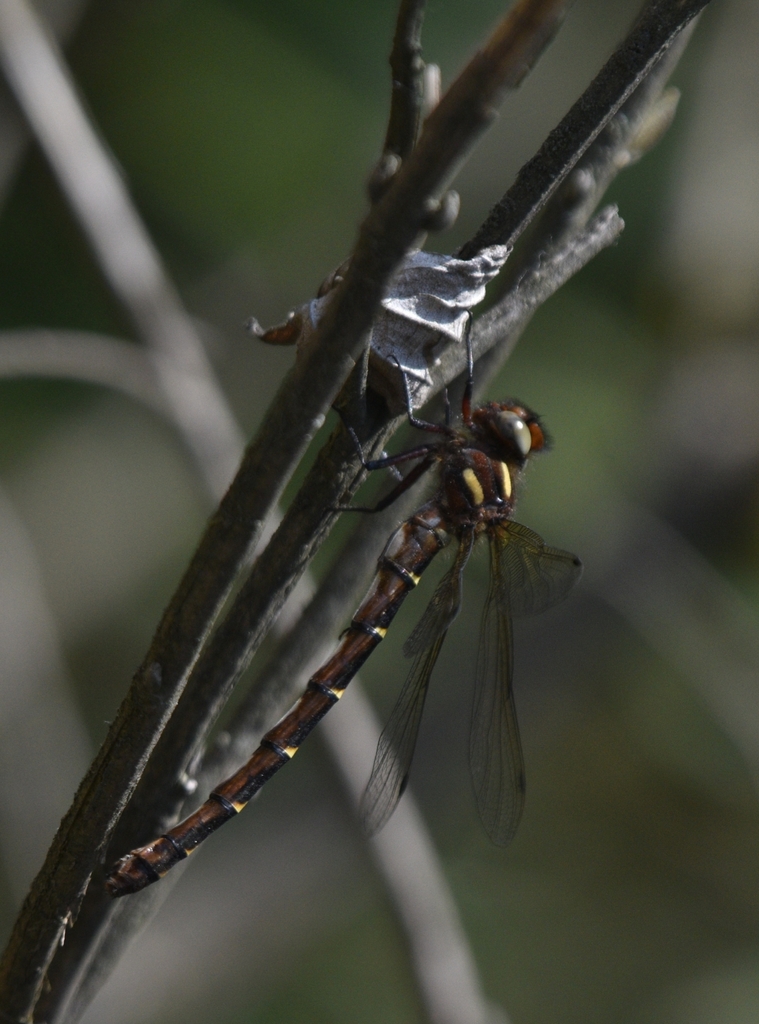
Himalayan Relict Dragonfly
Epiophlebia laidlawi
Epiophlebia laidlawi, the Himalayan relict dragonfly, is a species of odonate in the family Epiophlebiidae. It is one of three recognised species of Epiophlebia, the only living genus in the suborder Anisozygoptera. It occurs in the Himalayas and the Hengduan Mountains of southwestern China.
The species was first described by Robin Tillyard in 1921 from a larva collected by Stanley Kemp in June 1918 from a stream above Sonada, near Darjeeling. Frank Fortescue Laidlaw identified it as a species of Epiophlebia after dissecting its wing sheaths. Tillyard confirmed the identification and named the species in Laidlaw's honour.
From the article Epiophlebia laidlawi on Wikipedia (CC BY-SA), quoted section by section
Range & habitat
This species has been found in several locations along the Himalayas including Chittrey, Mt. Shivapuri, Kathmandu area, Solokhumbu region, all in Nepal, where it breeds in streams between 6,000 and 11,500 ft (1,800–3,500m). However, studies since 2015 have determined its range to also include Bhutan, India (Himalayas) and China (Hengduan Mountains).
Wikipedia: “Distribution”
What it does
The larvae grow for five to six years, which is believed to be the longest for any odonate. Specimens may emerge after nine years in many cases. Stephen Butler notes that the larvae stridulate when disturbed. The larvae appear like those of the Anisoptera but are unable to use the Anisopteran jet-propulsion mode of escape; instead they must walk. The adult flight is slow and rather uncoordinated. The discoidal cell in the forewing is uncrossed and four sided and in the hindwing the crossvein is long making the cell distally wide. The arculus is situated between the primary antenodals.
Wikipedia: “Ecology”
Listen
Looking for field recordings…
Where it lives
Recorded sightings
—
geo-referenced records in GBIF, from museums, herbaria and field observers.
Drag the globe to turn it. Dots are where records exist, not a range map; darker means more records.
In the stacks
Searching the stacks…
Every page naming Epiophlebia laidlawi in the Biodiversity Heritage Library →
This page is assembled live from iNaturalist, GBIF, Wikipedia, the Source Library and the Internet Archive. It is not yet part of the hand-edited codex. iNaturalist taxon 100162.