- Animals
- ›Arthropods
- ›Crustaceans
- ›Typical Crustaceans
- ›Malacostracans
- ›Decapods, Isopods, and allies
- ›Amphipods, Isopods, and Allies
- ›Isopods
- ›Valvetails
- ›Chaetiliidae
- ›Chiridotea
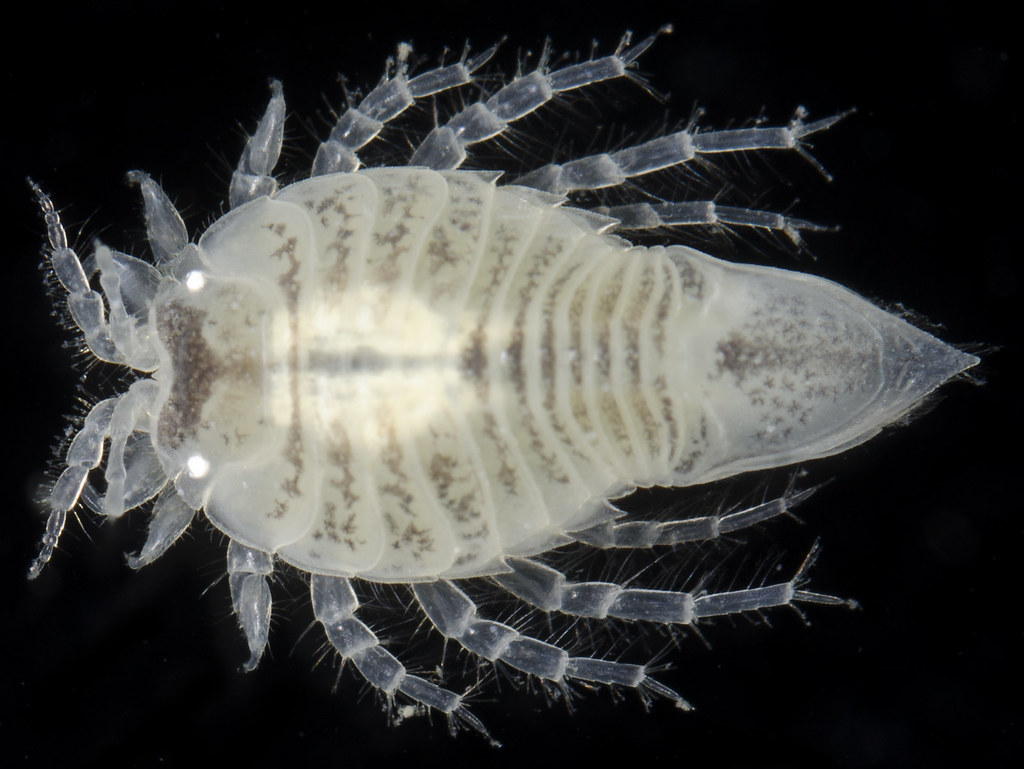
Surf Sandmole
Chiridotea coeca
Chiridotea coeca, the sand isopod, is a species of isopod crustacean found in the western Atlantic Ocean, from Nova Scotia to Florida.
From the article Chiridotea coeca on Wikipedia (CC BY-SA), quoted section by section
Description
Adult sand isopods are horizontally flattened. The thorax is almost round from above and the long, robust legs with large setae. The abdomen is short and pointed. Sand isopods reach 15 mm (0.59 in) in length and 7 mm (0.28 in) in width. They use the last pair of legs to dig tunnels in sand. When removed from the tunnels (for instance, by wave action), sand isopods swim down to the substrate, where they dig underground again.
Wikipedia: “Characteristics”
What it does
Chiridotea coeca feeds on carrion, which it holds with its gnathopods while chewing pieces off with its mandibles.
Wikipedia: “Ecology”
Where it lives
Recorded sightings
—
geo-referenced records in GBIF, from museums, herbaria and field observers.
Drag the globe to turn it. Dots are where records exist, not a range map; darker means more records.
In the stacks
Searching the stacks…
Every page naming Chiridotea coeca in the Biodiversity Heritage Library →
This page is assembled live from iNaturalist, GBIF, Wikipedia, the Source Library and the Internet Archive. It is not yet part of the hand-edited codex. iNaturalist taxon 1022980.