- Animals
- ›Molluscs
- ›Bivalves
- ›Autobranchia
- ›Heteroconchia
- ›Freshwater Mussels and Brooch Clams
- ›Freshwater Mussels
- ›Unionoidea
- ›River Mussels
- ›Ambleminae
- ›Pleurobemini
- ›Hemistena
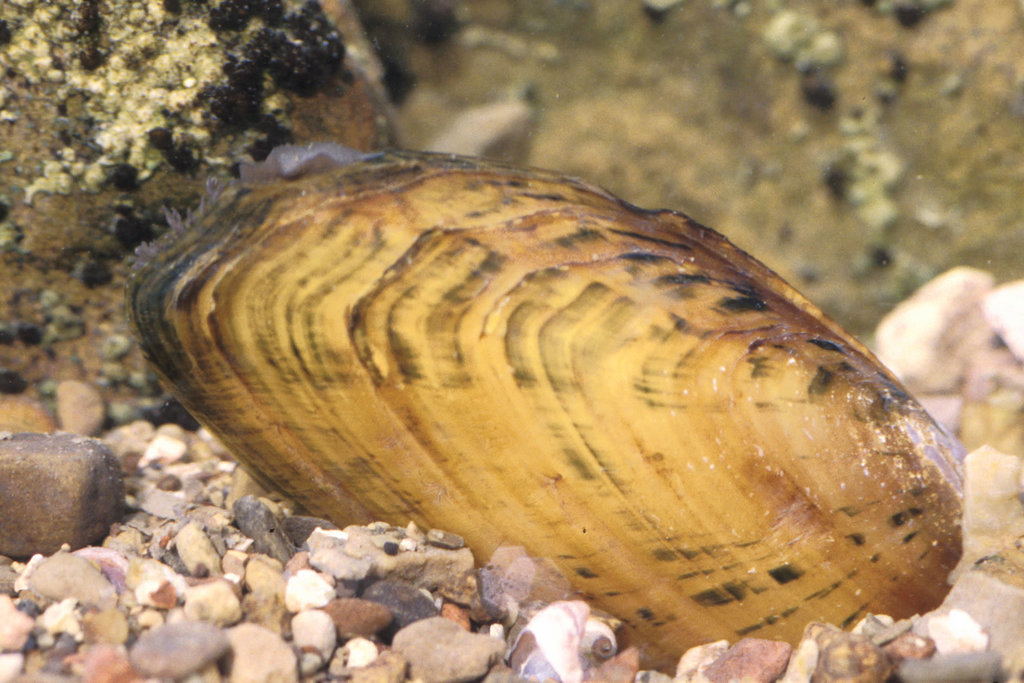
Cracking Pearlymussel
Hemistena lata
The cracking pearlymussel (Hemistena lata) is an endangered species of freshwater mussel, an aquatic bivalve mollusk in the family Unionidae.
This species is native to the United States, where it remains only in Tennessee and Virginia. It was originally distributed in the Ohio River, Cumberland River and Tennessee River systems, but it has been extirpated from most of its previous range.
From the article Cracking pearlymussel on Wikipedia (CC BY-SA), quoted section by section
What it does
This species spends its adult life buried under the sand or mud at the bottom of medium-sized, flowing rivers. The females capture sperm released into the water by males. They store the sperm until they need them to fertilize their eggs. After fertilization, the females release the larvae into the river, where the larvae attach themselves to fish. Once the larva matures into juveniles with shells, they leave their host fish and drop into the sediment, where they bury themselves. This process, therefore, requires an environment with ample fish to act as hosts. They prefer relatively shallow (usually less than 2 ft deep) water with a moderate current.
Wikipedia: “Ecology”
Where it lives
Recorded sightings
—
geo-referenced records in GBIF, from museums, herbaria and field observers.
Drag the globe to turn it. Dots are where records exist, not a range map; darker means more records.
In the stacks
Searching the stacks…
Every page naming Hemistena lata in the Biodiversity Heritage Library →
This page is assembled live from iNaturalist, GBIF, Wikipedia, the Source Library and the Internet Archive. It is not yet part of the hand-edited codex. iNaturalist taxon 102604.