- Animals
- ›Arthropods
- ›Hexapods
- ›Insects
- ›Winged and Once-winged Insects
- ›Dragonflies and Damselflies
- ›Dragonflies
- ›Libelluloidea
- ›Skimmers
- ›Hydrobasileus
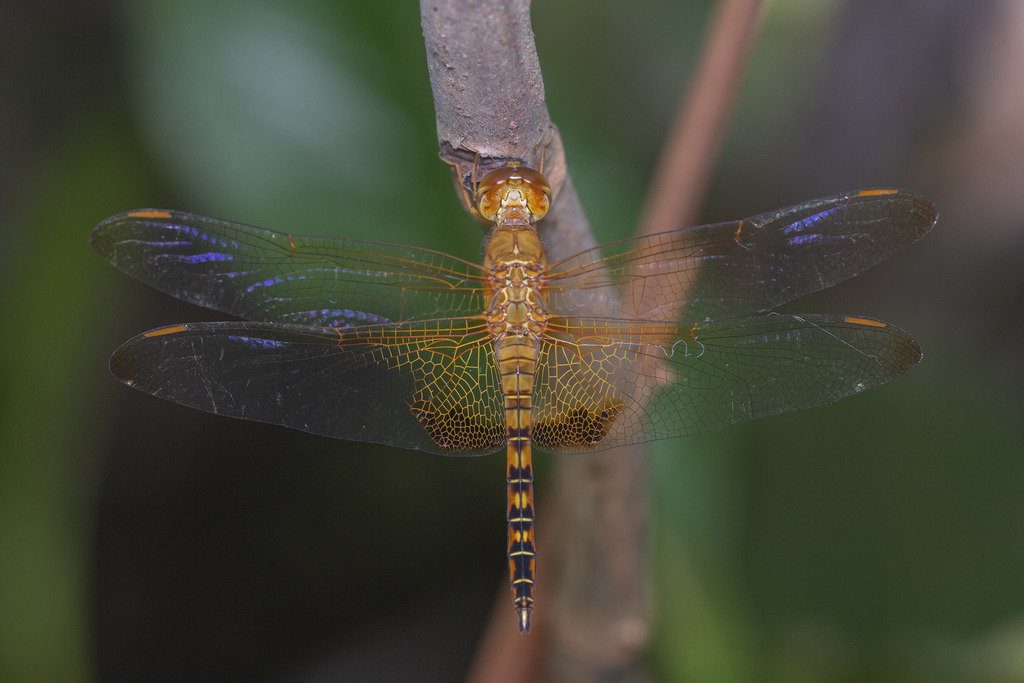
Amber-winged Glider
Hydrobasileus croceus
The amber-winged glider, (Hydrobasileus croceus) is a species of dragonfly in the family Libellulidae. It is a widely distributed species in many Asian countries. It breeds in weedy ponds and lakes. Can be seen in soaring above its habitat, sometimes in swarms, often in the company of Tramea species. The male is often seen patrolling over water, and rarely perches. When perched, they prefer to hang vertically on twigs inside dense shrubbery.
From the article Hydrobasileus croceus on Wikipedia (CC BY-SA), quoted section by section
Description
It is a large reddish-brown dragonfly with golden-amber tinted wings. Eyes are reddish-brown above, yellowish below. Its thorax is ohvaceous suffused with golden reddish-brown, Its base of hind-wings have a moderately broad dark reddish-brown mark. Abdomen is olivaceous, changing to ochreous towards anal end, marked with black. Segments 4 to 9 have apical and basal dorsal black wedge-shaped spots.
It breeds in weedy ponds and lakes. The male is often seen patrolling over water, and rarely perches. When perched, they prefer to hang vertically on twigs inside dense shrubbery.
Wikipedia: “Description and habitat”
Listen
Looking for field recordings…
Where it lives
Recorded sightings
—
geo-referenced records in GBIF, from museums, herbaria and field observers.
Drag the globe to turn it. Dots are where records exist, not a range map; darker means more records.
In the stacks
Searching the stacks…
Every page naming Hydrobasileus croceus in the Biodiversity Heritage Library →
This page is assembled live from iNaturalist, GBIF, Wikipedia, the Source Library and the Internet Archive. It is not yet part of the hand-edited codex. iNaturalist taxon 102995.