- Animals
- ›Arthropods
- ›Hexapods
- ›Insects
- ›Winged and Once-winged Insects
- ›Beetles
- ›Water, Rove, Scarab, Long-horned, Leaf, and Snout Beetles
- ›Cucujiform Beetles
- ›Longhorn Beetles and Allies
- ›Longhorn Beetles
- ›Flat-faced Longhorn Beetles
- ›Tragocephalini
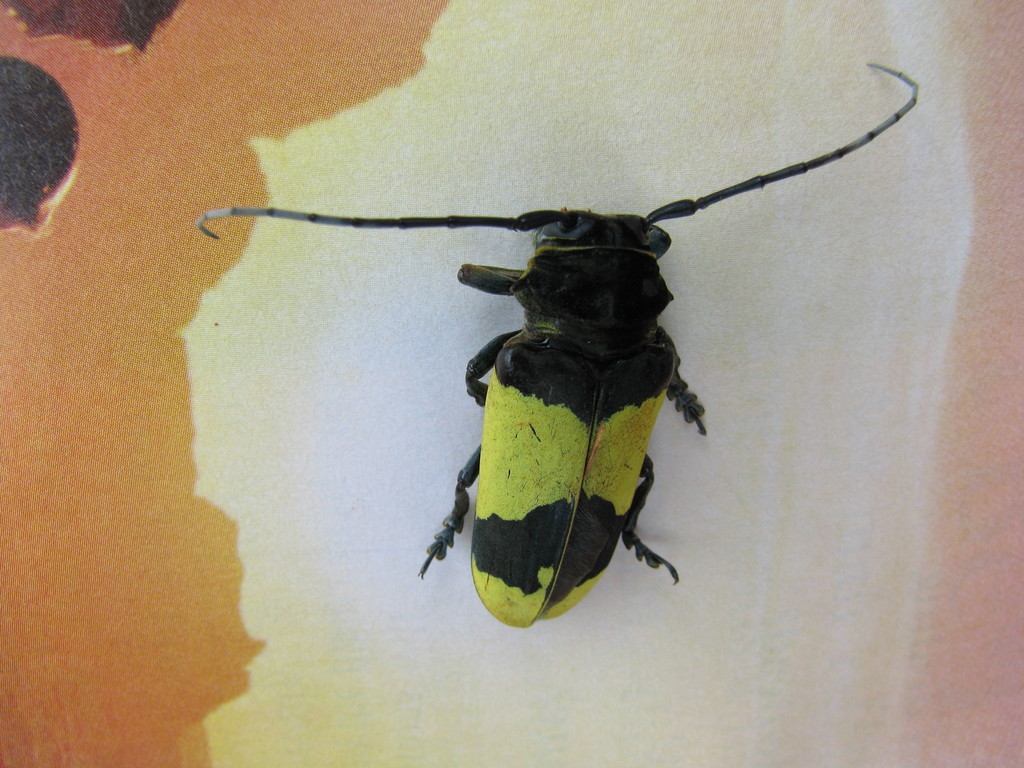
Phosphorus
Phosphorus is a chemical element; it has symbol P and atomic number 15. All elemental forms of phosphorus are highly reactive and are therefore never found in nature. Elemental phosphorus can be prepared artificially, the two most common allotropes being white phosphorus and red phosphorus. With 31P as its only stable isotope, phosphorus has an occurrence in Earth's crust of about 0.1%, generally as phosphate rock. A member of the pnictogen family, phosphorus readily forms a wide variety of organic and inorganic compounds, with as its main oxidation states +5, +3 and −3.
The isolation of white phosphorus in 1669 by Hennig Brand marked the scientific community's first discovery of an element since antiquity.
1 branches of this genus, most-observed first
See this branch on the Wheel of Life →
Where it lives
Recorded sightings
—
geo-referenced records in GBIF, from museums, herbaria and field observers.
Drag the globe to turn it. Dots are where records exist, not a range map; darker means more records.
In the stacks
Searching the stacks…
Every page naming Phosphorus in the Biodiversity Heritage Library →
This page is assembled live from iNaturalist, GBIF, Wikipedia, the Source Library and the Internet Archive. It is not yet part of the hand-edited codex. iNaturalist taxon 1047781.