- Plants
- ›Vascular Plants
- ›flowering plants
- ›Dicots
- ›Mints, Plantains, Olives, and Allies
- ›Mint Family
- ›Nepetoideae
- ›Mentheae
- ›Melissas and sages
- ›Salvia
- ›Glutinaria
- ›Eurysphace
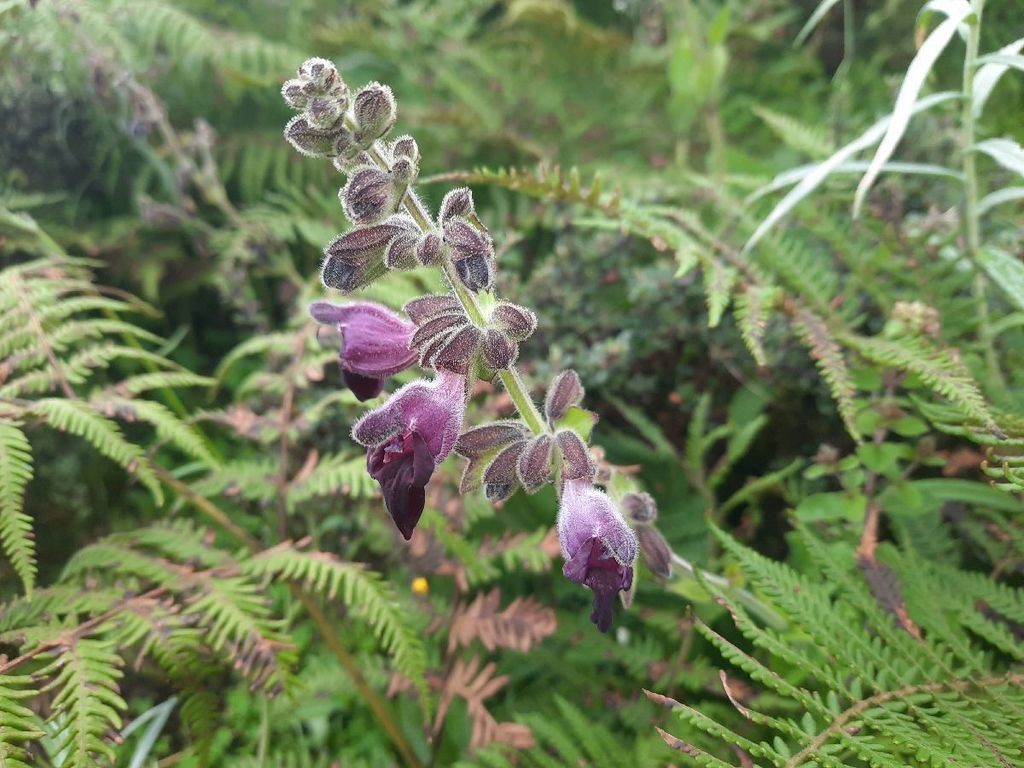
Salvia castanea
Salvia castanea is a herbaceous perennial plant discovered in the Yunnan Valley in China in 1904 by plant collector George Forrest. It also grows in Nepal, Bhutan, and Tibet. The plants used in horticulture today likely came from seed collected from a plant at 14,000 ft in Nepal, at the base of Mt. Everest. It grows 3 ft tall in the wild, and 1–2 feet in cultivation in Europe and the U.S. The few 1.0–1.5 in flowers grow...
Where it lives
Recorded sightings
—
geo-referenced records in GBIF, from museums, herbaria and field observers.
Drag the globe to turn it. Dots are where records exist, not a range map; darker means more records.
In the stacks
Searching the stacks…
Every page naming Salvia castanea in the Biodiversity Heritage Library →
This page is assembled live from iNaturalist, GBIF, Wikipedia, the Source Library and the Internet Archive. It is not yet part of the hand-edited codex. iNaturalist taxon 1116367.