- Fungi Including Lichens
- ›Basidiomycete Fungi
- ›Higher Basidiomycetes
- ›Mushrooms, Bracket Fungi, Puffballs, and Allies
- ›Agaricomycetidae
- ›boletes and allies
- ›Sclerodermatineae
- ›Sclerodermataceae
- ›Scleroderma
- ›Scleroderma geaster
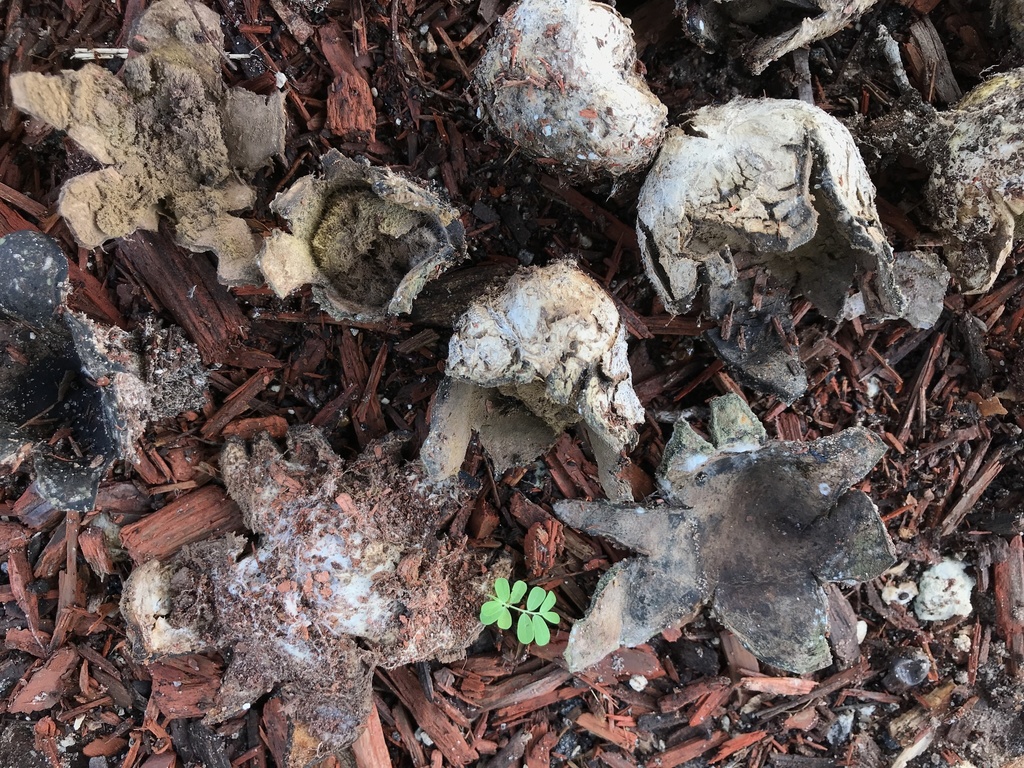
Scleroderma bermudense
Scleroderma bermudense is a species of Basidiomycete fungi in the family Sclerodermataceae. The species was first described by American botanist and mycologist, William Chambers Coker, in 1939.
From the article Scleroderma bermudense on Wikipedia (CC BY-SA), quoted section by section
Range & habitat
The species is indigenous to Bermuda, the Bahamas, Barbados, the Virgin Islands, Cuba, the Dominican Republic, Puerto Rico; The US state of Florida; and the Mexican states of Guerrero, Acapulco, Quintana Roo, Veracruz, and Yucatan. It has been introduced accidentally along with its host tree in various tropical regions, including French Guiana, Senegal, and Réunion.
Wikipedia: “Range”
What it does
Scleroderma bermudense is a mycorrhizal fungus associated with the seagrape Coccoloba uvifera. It has been found to alleviate salt uptake in seagrape seedlings, thus facilitating the tree's ability to live on coastal beaches.
Wikipedia: “Ecology”
In human culture
The genus name comes from Greek sclero, meaning hard, and derma, meaning skin, and is the same as the name of a skin disease also characterized by hardened skin. The specific epithet bermudense refers to the type locality, Bermuda. This species does not have a common name in English.
Wikipedia: “Etymology”
Where it lives
Recorded sightings
—
geo-referenced records in GBIF, from museums, herbaria and field observers.
Drag the globe to turn it. Dots are where records exist, not a range map; darker means more records.
In the stacks
Searching the stacks…
Every page naming Scleroderma bermudense in the Biodiversity Heritage Library →
This page is assembled live from iNaturalist, GBIF, Wikipedia, the Source Library and the Internet Archive. It is not yet part of the hand-edited codex. iNaturalist taxon 1136739.