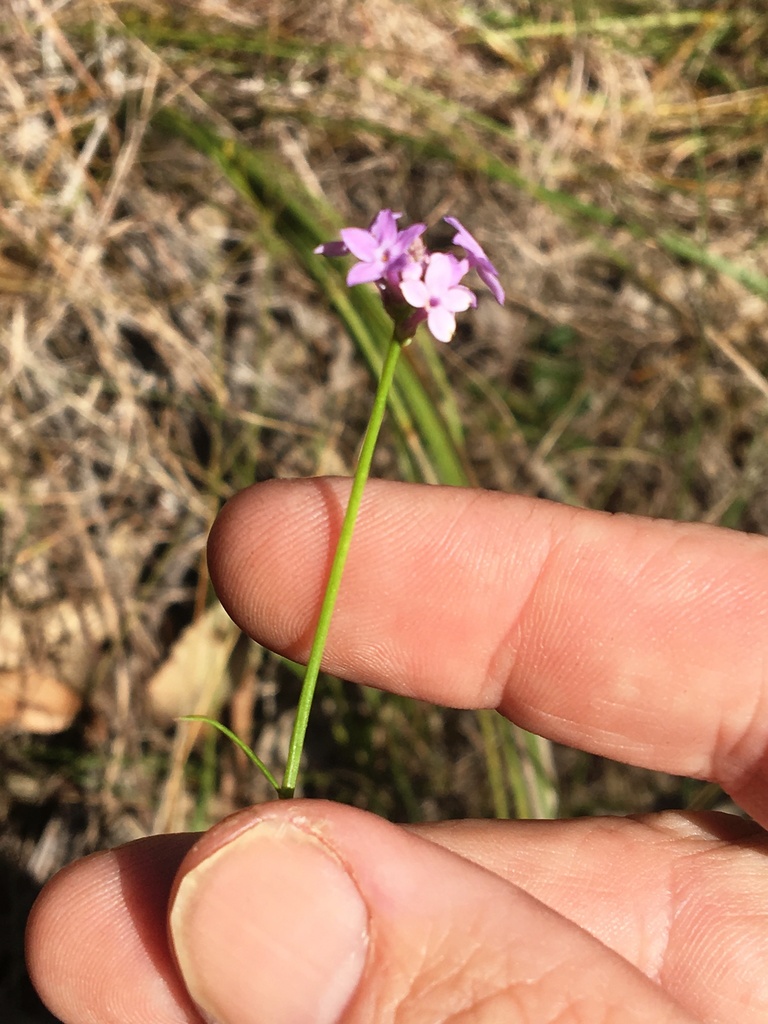
Stackhousia tryonii
Stackhousia tryonii is a herb which possesses edaphic Endemism to ultramafic serpentine soil containing high concentrations of nickel in Central Queensland.
From the article Stackhousia tryonii on Wikipedia (CC BY-SA), quoted section by section
Description
Stackhousia tryonii is the first nickel hyperaccumulating plant species discovered in Queensland.
Range & habitat
This species has a restricted range where the species range mainly extends from Yaamba to Glen Geddes in the north near Lake Learmouth State Forest in regional Rockhampton, Queensland. It also occurs in the Livingstone Shire from Keppel Sands Road to Bondoola where the Yeppoon-Rockhampton Road highway intersects its habitat. Smaller occurrences of this species occur in pockets of ultramafic serpentine soil past Glen Geddes to Eugene State Forest and Marlborough, Queensland. Other native flora seen in association with this species include Themeda triandra, Hibiscus heterophyllus, Eucalyptus fibrosa, Eucalyptus xanthope, Acacia aulacocarpa, Pimelea leptospermoides, and Styphelia cuspidata. Invasive weeds including Lantana camara and Stachytarpheta jamaicensis can be tolerant to serpentine and may appear in the same habitat through disturbance.
Wikipedia: “Distribution & Habitat”
Where it lives
Recorded sightings
—
geo-referenced records in GBIF, from museums, herbaria and field observers.
Drag the globe to turn it. Dots are where records exist, not a range map; darker means more records.
In the stacks
Searching the stacks…
Every page naming Stackhousia tryonii in the Biodiversity Heritage Library →
This page is assembled live from iNaturalist, GBIF, Wikipedia, the Source Library and the Internet Archive. It is not yet part of the hand-edited codex. iNaturalist taxon 1148780.