- Fungi Including Lichens
- ›Ascomycete Fungi
- ›Sac Fungi and Lichens
- ›Sordariomycetes
- ›Hypocreomycetidae
- ›Hypocreales
- ›Cordycipitaceae
- ›Samsoniella
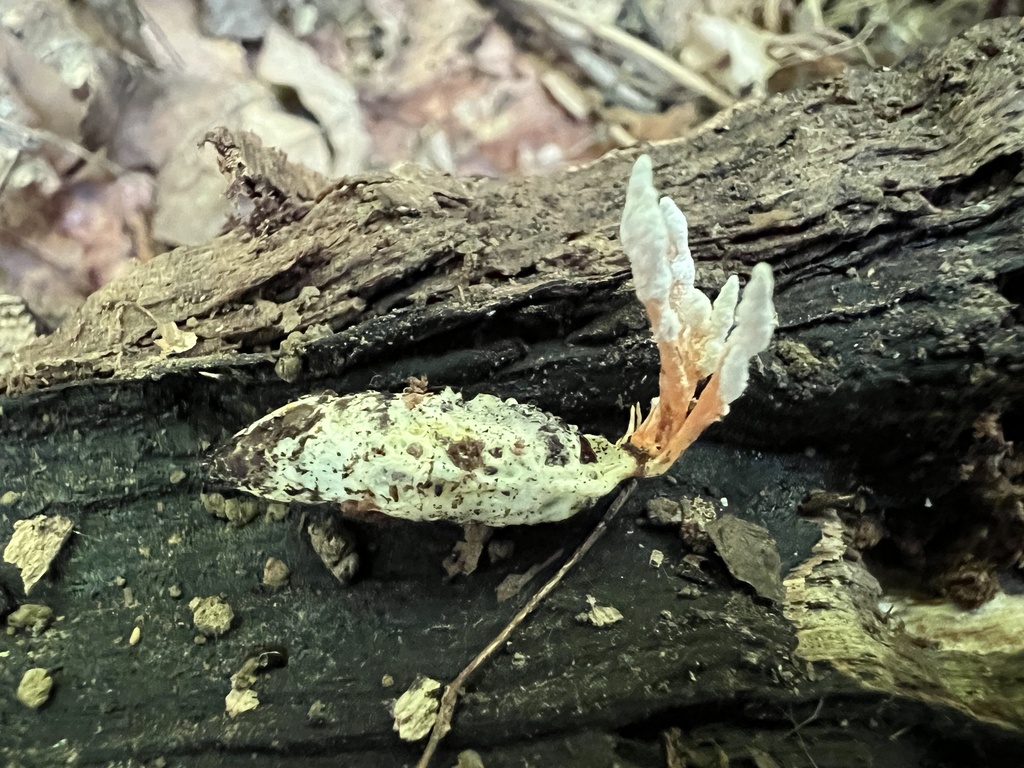
Samsoniella hepiali
Samsoniella hepiali is an entomopathogenic fungus. It was discovered in 1982 as a fungus infecting a field collection of infected Hepialus armoricanus originally presumed to be Ophiocordyceps sinensis. It is chemically and pharmacologically similar to O. sinensis, but differs significantly in terms of morphology. Later studies have also confirmed that it is genetically distinct from O. sinensis. It is known to produce cordycepin.
Because of its pharmacological similarities to true O. sinensis, it is also known as a type of "cordyceps" for human consumption.
From the article Samsoniella hepiali on Wikipedia (CC BY-SA), quoted section by section
Range & habitat
Samsoniella hepiali was originally collected in Qinghai, China on ghost moths. Isolates matching the diagnostic DNA sequences were also found in Anhui, China infecting leafhoppers and cicada; in Buenos Aires, Argentina infecting whiteflies and living in soil; and in Guizhou, China infecting ants.
Wikipedia: “Range”
In medicine
Samsoniella hepiali strain Cs-4 is used in an approved, prescription-only Chinese patent medicine product called "Jinshuibao" found in the Pharmacopoeia of the People's Republic of China. The Pharmacopoeia attributes it with lung, kidney, and chi-restorative properties similar to what is traditionally attributed to O. sinensis. Samsoniella hepiali is also used in more than 260 healthcare products (dietary supplements and similar) in China, with a total market worth of approximately 10 billion RMB.
== References ==
Wikipedia: “Ethnopharmacology”
In human culture
Q.T. Chen et al. originally placed the species in genus Paecilomyces. In the 1989 definition, P. hepiali is distinguished from P. xylariformis "in the shape and size of conidia and the associated host insects", and from P. farinosus "in the shape and arrangement of phialides, the shape of conidia, its host (Hepialus) and habitat at an altitude of 3000‒4500 m". The 1989 definition was not a valid publication because there was no living holotype specified. This was rectified in 2008 when the authors used the aforementioned dry culture at ICMM as the holotype. A 2020 genetic study, using CGMCC 3.17103 (Cs-4) and seven additional samples, found that what was known as P. hepiali should be placed into the genus Samsoniella. As a result, the current correct name is Samsoniella hepiali. The same article also identified numerous new species of cordycipitoid fungi, in genus Samsoniella and beyond.
Wikipedia: “Taxonomic history”
Where it lives
Recorded sightings
—
geo-referenced records in GBIF, from museums, herbaria and field observers.
Drag the globe to turn it. Dots are where records exist, not a range map; darker means more records.
In the stacks
Searching the stacks…
Every page naming Samsoniella hepiali in the Biodiversity Heritage Library →
This page is assembled live from iNaturalist, GBIF, Wikipedia, the Source Library and the Internet Archive. It is not yet part of the hand-edited codex. iNaturalist taxon 1179433.