- Fungi Including Lichens
- ›Basidiomycete Fungi
- ›Higher Basidiomycetes
- ›Mushrooms, Bracket Fungi, Puffballs, and Allies
- ›Shelf Fungi
- ›Phaeolaceae
- ›Phaeolus
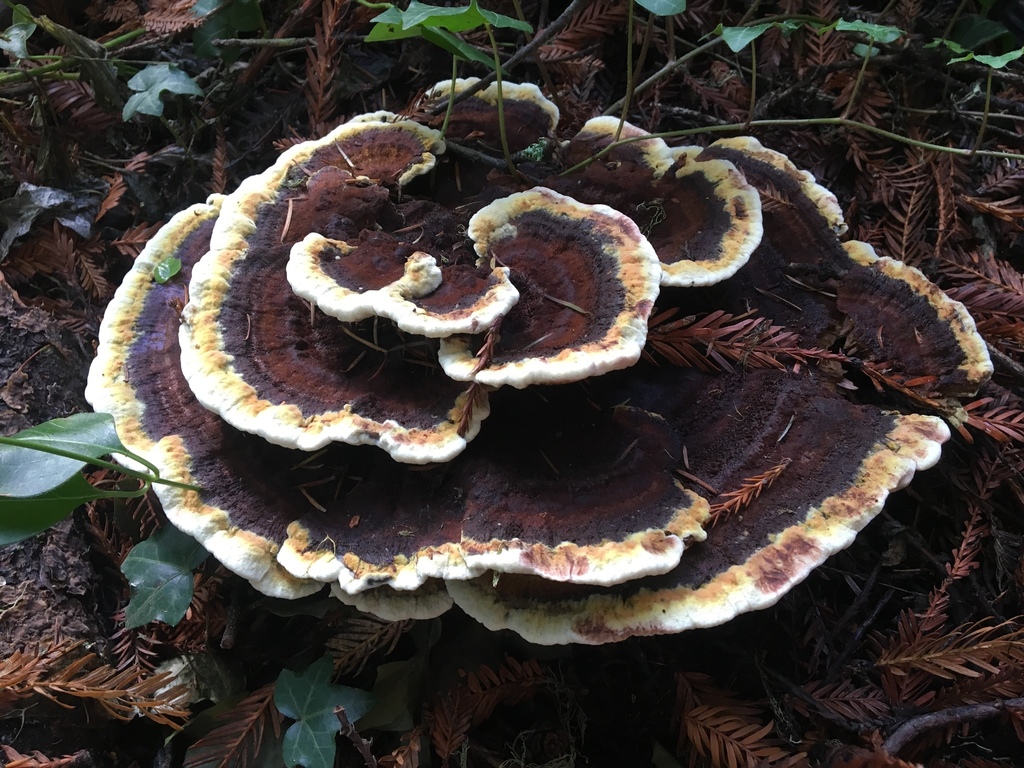
European Dyer's Polypore
Phaeolus schweinitzii
Phaeolus schweinitzii, commonly known as velvet-top fungus, dyer's polypore, or dyer's mazegill, is a fungal plant pathogen that causes butt rot on conifers such as Douglas-fir, spruce, fir, hemlock, pine, and larch. P. schweinitzii is a polypore, although unlike bracket fungi the fruiting body may appear terrestrial when growing from the roots or base of the host tree. The fruiting bodies, appearing in late summer or fall, commonly incorporate blades of grass, twigs, or fallen pine...
Where it lives
Recorded sightings
—
geo-referenced records in GBIF, from museums, herbaria and field observers.
Drag the globe to turn it. Dots are where records exist, not a range map; darker means more records.
In the stacks
Searching the stacks…
Every page naming Phaeolus schweinitzii in the Biodiversity Heritage Library →
This page is assembled live from iNaturalist, GBIF, Wikipedia, the Source Library and the Internet Archive. It is not yet part of the hand-edited codex. iNaturalist taxon 118084.