- Fungi Including Lichens
- ›Basidiomycete Fungi
- ›Higher Basidiomycetes
- ›Mushrooms, Bracket Fungi, Puffballs, and Allies
- ›Agaricomycetidae
- ›Common Gilled Mushrooms and Allies
- ›Agaricineae
- ›Brittlestems and Allies
- ›Psathyrella
- ›Hydrophilae
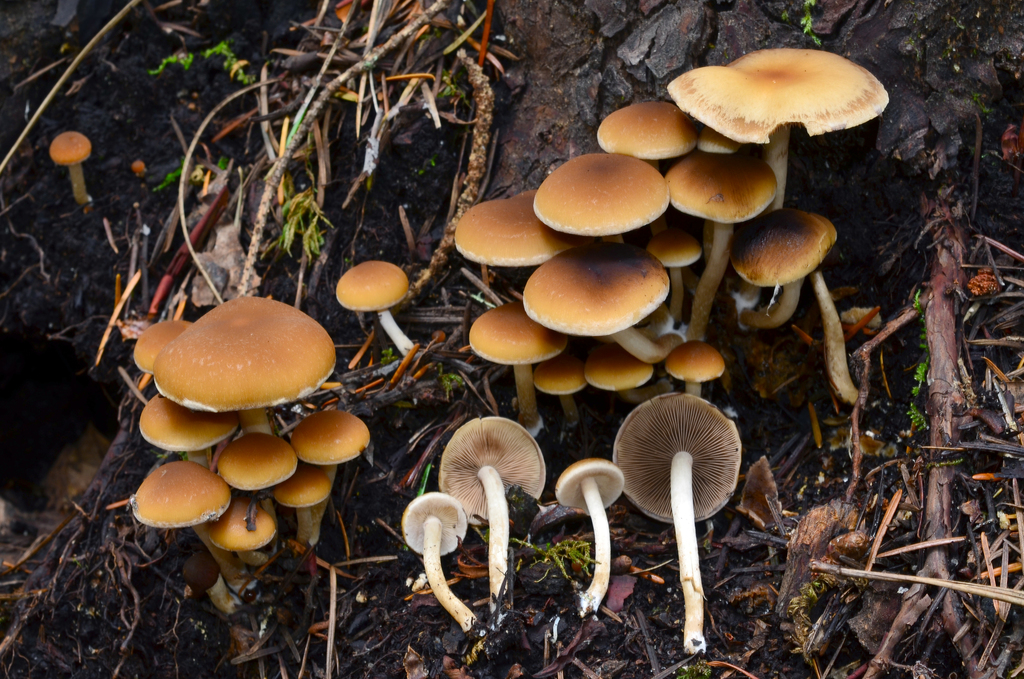
Common Stump Brittlestem
Psathyrella piluliformis
Psathyrella piluliformis is a species of agaric fungus in the family Psathyrellaceae. It produces fruit bodies (mushrooms) with broadly convex caps measuring 2–5 cm (0.8–2.0 inches) in diameter. The caps are chestnut to reddish brown, the color fading in age and with dry weather. The closely spaced Gills have an adnate attachment to the stipe. They are initially tan until the spores mature, when the gills turn dark brown. Fragments of the partial veil may remain on...
From the article Psathyrella piluliformis on Wikipedia (CC BY-SA), quoted section by section
Description
It produces fruit bodies (mushrooms) with broadly convex caps measuring 2–5 cm (3⁄4–2 inches) in diameter. The caps are chestnut to reddish brown, the color fading with age and with dry weather. Fragments of the partial veil may remain on the cap margin, and as a wispy band of hairs on the stipe. The closely spaced gills have an adnate attachment to the stipe. They are initially tan until the spores mature, when the gills turn dark brown. The stipe is 2–7 cm tall and 3–7 mm wide, white, smooth, hollow, and bulging at the base. The spore print is dark brown, sometimes purplish.
Similar species. Similar species include Psathyrella carbonicola, P. longipes, P. longistriata, P. multipedata, P. spadicea, and Parasola conopilus.
At the table
The species is considered edible but of low quality, with fragile flesh and being difficult to identify.
Wikipedia: “Uses”
Where it lives
Recorded sightings
—
geo-referenced records in GBIF, from museums, herbaria and field observers.
Drag the globe to turn it. Dots are where records exist, not a range map; darker means more records.
In the stacks
Searching the stacks…
Every page naming Psathyrella piluliformis in the Biodiversity Heritage Library →
This page is assembled live from iNaturalist, GBIF, Wikipedia, the Source Library and the Internet Archive. It is not yet part of the hand-edited codex. iNaturalist taxon 118273.