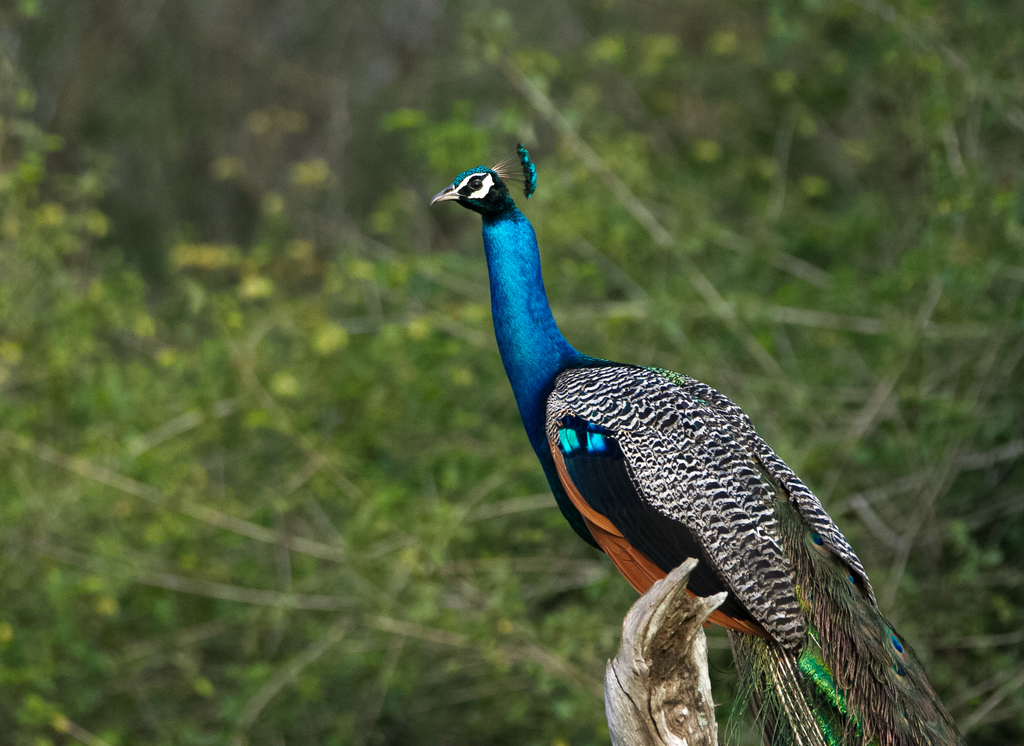
Peafowl
Pavo
Peafowl is a common name for two bird species of the genus Pavo and one species of the closely related genus Afropavo within the tribe Pavonini of the family Phasianidae (the pheasants and their allies). Male peafowl are referred to as peacocks, and female peafowl are referred to as peahens. Despite this, peacock is usually used to refer to both sexes, in common language.
The two Asiatic species are the blue or Indian peafowl originally from the Indian subcontinent, and the green peafowl from Southeast Asia. The third peafowl species, the Congo peafowl, is native only to the Congo Basin. Male peafowl are known for their piercing calls and their extravagant plumage. The latter is especially prominent in the Asiatic species, which have an eye-spotted "tail" or "train" of covert feathers, which they display as part of a courtship ritual.
3 branches of this genus, most-observed first · about 2 known species
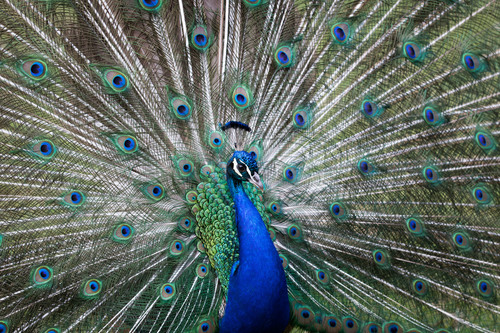
Indian Peafowl
speciesPavo cristatus
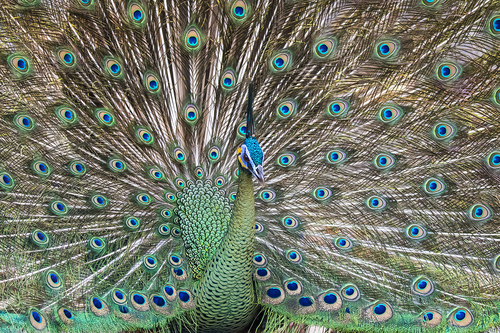
Green Peafowl
speciesPavo muticus

Spalding Peafowl
hybridPavo cristatus × muticus
Where it lives
Recorded sightings
—
geo-referenced records in GBIF, from museums, herbaria and field observers.
Drag the globe to turn it. Dots are where records exist, not a range map; darker means more records.
In the old herbals & bestiaries

Of the Eggs and Nests of Birds
Giuseppe Zinanni (Ginanni) (1692-1753) · 1737 · p.43

Of the Eggs and Nests of Birds
Giuseppe Zinanni (Ginanni) (1692-1753) · 1737 · p.43

Garden of Health (Hortus Sanitatis)
Jacob Meydenbach · 1491 · p.637

History of Animals, Book I: On Viviparous Quadrupeds
Conrad Gessner · 1554 · p.650

Noah's Ark
Athanasius Kircher · 1675 · p.129

Treasury of Medical Matters of New Spain
Francisco Hernández · 1651 · p.323

Garden of Malabar, Vol. 2 (Hortus Indicus Malabaricus)
Hendrik van Rheede · 1683 · p.212

A key to physic, and the occult sciences
Sibly, Ebenezer · 1810 · p.604
In the stacks
Searching the stacks…
Every page naming Pavo in the Biodiversity Heritage Library →
This page is assembled live from iNaturalist, GBIF, Wikipedia, the Source Library and the Internet Archive. It is not yet part of the hand-edited codex. iNaturalist taxon 1199.