- Plants
- ›Vascular Plants
- ›flowering plants
- ›Dicots
- ›geraniums, bridal wreaths, and allies
- ›bridal wreath family
- ›Melianthus
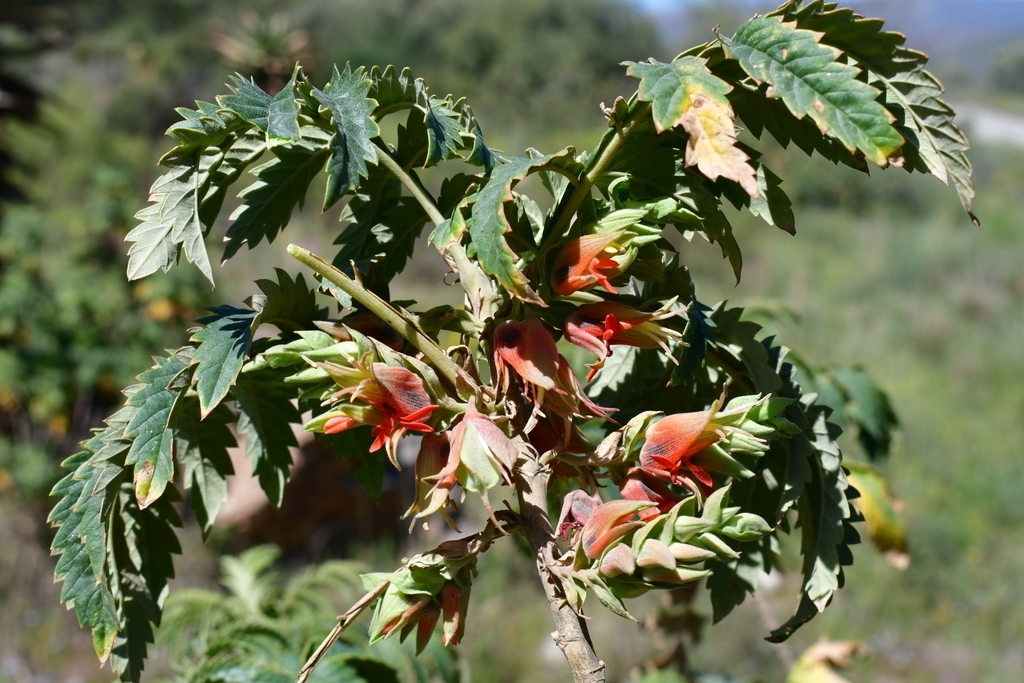
Crown Honeyflower
Melianthus comosus
Melianthus comosus, the honey flower, is a species of flowering plant in the family Francoaceae. It is native to the mostly dry regions of southern Africa. The attractive multi-stemmed shrubs are popular garden subjects. The Afrikaans name kruidjie-roer-my-nie (herb-touch-me-not) alludes to the unpleasant smell that results from bruising of any part of the plant. The vegetative parts are very toxic, as with other Melianthus species, and extracts of the leaves and stem have anti-bacterial properties.
From the article Melianthus comosus on Wikipedia (CC BY-SA), quoted section by section
Range & habitat
It is native to South Africa, western Lesotho and southern Namibia, where it occurs from 400 to 2,000 m above sea level. In South Africa it occurs in the greater part of the Cape and Free State provinces, and locally in North West, Gauteng and Mpumalanga.
Wikipedia: “Range”
At the table
Honey from its flowers is dark in colour, and apparently not toxic to humans. The flowers are visited by insects and birds, especially sunbirds which eagerly seek them out.
Wikipedia: “Uses and species associations”
Where it lives
Recorded sightings
—
geo-referenced records in GBIF, from museums, herbaria and field observers.
Drag the globe to turn it. Dots are where records exist, not a range map; darker means more records.
In the stacks
Searching the stacks…
Every page naming Melianthus comosus in the Biodiversity Heritage Library →
This page is assembled live from iNaturalist, GBIF, Wikipedia, the Source Library and the Internet Archive. It is not yet part of the hand-edited codex. iNaturalist taxon 120228.