- Plants
- ›Vascular Plants
- ›flowering plants
- ›Dicots
- ›Roses, Elms, Figs, and Allies
- ›rose family
- ›brambles, roses, strawberries, and allies
- ›rose tribe
- ›Rosa
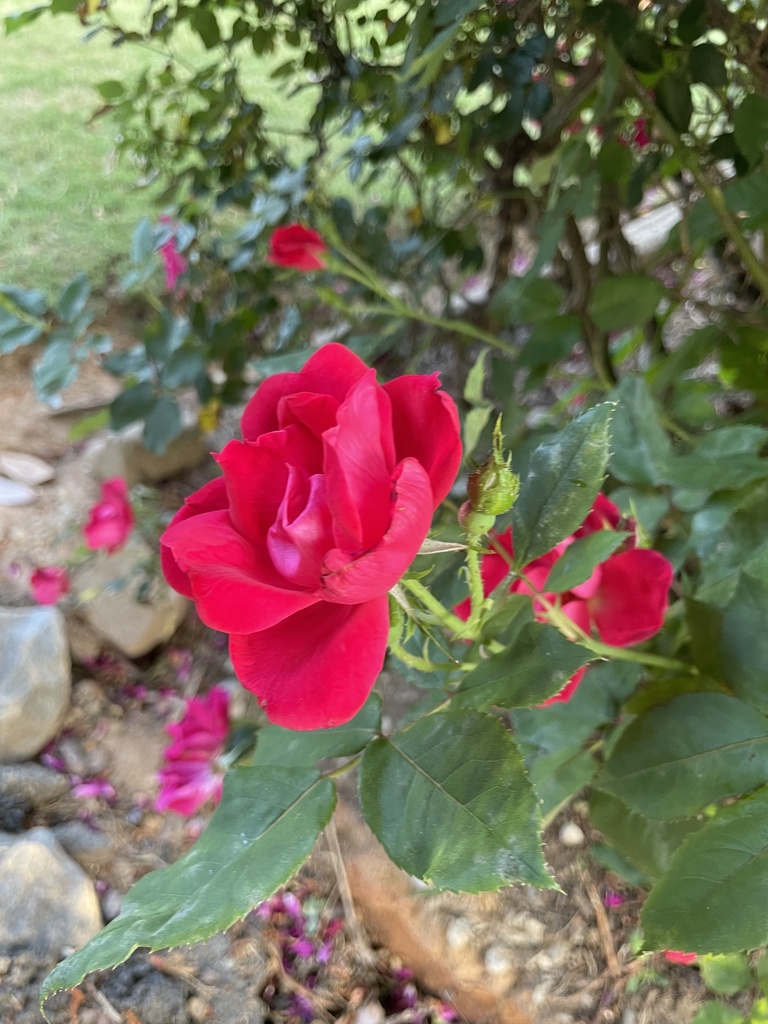
Rosa × kordesii
Rosa × kordesii, or Rosa kordesii, is a red type of rose that arose naturally from hybridization followed by chromosome doubling. A hybrid between R. rugosa and R. lucieae was created called Rosa 'Max Graf', but it was diploid and nearly sterile, producing flowers but no fruit. This rose produced a few viable seeds as a result of self-pollination, and the seedlings that resulted were tetraploid instead of diploid, i.e., the chromosomes of both pollen and egg cells had been naturally duplicated. The tetraploid seedlings are amphidiploids. A selection with double deep pink flowers and repeat bloom, also called 'K01 AgCan' was released by W. Kordes' Söhne in 1951.
These tetraploid roses interbreed readily with one another, but not with their diploid ancestors. Under the biological species concept, a new species name Rosa × kordesii was created for the tetraploid hybrid roses and their descendants.
From the article Rosa × kordesii on Wikipedia (CC BY-SA), quoted section by section
At the table
Rosa × kordesii petal extract gel is stable for at least 3–4 months when stored at 5 and 25 °C. It is essential for collection of similar data for different plants and their flowers, as well as other parts. This proved activity of plant showed its importance and prophylactic utility in anti-solar formulation. This will be a better, cheaper and safe alternative to harmful chemical sunscreens that used nowadays in the industry.
== References ==
Wikipedia: “Uses”
Where it lives
Recorded sightings
—
geo-referenced records in GBIF, from museums, herbaria and field observers.
Drag the globe to turn it. Dots are where records exist, not a range map; darker means more records.
In the stacks
Searching the stacks…
Every page naming Rosa × kordesii in the Biodiversity Heritage Library →
This page is assembled live from iNaturalist, GBIF, Wikipedia, the Source Library and the Internet Archive. It is not yet part of the hand-edited codex. iNaturalist taxon 1204608.