- Animals
- ›Molluscs
- ›Gastropods
- ›Caenogastropods
- ›Apple Snails, River Snails, and Allies
- ›Ampullarioidea
- ›Apple Snails
- ›Pomaceinae
- ›Pomacea
- ›Pomacea canaliculata
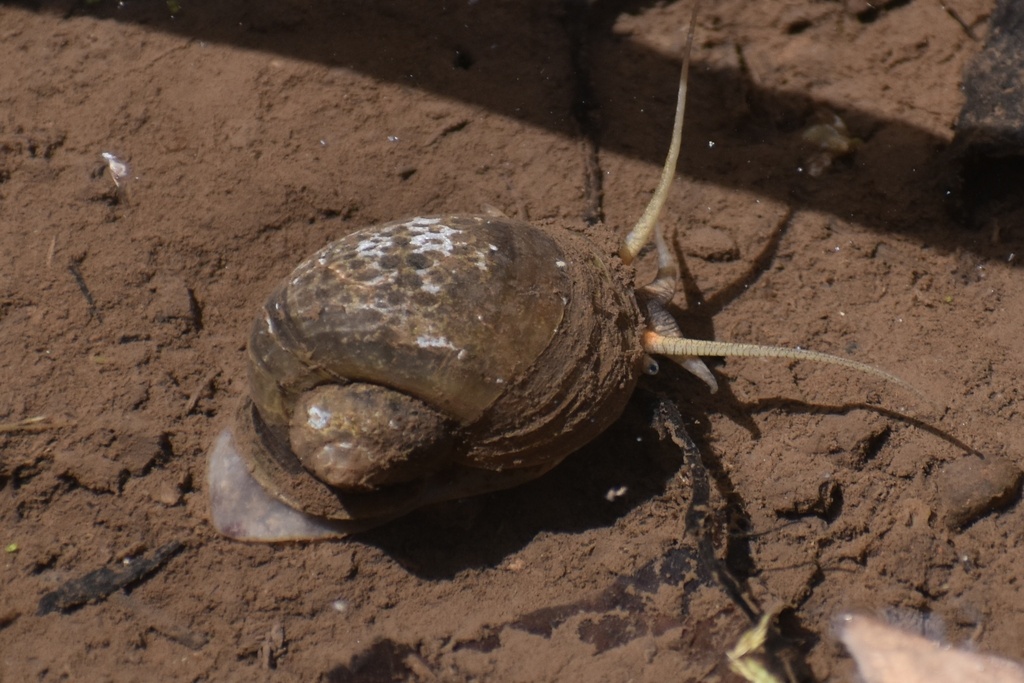
Channeled Apple Snail
Pomacea canaliculata
Pomacea canaliculata, commonly known as the golden apple snail or the channeled apple snail, is a species of large freshwater snail with gills and an operculum, an aquatic gastropod mollusc in the family Ampullariidae, the apple snails.
South American in origin, this species is considered to be in the top 100 of the "World's Worst Invasive Alien Species". It is also ranked as the 40th worst alien species in Europe and the worst alien species of gastropod in Europe.
From the article Pomacea canaliculata on Wikipedia (CC BY-SA), quoted section by section
Range & habitat
The native distribution of P. canaliculata is basically tropical and subtropical, including Argentina, Bolivia, Paraguay, Uruguay, and Brazil. The southernmost record for the species is Paso de las Piedras reservoir, south of the Buenos Aires province, Argentina.
Non-indigenous distribution. This species also occurs in the United States, where the initial introductions were probably from aquarium release, aka "aquarium dumping". The non-indigenous distribution includes: Lake Wawasee in Kosciusko County, Indiana; Langan Park and Three Mile Creek in Mobile, Alabama; a pond bordering the Mobile-Tensaw River Delta in Baldwin County, Alabama; Little Wekiva River, Orlando, Florida; a lake near Jacksonville, Florida; Miramar Reservoir in San Diego County, California; and a pond near Yuma, Arizona. Established populations exist in California and Hawaii. Moving north, the Government of Alberta has labelled channeled apple snails as an invasive species. Alberta's Minister of Environment and Protected Areas Rebecca Schulz, alongside the Alberta Invasive Species Council, is working hard to make Alberta invasive species free, which includes addressing the issue of channeled apple snails. The species has been found in China since 1981. …
Wikipedia: “Distribution”
What it does
Pomacea canaliculata is extremely polyphagous, feeding on vegetal (primarily macrophytophagous, feeding on floating or submersed higher plants), detrital, and animal matter. Diet may vary with age, with younger smaller individuals feeding on algae and detritus, and older, bigger (15 millimetres (19⁄32 in) and above) individuals later shifting to higher plants. This species negatively impacts rice and taro agriculture worldwide where it has been introduced.
Wikipedia: “Feeding habits”
Where it lives
Recorded sightings
—
geo-referenced records in GBIF, from museums, herbaria and field observers.
Drag the globe to turn it. Dots are where records exist, not a range map; darker means more records.
In the stacks
Searching the stacks…
Every page naming Pomacea canaliculata in the Biodiversity Heritage Library →
This page is assembled live from iNaturalist, GBIF, Wikipedia, the Source Library and the Internet Archive. It is not yet part of the hand-edited codex. iNaturalist taxon 122278.