- Plants
- ›Vascular Plants
- ›flowering plants
- ›Dicots
- ›Mints, Plantains, Olives, and Allies
- ›Mint Family
- ›Nepetoideae
- ›Mentheae
- ›balms, mints, and thymes
- ›Monarda
- ›Cheilyctis
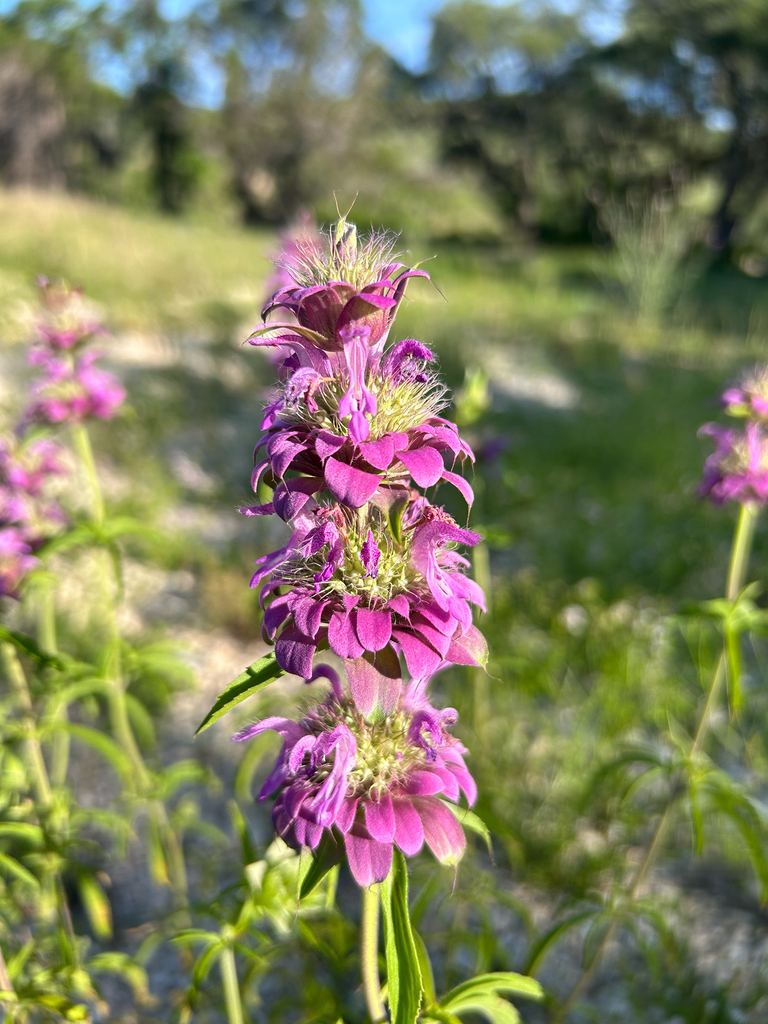
lemon beebalm
Monarda citriodora
Monarda citriodora is a species of flowering plant in the mint family, Lamiaceae, that is native to the southern United States and northern Mexico. Common names include lemon beebalm, lemon mint (this may also apply to Eau de Cologne mint) and purple horsemint. When crushed, the leaves emit an odor reminiscent of lemons. This odor is sometimes described as more resembling oregano, especially late in the season. Its purple flowers are highly attractive to butterflies, bees and hummingbirds.
From the article Monarda citriodora on Wikipedia (CC BY-SA), quoted section by section
Description
Lemon beebalm can tolerate dry soil, and requires little water and direct sun light. Several stems grow from the base and are lined with pairs of lance-shaped leaves. It grows quickly during spring, reaching up to 90 centimetres (3 ft) high, and blooms its white, purple and pink colored flowers from May through July (in the northern hemisphere), continuing to bloom even later in the year if given water. The plant dies with the first frost, and although lemon beebalm is an annual, its seeds can germinate and grow the following year. The Latin specific epithet citriodora means having a citrus aroma.
Range & habitat
This widespread plant grows in prairies, roadsides and other sunny habitats from Arizona to Florida, and from Nebraska to Michoacán. It prefers soils with a high percentage of clay, such as the vertisols and mollisols typical of tallgrass prairies, where it sometimes forms impressive blankets of summer flowers.
Varieties Monarda citriodora var. austromontana (Epling) B.L.Turner - Arizona, New Mexico, Chihuahua, Sonora, and elsewhere in Mexico Monarda citriodora var. citriodora - Kansas, Missouri, Oklahoma, Arkansas, Utah, Texas, Tamaulipas Monarda citriodora var. parva Scora - southern Texas
Wikipedia: “Habitat and range”
At the table
Some people use lemon beebalm as an addition to salads and teas. It's also used sometimes in wines and liqueurs. It can give a good flavor to certain seafood and meat dishes too, such as crab and chicken. Lemon beebalm is an ingredient in many dessert recipes, and is used for flavoring in cakes, cheesecakes, sauces, and pies. But most recipes bearing the name "lemon mint" actually used spearmint and the juice or other components of the actual fruit of the lemon plant rather than this plant. However, lemon beebalm is occasionally used in herbal teas.
Wikipedia: “Culinary”
In medicine
Teas made from the leaves is used by herbalists to supposedly treat colds, coughs, fevers, and respiratory problems.
Wikipedia: “Medicinal”
Where it lives
Recorded sightings
—
geo-referenced records in GBIF, from museums, herbaria and field observers.
Drag the globe to turn it. Dots are where records exist, not a range map; darker means more records.
In the stacks
Searching the stacks…
Every page naming Monarda citriodora in the Biodiversity Heritage Library →
This page is assembled live from iNaturalist, GBIF, Wikipedia, the Source Library and the Internet Archive. It is not yet part of the hand-edited codex. iNaturalist taxon 122587.