- Plants
- ›Vascular Plants
- ›flowering plants
- ›Dicots
- ›Legumes, Milkworts, and Allies
- ›Legumes
- ›Faboideae
- ›Phaseoleae
- ›Phaseolinae
- ›Phaseolus
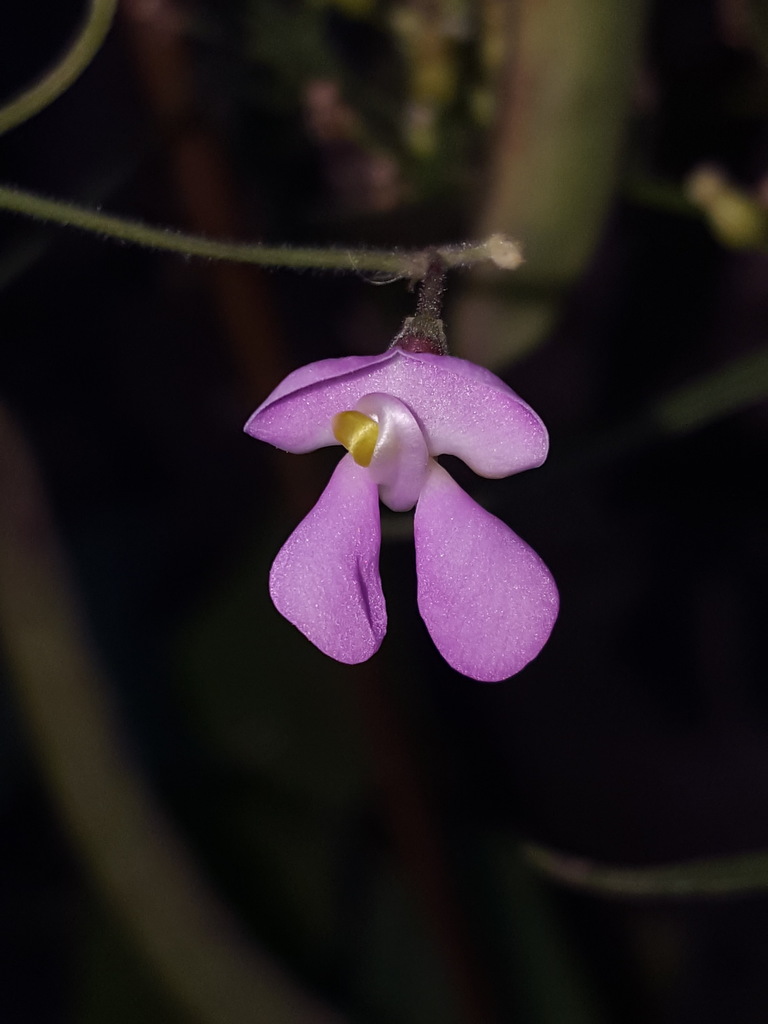
tepary bean
Phaseolus acutifolius
Phaseolus acutifolius, also known as the tepary bean, is a legume native to the southwestern United States and Mexico that has been grown there by the native peoples since pre-Columbian times. It is more drought-resistant than the common bean (Phaseolus vulgaris) and is grown in desert and semi-desert conditions from Arizona through Mexico to Costa Rica. The water requirements are low. The crop will grow in areas where annual rainfall is less than 400 mm (16 in).
From the article Phaseolus acutifolius on Wikipedia (CC BY-SA), quoted section by section
Description
The tepary bean is an annual and can be climbing, trailing, or erect, with stems up to 4 m (13 ft) long. The specific epithet, acutifolius, is derived from Latin acutus 'pointed, acute', and -folius '-leaved'. A narrow leafed, variety tenuifolius, and a broader leafed, variety latifolius, are known. Domestic varieties are derived from latifolius. Observation of "a limited number" of wild specimens suggested that "the flowers concur with the summer rains, first appearing in late August, with the pods ripening early in the fall dry season, most of them in October". The beans can be of nearly any color. There are many local landraces. Beans vary in size but tend to be small. They mature 60 to 120 days after planting. Other names for this native bean include Pawi, Pavi, Tepari, Escomite, Yori mui, Yorimuni and Yori muni. The name tepary may derive from the Tohono O'odham phrase tʼpawi or "It's a bean". The name for a small bean was recorded in the 17th century, in the now extinct Eudeve language of northern Mexico, as tépar (accusative case, tépari). Names that contain yori in them typically refer to non-native species of beans, since those names mean "non-Indian person's bean".
At the table
The nutritional characteristics of the tepary bean are generally similar to those of the common bean (Phaseolus vulgaris). Like other legumes, tepary beans are rich in protein. They contain 15–32% protein, 0.9–1.7% fat, and 65.3–69.1% carbohydrate. Total dietary fiber content ranges from 18–21%, of which 0.5–1% are considered soluble fiber and 17–20% insoluble fiber. Tepary beans contain higher levels of essential minerals than common pinto beans, with levels 10–40% higher. The exceptions are iron, nickel and selenium, for which the content is the same in both types of bean. There are also differences in the levels of some trace elements, with tepary beans having lower levels of rubidium but higher levels of bromine and strontium than pinto beans. Tepary beans are, however, relatively low in the sulfur-containing amino acids cysteine, methionine, and also tryptophan, likewise as the common bean and other legume crops. In traditional food systems where beans form a dietary staple, these shortcomings are typically balanced by complementary foods such as maize or squash. Anti-nutritional factors in tepary beans include trypsin inhibitors and lectins, which can interfere with digestion by reducing nutrient absorption in the intestine. Trypsin inhibitor activity is largely inactivated by heat treatment, and lectins in properly cooked beans do not pose nutritional concerns.
Wikipedia: “Nutritional aspects”
In medicine
Research in the United States and Mexico suggests that lectin toxins and other compounds from tepary beans may be useful in chemotherapy for treating cancer. However, further research is needed.
Wikipedia: “Medical uses”
In human culture
Tepary beans have been grown by Native Americans for thousands of years; cultivated beans have been found dating to 500 BCE in the Tehuacán Valley in Mexico. Tepary beans appear to have been domesticated in a single event in northern Mexico, based on genetic evidence. The Sand Papago (Hia C-eḍ O'odham) were mainly hunter-gatherers but cultivated tepary beans and other crops when moisture made it possible for them to do so. In 1912, ethnographer Carl Lumholtz found small cultivated fields primarily of tepary beans in the Pinacate Peaks area of Sonora. In the Pinacate, with an average annual precipitation of 75 mm (3.0 in) and temperatures up to 48 °C (118 °F), Tohono O'Odham and Mexican farmers utilized runoff from sparse rains to grow crops. In the 1980s, author Gary Paul Nabhan visited this area, and found one farm family taking advantage of the first large rain in six years, planting seeds in the wet ground and harvesting a crop two months later. The most successful crops were tepary beans and a drought-adapted squash. Nabhan calculated that the cultivation in the Pinacate was the most arid area in the world where rain-fed agriculture is practiced. The tepary bean was a major food staple of natives in the Southwestern United States and northern Mexico. In addition to being grown in floodplains, it was often grown alongside squash and corn. …
Wikipedia: “History”
Where it lives
Recorded sightings
—
geo-referenced records in GBIF, from museums, herbaria and field observers.
Drag the globe to turn it. Dots are where records exist, not a range map; darker means more records.
In the stacks
Searching the stacks…
Every page naming Phaseolus acutifolius in the Biodiversity Heritage Library →
This page is assembled live from iNaturalist, GBIF, Wikipedia, the Source Library and the Internet Archive. It is not yet part of the hand-edited codex. iNaturalist taxon 122858.