Rainbow Plants
Byblis
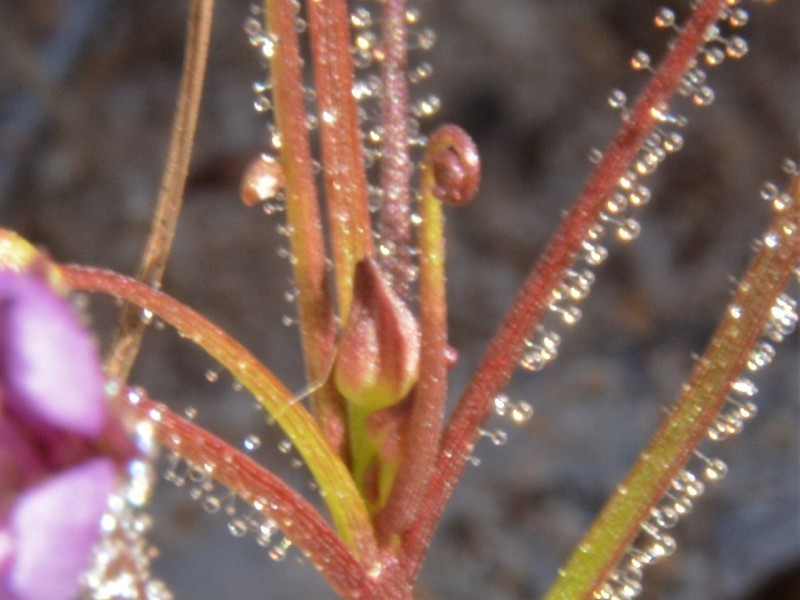
Byblis ( BIB-liss) is a genus of carnivorous plants, sometimes termed the rainbow plants for the attractive appearance of their mucilage-covered leaves in bright sunshine. Native to Australia and New Guinea, it is the only genus in the family Byblidaceae. The first species in the genus was described by the English botanist Richard Anthony Salisbury in 1808. Eight species are now recognised.
Byblis species look very similar to Drosera and Drosophyllum, but are distinguished by their zygomorphic flowers, with five curved stamens off to one side of the pistil. These genera are in fact not closely related; modern classifications place Byblis in the Lamiales, while the sundews and Drosophyllum are now placed in the Caryophyllales.
8 branches of this genus, most-observed first

Byblis filifolia
speciesByblis filifolia

Byblis liniflora
speciesByblis liniflora

Byblis aquatica
speciesByblis aquatica

Byblis rorida
speciesByblis rorida
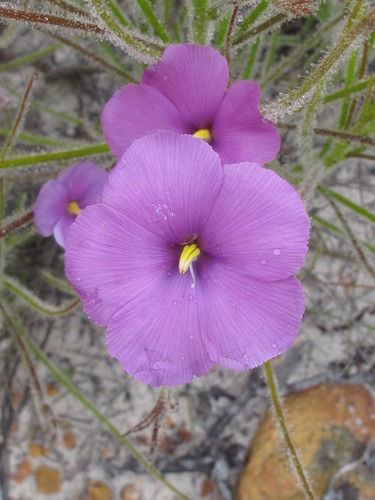
Byblis lamellata
speciesByblis lamellata
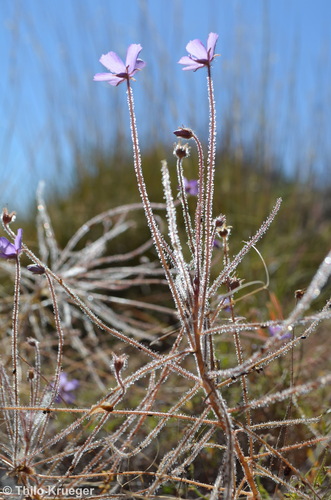
Byblis pilbarana
speciesByblis pilbarana
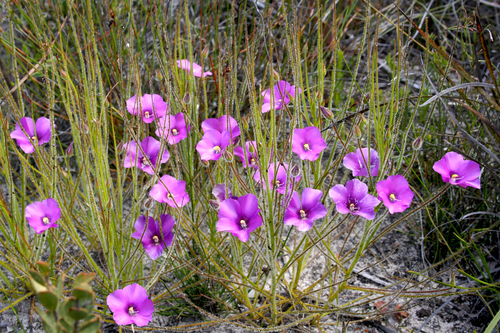
Byblis gigantea
speciesByblis gigantea

Byblis guehoi
speciesByblis guehoi
Where it lives
Recorded sightings
—
geo-referenced records in GBIF, from museums, herbaria and field observers.
Drag the globe to turn it. Dots are where records exist, not a range map; darker means more records.
In the stacks
Searching the stacks…
Every page naming Byblis in the Biodiversity Heritage Library →
This page is assembled live from iNaturalist, GBIF, Wikipedia, the Source Library and the Internet Archive. It is not yet part of the hand-edited codex. iNaturalist taxon 123289.