- Animals
- ›Arthropods
- ›Hexapods
- ›Insects
- ›Winged and Once-winged Insects
- ›Scorpionflies, Hangingflies, and Allies
- ›Scorpionflies
- ›Panorpinae
- ›Panorpa
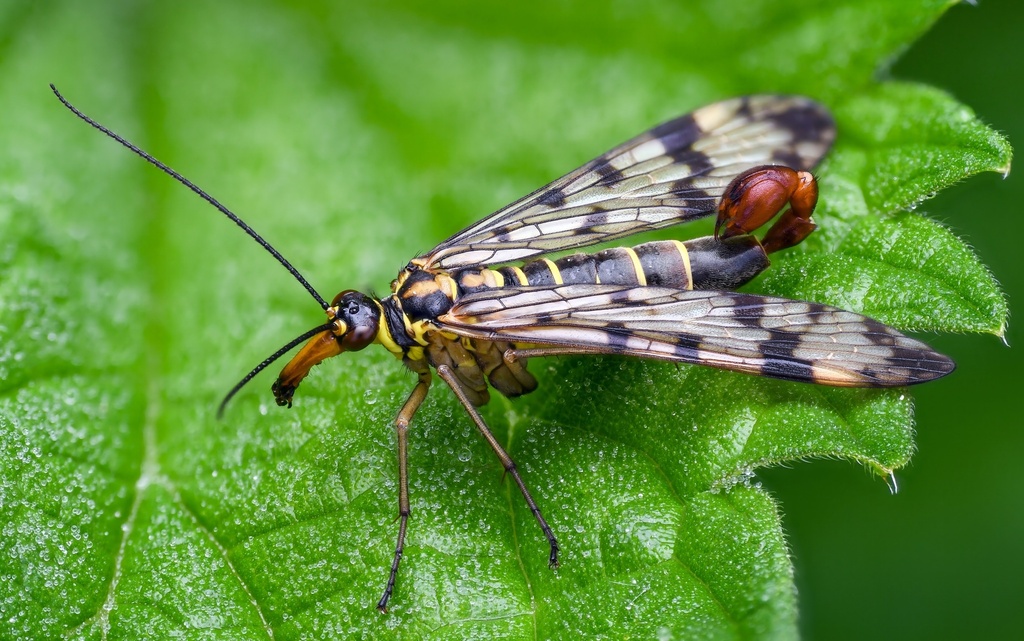
Meadow Scorpionfly
Panorpa vulgaris
Panorpa vulgaris, also known by its common name meadow scorpionfly is a species from the genus Panorpa. The species was first described in 1845.
From the article Panorpa vulgaris on Wikipedia (CC BY-SA), quoted section by section
Range & habitat
P. vulgaris are commonly distributed throughout central Europe. They prefer dry and warm habitats that provide shade at high temperatures and are most abundant along the edges of low-lying shrubs. Despite their environmental preference, smaller populations do occur in forested areas that experience moist and cool conditions.
Wikipedia: “Distribution and habitat”
What it does
The meadow scorpionfly develops two separate generations per year, one generation that undergoes overwintering in early spring and another that experiences a diapause free-developing stage in the summer. During their lifecycle individuals can survive up to two months.]
Wikipedia: “Life cycle”
At the table
Individuals of both sexes are capable of foraging for food, they are heavily influenced by their environments. Intraspecific and interspecific competition is common between and within both sexes when food sources are limited. Both larvae and adults typically feed on dead arthropods, and adults are often kleptoparasites of spider webs. Adults are generally capable of avoiding spiderwebs when feeding on prey. Males will use their genital claspers and females will use their abdomens to remove prey from spider webs and will even strike spiders who attempt to interfere with them.
Wikipedia: “Nutrition”
Listen
Looking for field recordings…
Where it lives
Recorded sightings
—
geo-referenced records in GBIF, from museums, herbaria and field observers.
Drag the globe to turn it. Dots are where records exist, not a range map; darker means more records.
In the stacks
Searching the stacks…
Every page naming Panorpa vulgaris in the Biodiversity Heritage Library →
This page is assembled live from iNaturalist, GBIF, Wikipedia, the Source Library and the Internet Archive. It is not yet part of the hand-edited codex. iNaturalist taxon 123579.