- Animals
- ›Arthropods
- ›Hexapods
- ›Insects
- ›Winged and Once-winged Insects
- ›Ants, Bees, Wasps, and Sawflies
- ›Narrow-waisted Wasps, Ants, and Bees
- ›Ants, Bees, and Stinging Wasps
- ›Bees and Apoid Wasps
- ›Bees
- ›Honey Bees, Bumble Bees, and Allies
- ›Apine Bees
- ›Bombini
- ›Bombus
- ›Cullumanobombus
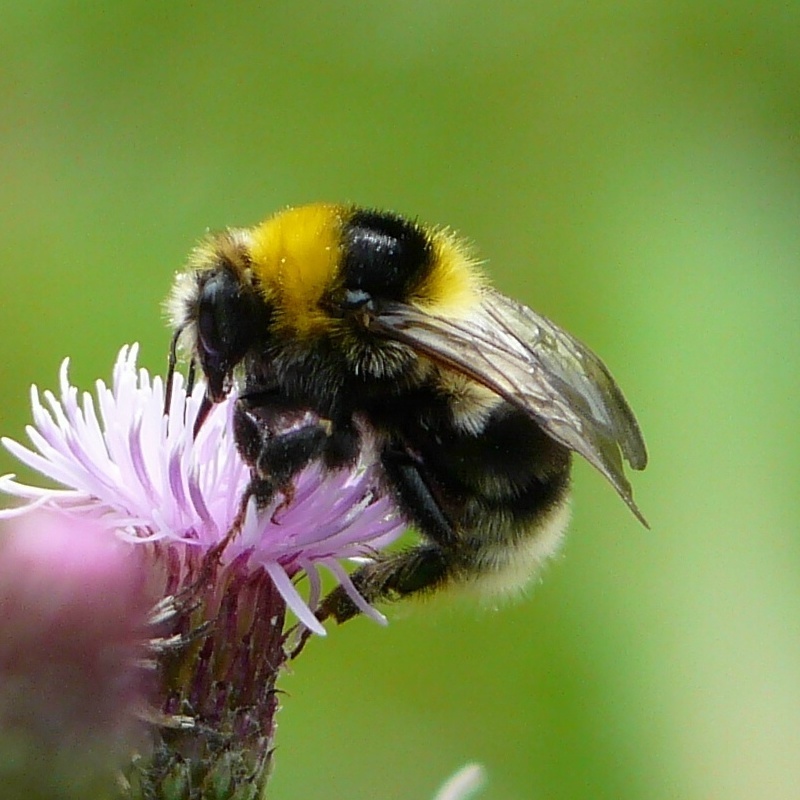
Semenov's Bumble Bee
Bombus semenoviellus
Bombus semenoviellus is a species of insect belonging to the family Apidae.
It is native to Europe.
From the article Bombus semenoviellus on Wikipedia (CC BY-SA), quoted section by section
Range & habitat
The species has been invading towards west in recent years. The westernmost location so far is in Lower Saxony; from here eastwards to Tuva, east of this only one report from Panfilov et al. 1961 from Sakha / Yakutia; northwards to southern Norway (first discovered here in 2013 in Hvaler; no evidence from Sweden), in Finland to the Arctic Circle, in Russia to Karelia, Arkhangelsk, Komi and Perm; south to Bavaria, Northern Austria, Slovakia, Ukraine and Orenburg. In Germany, the first record for Central Europe was made in Schleswig-Holstein in 1998 (van der Smissen & Rasmont 2000), in the following years the species was also reported from Brandenburg, Saxony, Thuringia, Saxony-Anhalt, Bavaria, Mecklenburg-Western Pomerania and Lower Saxony. In Austria, a find from 2009 from the Waldviertel in Lower Austria is known to date (Streinzer, 2010).
Wikipedia: “Range”
What it does
Occurs from late April to late August. Overwintered females appear from the end of April, young males in July. This is a polylectic species. During the summer colony development phase, Asteraceae are preferred as fodder plants. Nests underground in abandoned mouse cauldrons. Pollenstorer. The colonies are not very strong in individuals.
Wikipedia: “Ecology”
In human culture
Named after the Russian entomologist Andrey Petrovich Semyonov Tyan-Shansky (1866-?), Who collected parts of the type series.
Wikipedia: “Etymology”
Listen
Looking for field recordings…
Where it lives
Recorded sightings
—
geo-referenced records in GBIF, from museums, herbaria and field observers.
Drag the globe to turn it. Dots are where records exist, not a range map; darker means more records.
In the stacks
Searching the stacks…
Every page naming Bombus semenoviellus in the Biodiversity Heritage Library →
This page is assembled live from iNaturalist, GBIF, Wikipedia, the Source Library and the Internet Archive. It is not yet part of the hand-edited codex. iNaturalist taxon 124194.