- Fungi Including Lichens
- ›Basidiomycete Fungi
- ›Higher Basidiomycetes
- ›Mushrooms, Bracket Fungi, Puffballs, and Allies
- ›Agaricomycetidae
- ›boletes and allies
- ›boletes
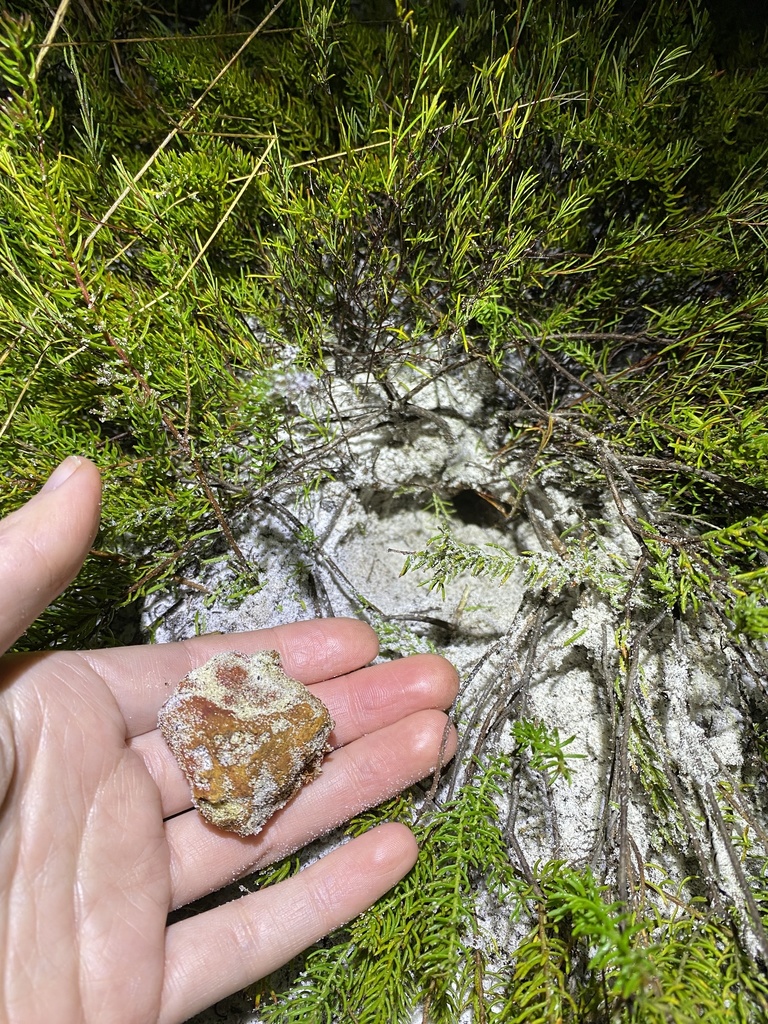
Solioccasus
Solioccasus is a fungal genus in the family Boletaceae. It is a monotypic genus, containing the single Australasian species Solioccasus polychromus. This is a truffle-like species with a roughly spherical to lobed fruitbody, which measures up to 4.5 cm (1.8 in) in diameter. It is initially dull white, but becomes yellow to pink to orange to red in maturity, making it one of the most brightly colored hypogeous species known.
Solioccasus polychromus is found in northern Australia, including Queensland and the Northern Territory, and Papua New Guinea. The fruitbodies grow in the ground or partially emergent in lowland tropical and subtropical forests, often in sandy soil. Plant associates include Allocasuarina littoralis, Corymbia dichromophloia, C. erythrophloia, C. polycarpa, Eucalyptus pellita, E. pilularis, E. racemosa, E. tetrodonta, and species from the genera Leptospermum, Lophostemon, and Melaleuca.
1 branches of this genus, most-observed first
See this branch on the Wheel of Life →
Where it lives
Recorded sightings
—
geo-referenced records in GBIF, from museums, herbaria and field observers.
Drag the globe to turn it. Dots are where records exist, not a range map; darker means more records.
In the stacks
Searching the stacks…
Every page naming Solioccasus in the Biodiversity Heritage Library →
This page is assembled live from iNaturalist, GBIF, Wikipedia, the Source Library and the Internet Archive. It is not yet part of the hand-edited codex. iNaturalist taxon 1243664.