Ammonitina
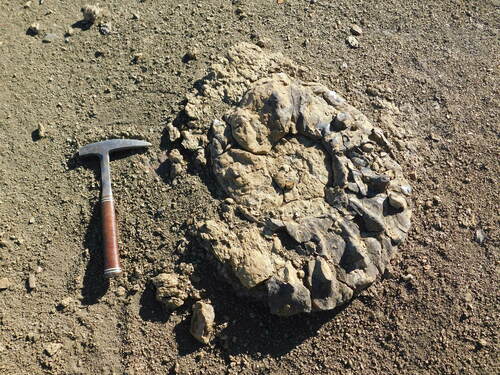
Ammonitina comprises a diverse suborder of ammonite cephalopods that lived during the Jurassic and Cretaceous periods of the Mesozoic Era. They are excellent index fossils, and it is often possible to link the rock layer in which they are found to specific geological time periods.
The shells of Ammonitina are typically planospiral, coiled in a single plane and symmetrical from side to side. They come in various forms, including evolute shells where all whorls are exposed, and strongly involute shells with only the outer whorl visible. Shells may be heavily ribbed, with some featuring nodes and spines, while others are completely smooth. Some shells have broad, rounded venters (the outer rim), while others have a sharp, keel-like venter. Sutures are generally ammonitic, characterized by complex saddle and lobe patterns. However, in some derived forms, the suture pattern becomes simplified, appearing ceratitic or even goniatitic.

Where it lives
Recorded sightings
—
geo-referenced records in GBIF, from museums, herbaria and field observers.
Drag the globe to turn it. Dots are where records exist, not a range map; darker means more records.
In the stacks
Searching the stacks…
Every page naming Ammonitina in the Biodiversity Heritage Library →
This page is assembled live from iNaturalist, GBIF, Wikipedia, the Source Library and the Internet Archive. It is not yet part of the hand-edited codex. iNaturalist taxon 1255730.