- Plants
- ›Vascular Plants
- ›flowering plants
- ›Dicots
- ›Heathers, Balsams, Primroses, and Allies
- ›phlox family
- ›Phlox
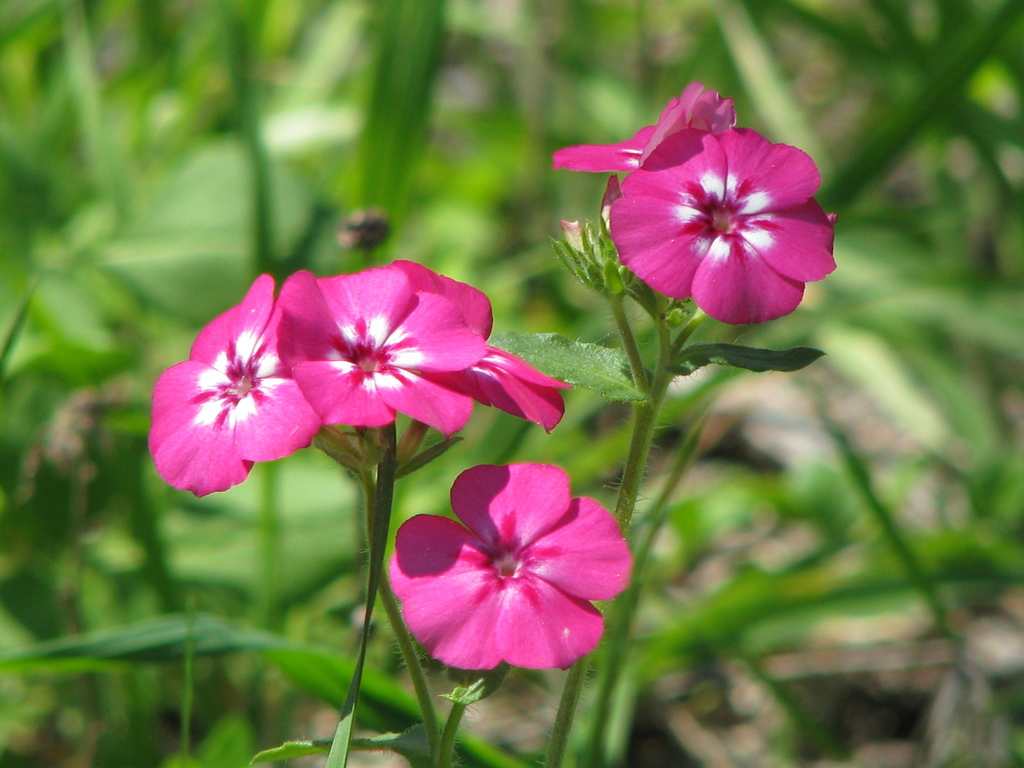
Drummond's phlox
Phlox drummondii
Phlox drummondii (commonly annual phlox or Drummond's phlox) is a flowering plant in the genus Phlox of the family Polemoniaceae. Native to Texas, it is also widely distributed in the southeastern United States, especially along public highways. P. drummondii is often used as an ornamental plant. The flowers have a wide range of colours "from white and cream through pinks, lilacs, roses, purples and reds, to almost black".
Phlox drummondii is named after Scottish botanist Thomas Drummond, who sent it and a variety of other plant samples back to Britain following his 1833–1835 expedition to Texas.
From the article Phlox drummondii on Wikipedia (CC BY-SA), quoted section by section
Description
It is an annual, growing from seed each year. The branches have sharp, pointed, lengthy, ciliated leaves with rounded flowers. The flowers are single or double, with lightly scented, flat, star-shaped petals. The flowers mature to 2.5 cm (1 in) in diameter. It tolerates cold weather well, but requires plentiful watering and dislikes drought, wind and heat. The plant attracts hummingbirds and butterflies, which includes its main pollinator responsible for approximately 80% of pollinator visits, Battus philenor.
== References ==
Where it lives
Recorded sightings
—
geo-referenced records in GBIF, from museums, herbaria and field observers.
Drag the globe to turn it. Dots are where records exist, not a range map; darker means more records.
In the stacks
Searching the stacks…
Every page naming Phlox drummondii in the Biodiversity Heritage Library →
This page is assembled live from iNaturalist, GBIF, Wikipedia, the Source Library and the Internet Archive. It is not yet part of the hand-edited codex. iNaturalist taxon 126177.