- Animals
- ›Arthropods
- ›Hexapods
- ›Insects
- ›Winged and Once-winged Insects
- ›True Bugs, Hoppers, Aphids, and allies
- ›Plant-parasitic Hemipterans
- ›Scale Insects
- ›ground pearls
- ›Porphyrophora
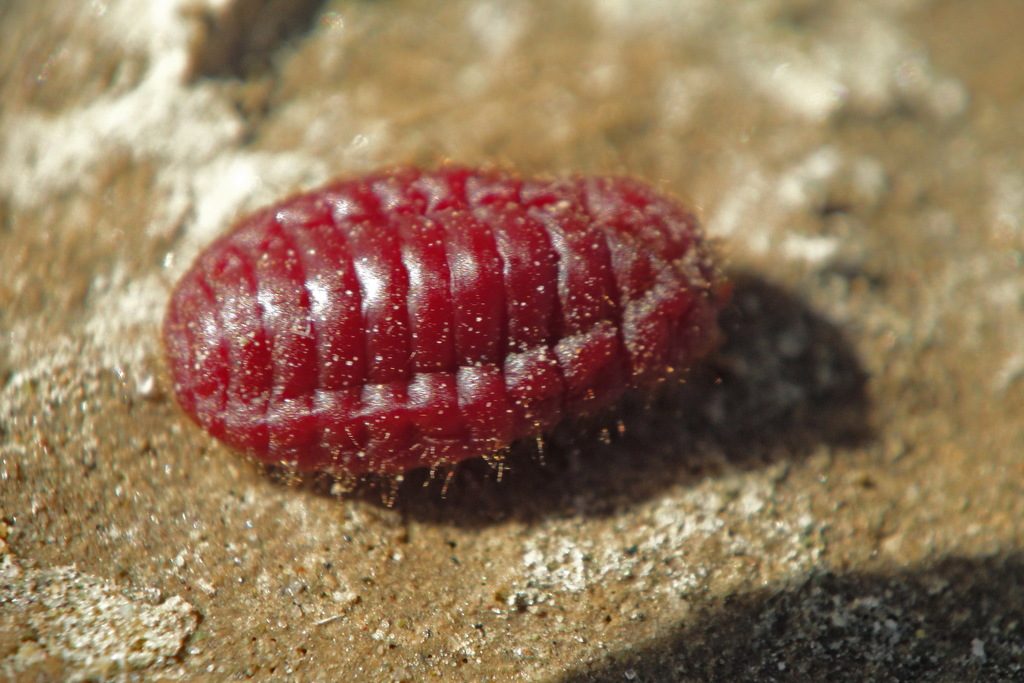
Ararat Scale
Porphyrophora hamelii
The Armenian cochineal (Porphyrophora hamelii), also known as the Ararat cochineal or Ararat scale, is a scale insect indigenous to the Ararat plain and Aras (Araks) River valley in the Armenian Highlands, including eastern Turkey. It was historically used to produce an eponymous crimson carmine dyestuff known in Armenia as vordan karmir (Armenian: որդան կարմիր, literally "worm's red") and in Persia as kirmiz. The species is critically endangered within Armenia.
P. hamelii is in a different taxonomic family from the cochineal found in the Americas. Both insects produce red dyestuffs that are also commonly called cochineal.
From the article Armenian cochineal on Wikipedia (CC BY-SA), quoted section by section
Range & habitat
The red dye-producing insects of the Ararat plain were once plentiful: a 19th-century French traveler wrote that shepherds' flocks, when led to drink from the Araxes (Araks) River, would appear bloody from the insects. In the mid-20th century the extent of occurrence in Armenia was 100 km2 (39 sq mi) with a recorded distribution that included the Ararat and Armavir provinces in Armenia as well as the Turkish, Iranian, and Russian Caucasus, but by the 1990s the extent of occurrence in Armenia had shrunk to about 20 km2 (7.7 sq mi), mostly in Armavir Province. During the Soviet period, desalination of the Armenian salt marshes to create "economic and agricultural regions", and the creation of lakes for fisheries, "severely restricted the [habitable] area for the insects and [endangered their] existence."
The population in Armenia resides almost entirely in the Vordan Karmir State Reservation, a salt meadow habitat of 198.33 ha (490.1 acres) northwest of Arazap village and 21.52 ha (53.2 acres) in the north of Jrarat village established in 1987 near the Araks River border with Turkey, plus a site southeast of Ararat village and a few patches of several hectares elsewhere. …
Wikipedia: “Habitat and conservation”
In human culture
P. hamelii is one of the ancient natural sources of red dye in the Middle East and Europe, along with the insect dyes kermes (from Kermes vermilio and related species), lac (from Kerria lacca and related species), and carmine from other Porphyrophora species such as the Polish cochineal (P. polonica), and the plant dye madder (from Rubia tinctorum and related species). It is possible that Armenian cochineal dye was in use as early as 714 BC, when the Neo-Assyrian king Sargon II was recorded as seizing red textiles as spoils of war from the kingdoms of Urartu (the geographic predecessor of Armenia) and Kilhu. The Roman-era physician and pharmacologist Dioscorides, writing in the 1st century AD, noted that the best kokkos baphike, the kermes shrub and its "grain" (kermes insect) that some ancient writers likely confused with P. hamelii, came from Galatia and Armenia. In the Early Middle Ages the Armenian historians Ghazar Parpetsi and Movses Khorenatsi wrote specifically of a worm-produced dyestuff from the Ararat region. During the Middle Ages the Armenian cochineal dyestuff vordan karmir, also known in Persia as kirmiz, was widely celebrated in the Near East. Kirmiz is not to be confused with dyer's kermes, which was derived from another insect. …
Wikipedia: “History and art”
Listen
Looking for field recordings…
Where it lives
Recorded sightings
—
geo-referenced records in GBIF, from museums, herbaria and field observers.
Drag the globe to turn it. Dots are where records exist, not a range map; darker means more records.
In the stacks
Searching the stacks…
Every page naming Porphyrophora hamelii in the Biodiversity Heritage Library →
This page is assembled live from iNaturalist, GBIF, Wikipedia, the Source Library and the Internet Archive. It is not yet part of the hand-edited codex. iNaturalist taxon 1263363.