- Plants
- ›Vascular Plants
- ›flowering plants
- ›Dicots
- ›Woodsorrels, Quandongs, and Allies
- ›Woodsorrel Family
- ›Oxalis
- ›Oxalis
- ›Palmatifoliae
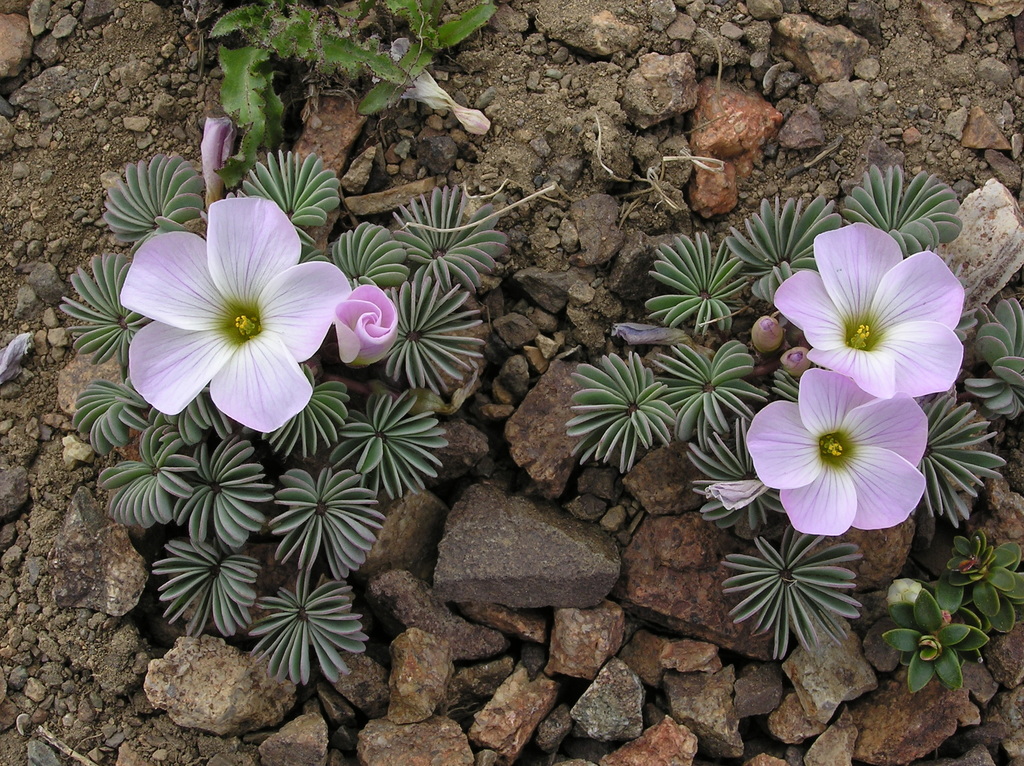
Silver Shamrock
Oxalis adenophylla
Oxalis adenophylla, commonly known as Chilean oxalis or silver shamrock (among other common names), is an Argentinian and Chilean alpine plant. It does well in far-north locations such as Sweden, Norway and Nova Scotia (Canada), as well as in purely temperate regions. Its cold-hardiness comes from the bulb's adaptation to freezing during dormancy. It is, however, susceptible to rot in the winter in temperate zones, a problem not present where ground freezes in winter. It is...
From the article Oxalis adenophylla on Wikipedia (CC BY-SA), quoted section by section
How it is grown
It is hardy in USDA hardiness zones 4–10. Outside of its native location, it is often used for rock gardens. It can also do well as a houseplant. In the UK this plant has received the Royal Horticultural Society's Award of Garden Merit. It does well in far-north locations such as Sweden, Norway and Nova Scotia (Canada), as well as in purely temperate regions. Its cold-hardiness comes from the bulb's adaptation to freezing during dormancy. It is, however, susceptible to rot in the winter in temperate zones, a problem not present where ground freezes in winter. It is tolerant of some shade, but will bloom most with full sunlight.
Wikipedia: “Cultivation”
Where it lives
Recorded sightings
—
geo-referenced records in GBIF, from museums, herbaria and field observers.
Drag the globe to turn it. Dots are where records exist, not a range map; darker means more records.
In the stacks
Searching the stacks…
Every page naming Oxalis adenophylla in the Biodiversity Heritage Library →
This page is assembled live from iNaturalist, GBIF, Wikipedia, the Source Library and the Internet Archive. It is not yet part of the hand-edited codex. iNaturalist taxon 126496.