- Plants
- ›Vascular Plants
- ›flowering plants
- ›Dicots
- ›Buttercups, Poppies, and Allies
- ›buttercup family
- ›Anemones, buttercups, larkspurs and allies
- ›hellebores and Lenten roses
- ›Helleborus
- ›Helleborastrum
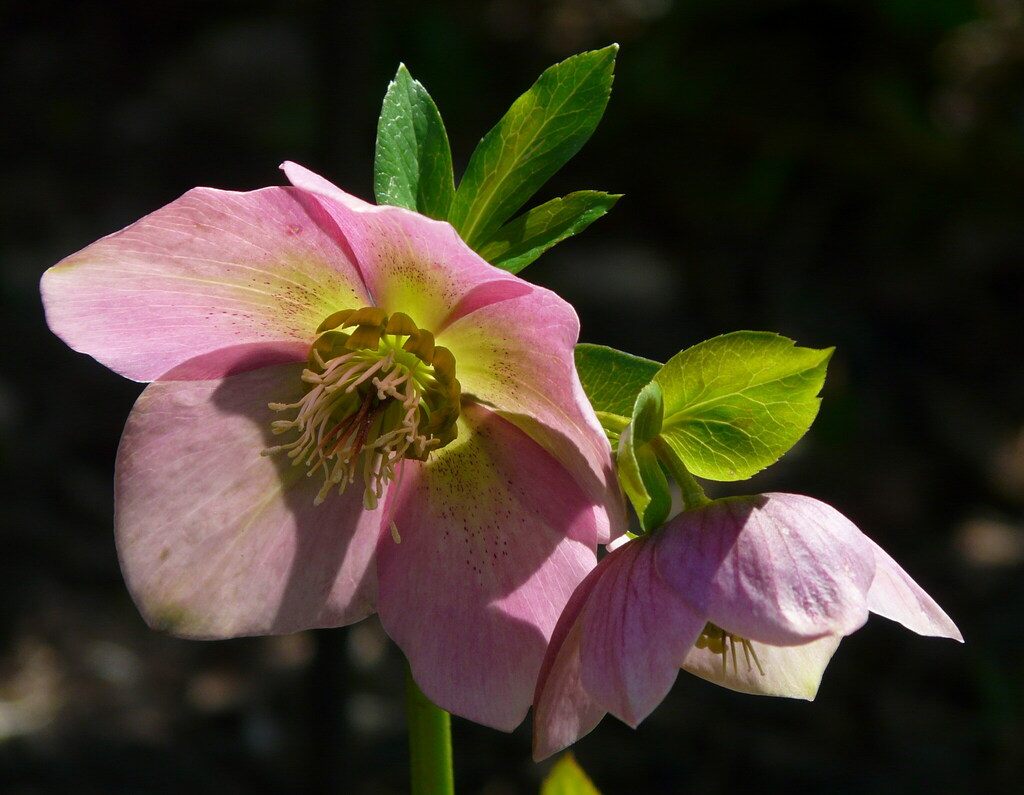
Lenten-rose
Helleborus orientalis
Helleborus orientalis, known as the lenten rose, is a perennial flowering plant in the buttercup family, Ranunculaceae, native to Greece and Turkey. Jean-Baptiste Lamarck described the species in 1789, giving it its current name of Helleborus orientalis "Hellébore du Levant". The species name is derived from the Latin oriens "the east". The common name is from their flowering during Lent. Within the genus it has been classified in the section Helleborastrum, and is closely related to...
From the article Helleborus orientalis on Wikipedia (CC BY-SA), quoted section by section
Description
This perennial reaches 28–45 cm (11–18 in) tall, with glossy green palmate leaves composed of 7–9 leaflets with serrated leaf margins. Leathery in texture, the leaves are evergreen. The cup-shaped pendent flowers appear in late winter and spring, arising in groups of 1–4 on the ends of thick stems rising above the foliage. They have yellow stamens. All parts of the Lenten rose are poisonous. Sap coming into contact with the skin may cause temporary irritation, while ingestion of large quantities can cause burning of mouth and throat, vomiting, abdominal cramping, and diarrhea.
How it is grown
The Lenten rose is suited to shaded or part-shaded positions, in soil rich in humus. Cultivated varieties have a wide array of colours. It is hardy in USDA hardiness zones 4–9 (down to −15 to −20 °C (5 to −4 °F)). German planters began breeding H. orientalis in the mid-19th century, enhanced by new material from the Caucasus via St Petersburg Botanic Garden. New varieties were soon introduced to the United Kingdom. Interest peaked in the late 19th century, but the genus had fallen out of favour by the 1920s. The Lenten rose was revived in horticulture in the 1960s by Helen Ballard, who bred many new varieties. Cultivated varieties can have white, green, pink to maroon and purple or spotted flowers.
Wikipedia: “Cultivation”
Where it lives
Recorded sightings
—
geo-referenced records in GBIF, from museums, herbaria and field observers.
Drag the globe to turn it. Dots are where records exist, not a range map; darker means more records.
In the stacks
Searching the stacks…
Every page naming Helleborus orientalis in the Biodiversity Heritage Library →
This page is assembled live from iNaturalist, GBIF, Wikipedia, the Source Library and the Internet Archive. It is not yet part of the hand-edited codex. iNaturalist taxon 126550.