- Plants
- ›Vascular Plants
- ›flowering plants
- ›Dicots
- ›Sunflowers, Bellflowers, Fanflowers, and Allies
- ›Sunflowers, Daisies, Asters, and Allies
- ›Vernonioideae
- ›Vernonieae
- ›Elephantopinae
- ›Elephantopus
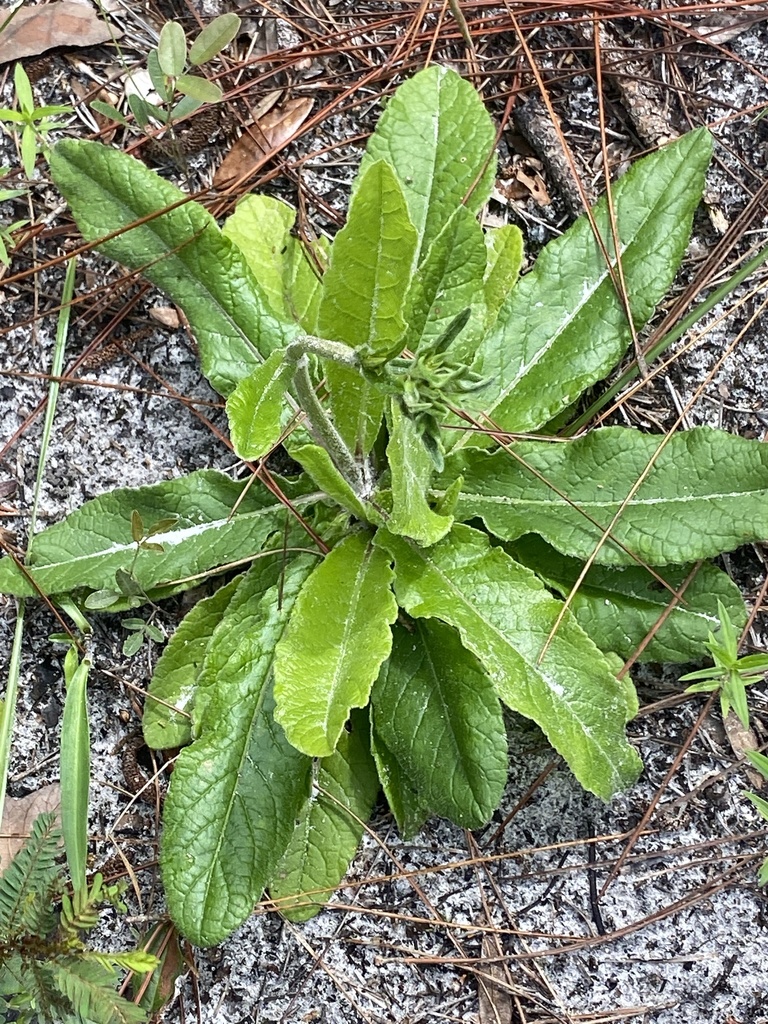
Tall Elephant's-foot
Elephantopus elatus
Elephantopus elatus, common name tall elephantsfoot, is a North American species of flowering plant in the family Asteraceae. It is native to the southeastern United States from eastern Louisiana to South Carolina.
From the article Elephantopus elatus on Wikipedia (CC BY-SA), quoted section by section
Description
Elephantopus elatus is a perennial herb up to 70 cm (28 in) tall. Leaves are oblanceolate, up to 20 cm (7.9 in) long, darker on the upper side than they are on the lower side. The plant produces numerous small flower heads in a tight cluster, each head generally containing only 4-5 florets. This species flowers from August to November.
Range & habitat
The species' range extends from South Carolina to Florida, stretching westward to Louisiana. It has been observed in habitats such as pine flatwoods, sandhills, oak hammocks, and other well-drained environments. Within the southern region of Florida, Elephantopus elatus is primarily to dry mesic communities, which occur on poorly drained Spodosols. This species possesses the ability to persevere through repeated burns.
Wikipedia: “Distribution and habitat”
What it does
Elephantopus elatus is insect pollinated and is recorded to have been visited in northern Florida by Heriades variolosa/leavitti, Megachile albitarsis, and Megachile petulans.
Wikipedia: “Ecology”
In human culture
The genus name Elephantopus comes from the Greek words "elephantos" (elephant) and "pous" (foot). The term likely refers to the large basal leaves of some members of the genus.
Wikipedia: “Etymology”
Where it lives
Recorded sightings
—
geo-referenced records in GBIF, from museums, herbaria and field observers.
Drag the globe to turn it. Dots are where records exist, not a range map; darker means more records.
In the stacks
Searching the stacks…
Every page naming Elephantopus elatus in the Biodiversity Heritage Library →
This page is assembled live from iNaturalist, GBIF, Wikipedia, the Source Library and the Internet Archive. It is not yet part of the hand-edited codex. iNaturalist taxon 126570.