- Plants
- ›Vascular Plants
- ›flowering plants
- ›Dicots
- ›Mallows, Rock Roses, and Allies
- ›Mallow and Hibiscus Family
- ›Malvoideae
- ›Gossypieae
- ›Gossypium
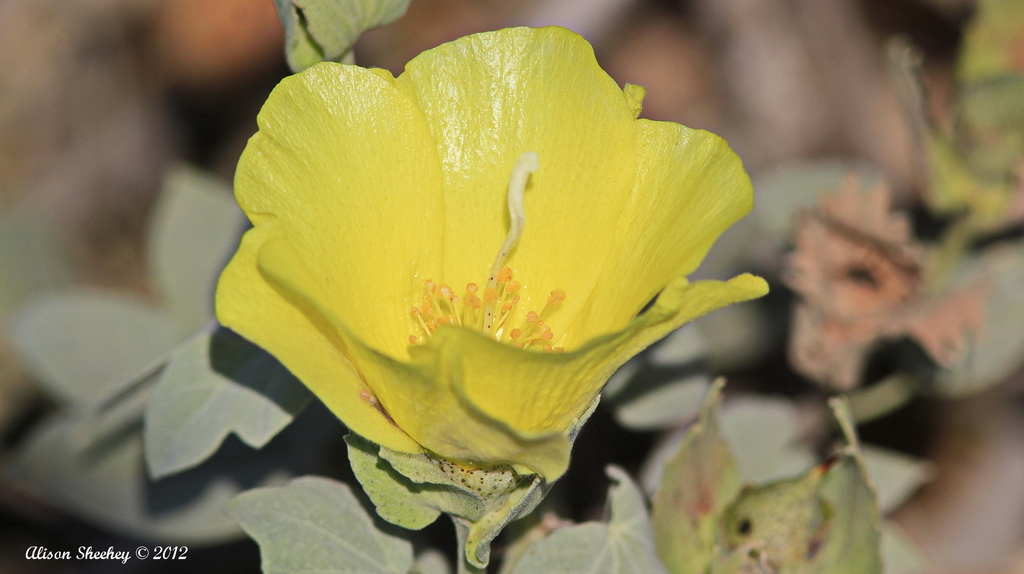
Ma'o
Gossypium tomentosum
Gossypium tomentosum, commonly known as Maʻo or Hawaiian cotton, is a species of cotton plant that is endemic to the Hawaiian Islands. It inhabits low shrublands at elevations from sea level to 120 m (390 ft). Maʻo is a shrub that reaches a height of 1.5–5 ft (0.46–1.52 m) and a diameter of 5–10 ft (1.5–3.0 m). The seed hairs (lint) are short and reddish brown, unsuitable for spinning or twisting into thread.
From the article Gossypium tomentosum on Wikipedia (CC BY-SA), quoted section by section
Description
Maʻo is a shrub that reaches a height of 1.5–5 ft (0.46–1.52 m) and a diameter of 5–10 ft (1.5–3.0 m). The seed hairs (lint) are short and reddish brown, unsuitable for spinning or twisting into thread. Its flowers are bright yellow and have from 3-5 lobes that bloom in late summer to winter.
Range & habitat
Its ancestor may have come to the islands from the Americas as a seed on the wind or in the droppings of a bird, or as part of floating debris.
Wikipedia: “Distribution”
In human culture
Native Hawaiians use maʻo flowers to make a yellow dye. They were also used to aid childbirth and mitigate stomach aches.
Wikipedia: “Cultural significance”
Where it lives
Recorded sightings
—
geo-referenced records in GBIF, from museums, herbaria and field observers.
Drag the globe to turn it. Dots are where records exist, not a range map; darker means more records.
In the stacks
Searching the stacks…
Every page naming Gossypium tomentosum in the Biodiversity Heritage Library →
This page is assembled live from iNaturalist, GBIF, Wikipedia, the Source Library and the Internet Archive. It is not yet part of the hand-edited codex. iNaturalist taxon 126842.