- Plants
- ›Vascular Plants
- ›flowering plants
- ›monocots
- ›grasses, sedges, cattails, and allies
- ›grasses
- ›Pooideae
- ›Wheats, ryes, barleys and relatives
- ›barleys, ryes, and relatives
- ›Elymus
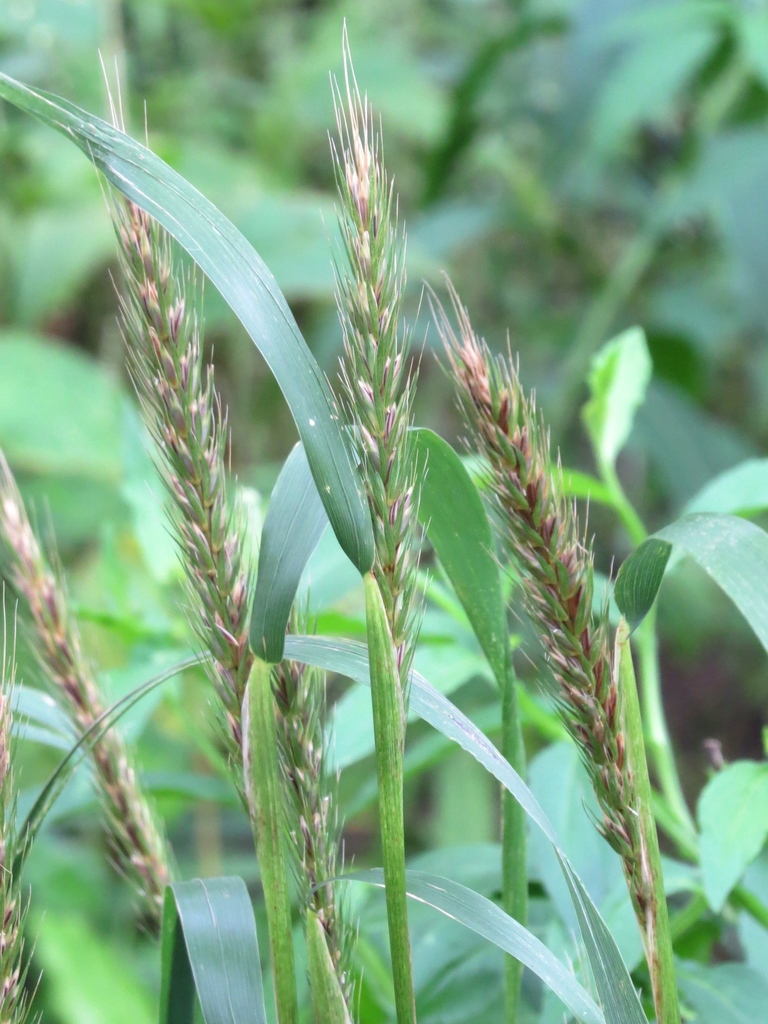
Virginia wildrye
Elymus virginicus
Elymus virginicus (common names Virginia wildrye, common eastern wild rye, terrell grass) is a perennial bunchgrass native to the eastern United States. Virginia wild rye is one of the few cool season native grasses found in the east Texas area. It is extremely palatable to livestock and will decrease without proper grazing management. It spreads via seed and tillering. It can be confused with Canadian wild rye which is a more robust plant with longer awns. It should be cut early in the season when used for hay to avoid ergot contamination. Northern Missouri Germplasm Virginia wild rye was released in 1999 by the Missouri Plant Material Center for use in northern Missouri.
Virginia wildrye, when sown in combination with Prairie cordgrass, has shown promise in competing with the invasive Japanese Knotweed.
From the article Elymus virginicus on Wikipedia (CC BY-SA), quoted section by section
Description
Cool season Perennial Bunch grass Variable color, green - silver blue 2 – 4 feet tall Seed head has dense, medium length awns Seed head 2 - 6 inches in length Uses Pasture and hay Restoration Erosion control Wildlife habitat Buffer strips Key characteristics Seed head remains straight at maturity Short, membranous, rigid ligule Densely awned, wheat like head No hair on stems or leaves Color variable, green waxy, blue-green or silver Flowers May - July
Range & habitat
Virginia wildrye is found throughout the eastern 2/3rds of the United States and all of the southern Canadian provinces. It is typically found in moister sites than Canadian wildrye, and will tolerate more shading. It prefers heavy, fertile soils, but is extremely adaptable.
== References ==
Wikipedia: “Distribution”
Where it lives
Recorded sightings
—
geo-referenced records in GBIF, from museums, herbaria and field observers.
Drag the globe to turn it. Dots are where records exist, not a range map; darker means more records.
In the stacks
Searching the stacks…
Every page naming Elymus virginicus in the Biodiversity Heritage Library →
This page is assembled live from iNaturalist, GBIF, Wikipedia, the Source Library and the Internet Archive. It is not yet part of the hand-edited codex. iNaturalist taxon 126873.