- Plants
- ›Vascular Plants
- ›flowering plants
- ›Dicots
- ›Mints, Plantains, Olives, and Allies
- ›Mint Family
- ›Nepetoideae
- ›Mentheae
- ›Melissas and sages
- ›Salvia
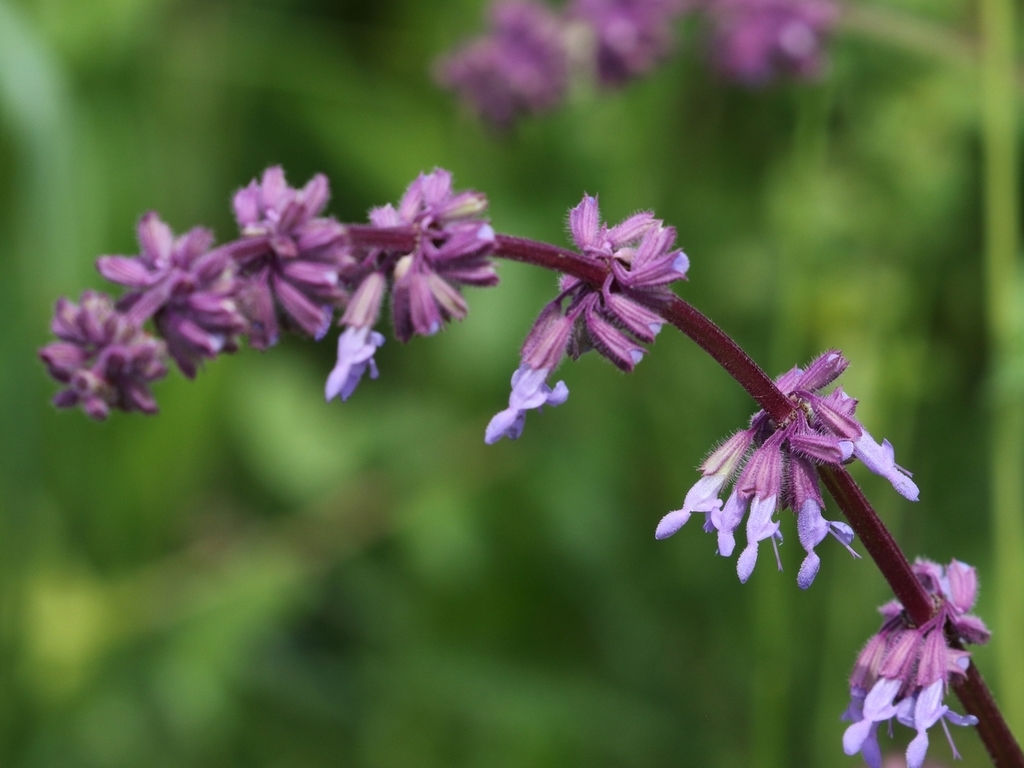
Whorled Clary
Salvia verticillata
Salvia verticillata, the lilac sage or whorled clary, is a herbaceous perennial native to a wide area ranging from central Europe to western Asia, and naturalized in northern Europe and North America. It was first described by Carl Linnaeus in 1753.
Salvia verticillata has a leafy base of mid-green leaves covered with hairs, putting up leaf-covered stems that carry 3 feet (0.91 m) inflorescences. The tiny lavender flowers grow tightly packed in whorls, with tiny lime-green and purple calyces. The specific epithet verticillata refers to the whorls that grow in verticils. A cultivar introduced in the 1990s, 'Purple Rain', is much more showy and long-blooming, growing about 2 feet (0.61 m) tall.
Where it lives
Recorded sightings
—
geo-referenced records in GBIF, from museums, herbaria and field observers.
Drag the globe to turn it. Dots are where records exist, not a range map; darker means more records.
In the stacks
Searching the stacks…
Every page naming Salvia verticillata in the Biodiversity Heritage Library →
This page is assembled live from iNaturalist, GBIF, Wikipedia, the Source Library and the Internet Archive. It is not yet part of the hand-edited codex. iNaturalist taxon 128689.