- Plants
- ›Vascular Plants
- ›flowering plants
- ›Dicots
- ›Soapberries, Cashews, Mahoganies, and Allies
- ›Cashew Family
- ›cashews, sumacs, and allies
- ›Rhus
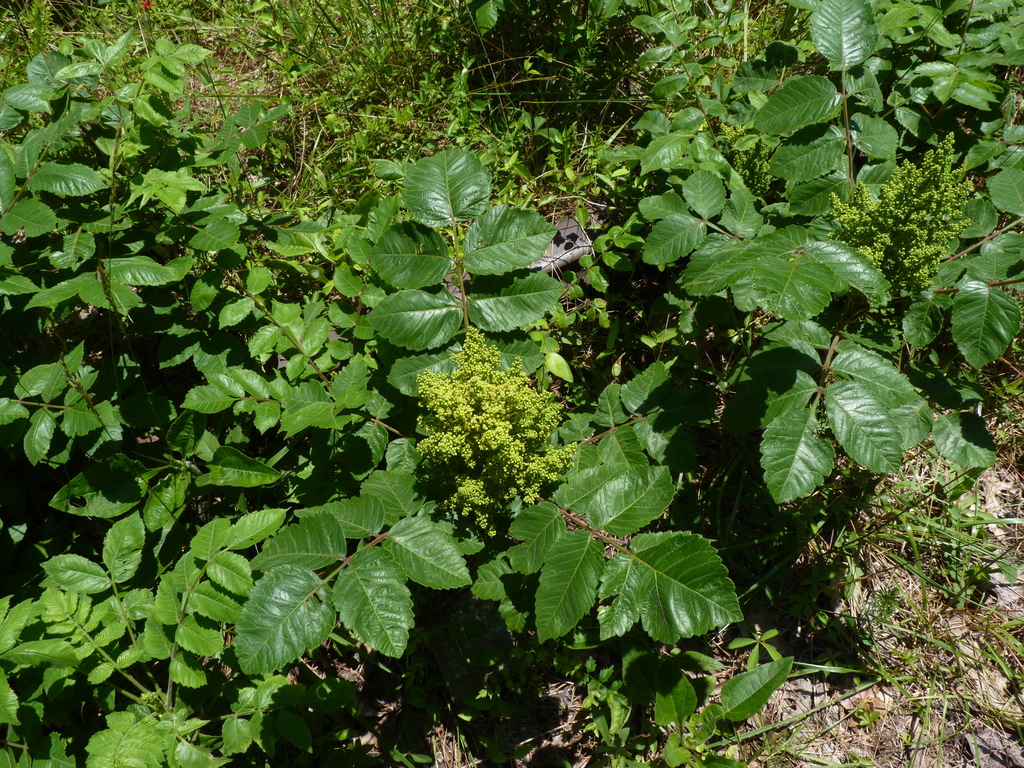
Michaux's sumac
Rhus michauxii
Rhus michauxii is a rare species of flowering plant in the cashew family known by the common names false poison sumac and Michaux's sumac. It is endemic to the southeastern United States, where it can be found in the states of Virginia, North Carolina, South Carolina and Georgia. It is threatened by the loss and degradation of its habitat and by barriers to reproduction. It is a federally listed endangered species of the United States.
This plant is a small shrub growing 30 to 60 centimetres (12 to 24 in) tall. It is very hairy in texture. The small size and hairiness distinguish the plant from other sumacs. The long leaves are each made up of several pairs of toothed leaflets. The plant is dioecious with male and female reproductive parts occurring on separate plants. The plant produces an erect inflorescence of white or greenish yellow flowers in June that develop into red drupes in female plants in late summer to early fall. This plant was first described as Rhus pumila by André Michaux in 1803, and it was renamed for Michaux in 1895.
Where it lives
Recorded sightings
—
geo-referenced records in GBIF, from museums, herbaria and field observers.
Drag the globe to turn it. Dots are where records exist, not a range map; darker means more records.
In the stacks
Searching the stacks…
Every page naming Rhus michauxii in the Biodiversity Heritage Library →
This page is assembled live from iNaturalist, GBIF, Wikipedia, the Source Library and the Internet Archive. It is not yet part of the hand-edited codex. iNaturalist taxon 129622.