- Animals
- ›Arthropods
- ›Crustaceans
- ›Typical Crustaceans
- ›Malacostracans
- ›Decapods, Isopods, and allies
- ›Decapods and Krill
- ›Decapods
- ›Crabs, Lobsters, Shrimps, and Allies
- ›Anomurans
- ›Squat Lobsters and Porcelain Crabs
- ›Porcelain Crabs
- ›Porcellana
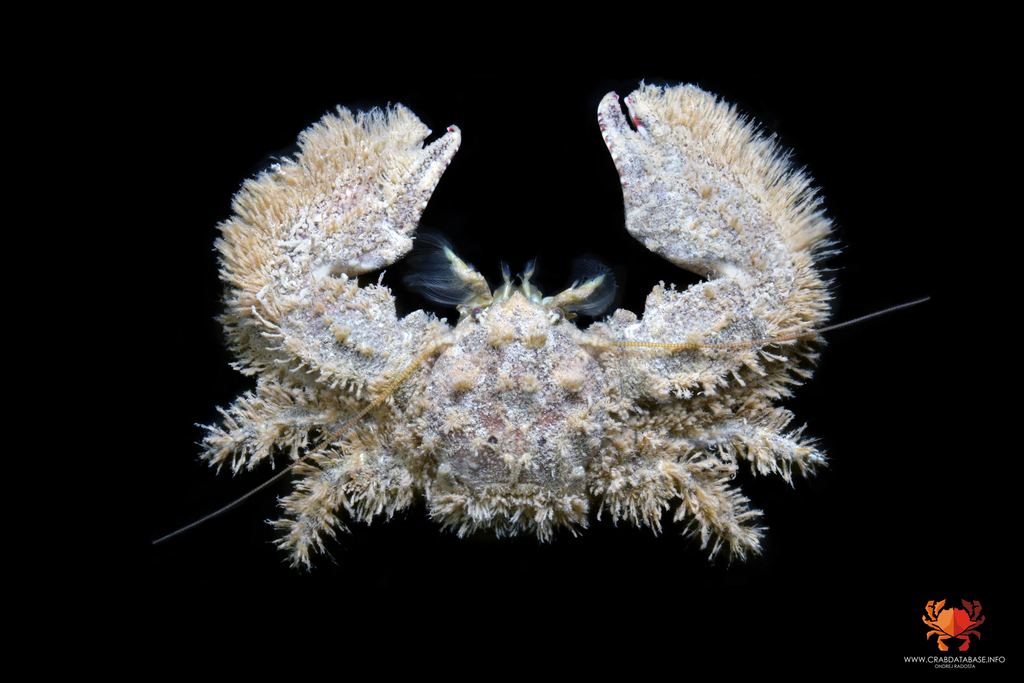
Hairy Porcelain Crab
Porcellana platycheles
Porcellana platycheles, sometimes called the broad-clawed porcelain crab, is a species of porcelain crab. It may reach a size of 15 millimetres (0.59 in), and is found in the Eastern North Atlantic Ocean and Mediterranean Sea. It is a filter-feeding crab and it feeds on carrion and other organic debris.
From the article Porcellana platycheles on Wikipedia (CC BY-SA), quoted section by section
Description
Porcellana platycheles may attain a length of 15 millimetres (0.59 in). This species has wide, flattened front claws and two long antennae. It is greenish-brown on its back while the belly is off white. It has a small abdomen which it tucks under its carapace. The last pair of legs are highly reduced and are normally hidden making the crab appear to have only three pairs of walking legs. The body is flattened and the legs end in sharp claws, which are used to grip the underside of the rocks they live under. Porcelain crabs are more closely related to lobsters and squat lobsters than "true" crabs, a relationship hinted at by their long antennae.
Range & habitat
Porcellana platycheles is distributed from Norway to the Canary Islands and throughout the Mediterranean. In Britain it is widely distributed around all coastlines from Shetland to Scilly.
Wikipedia: “Distribution”
Where it lives
Recorded sightings
—
geo-referenced records in GBIF, from museums, herbaria and field observers.
Drag the globe to turn it. Dots are where records exist, not a range map; darker means more records.
In the stacks
Searching the stacks…
Every page naming Porcellana platycheles in the Biodiversity Heritage Library →
This page is assembled live from iNaturalist, GBIF, Wikipedia, the Source Library and the Internet Archive. It is not yet part of the hand-edited codex. iNaturalist taxon 130089.