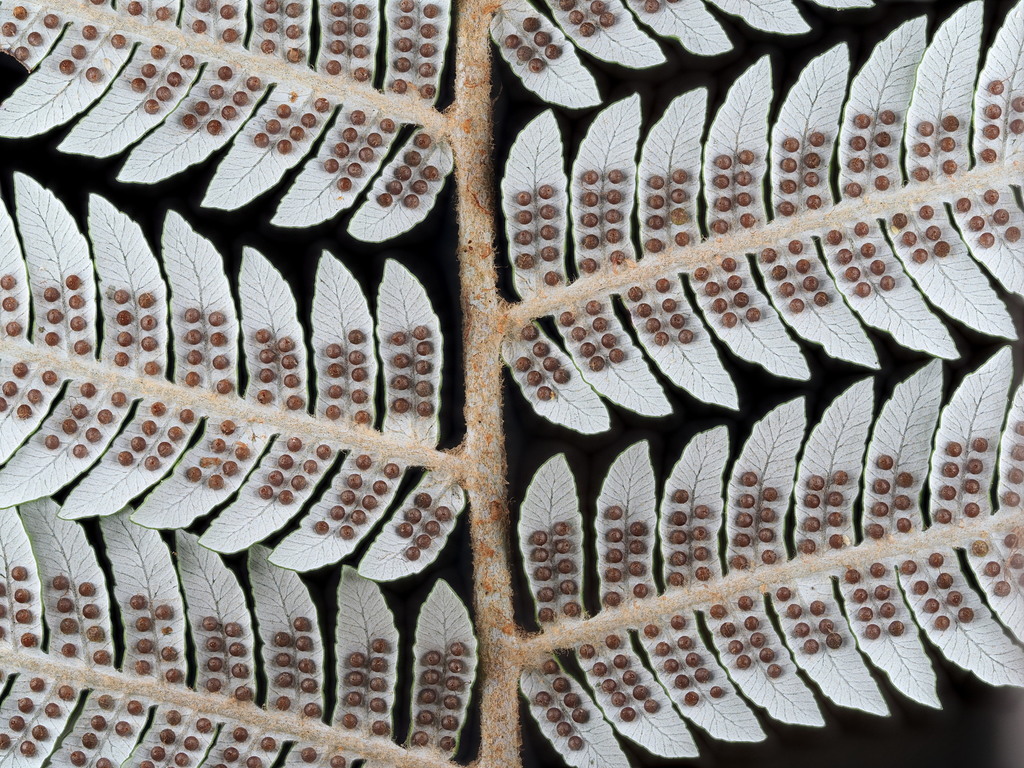
silver fern
Cyathea dealbata
Alsophila dealbata (synonyms Alsophila tricolor and Cyathea dealbata), commonly known as the silver fern or silver tree-fern, or as ponga or punga (from Māori kaponga or ponga), is a species of medium-sized tree fern, endemic to New Zealand. The fern is usually recognisable by the silver-white colour of the under-surface of mature fronds. It is a symbol commonly associated with the country both overseas and by New Zealanders themselves.
From the article Silver fern on Wikipedia (CC BY-SA), quoted section by section
Description
This fern is known to grow to heights of 10 metres (33 ft) or more (though it occasionally takes a rare creeping form). The crown is dense, and mature fronds can be as much as 3 metres (9.8 ft) long and 1 m (3 ft 3 in) wide with a silver-white colouration on the undersides. The fronds may be bipinnately compound or tripinnate. The underside colouration is less intensely silvery or patchy in younger plants and juveniles are pale green. This distinctive silver colouration has made them useful for laying along tracks for night walking. The scales are a dark brown and are often twisted and glossy. Rhizomes very rarely prostrate, usually erect, forming a woody trunk up to 12 metres (39 ft) tall, 160 to 450 millimetres (6.3 to 17.7 in) in diameter, covered in light brown or white projecting stipe bases, bearing scales near the apex.
Range & habitat
Arriving relatively late in New Zealand's history during the Pliocene epoch (around 5.0–1.8 million years ago), the silver fern occurs on the main islands of New Zealand—although absent from the west and south regions of the South Island, on the Chatham Islands to the east, and is also native to Lord Howe Island. It has also become naturalised in Ireland. Its primary habitat is subcanopy areas of drier forests and in open scrub, although it is occasionally found on bush margins and in more open areas, and has been recorded from amongst rushes in a dune slack. The fern is known to grow well in well-drained humus, and once established, it will tolerate drier conditions. It does best when sheltered from winds and should be protected from frost. Evidence of large amount of macro-charcoals in the top layers of soil suggest that Alsophila tricolor establishes itself in areas where anthropogenic fires occur.
Wikipedia: “Habitat”
At the table
Ponga logs are widely used in landscaping in New Zealand, used to create retaining walls and edging for gardens.
Wikipedia: “Modern uses”
In medicine
In traditional Māori culture, ponga is seen as a symbol new life and growth. Ponga trunks were often used in the construction of whare, walls and palisades. The koru symbol, which depicts the shape of an unfurling silver fern frond, is found extensively in Māori art, including in designs of carvings, marae and tā moko, Pūrākau (traditional stories) involve the silver fern once living in the sea, and that hunters at night time would use the white underside of fern fronds to mark a path home in the darkness, as the undersides could easily catch moonlight.
Wikipedia: “Traditional Māori culture”
In human culture
The species epithet dealbata means whitish, and refers to the underside of the fronds. The Māori word ponga, pronounced [ˈpɔŋa], is a term used across Polynesian languages to describe tree ferns, such as Sphaeropteris lunulata in Tongan and Samoan or Angiopteris evecta in Samoan. It has been borrowed into New Zealand English using both the spelling ponga and punga, and is used as a generic term for tree ferns, and to refer to tree fern logs when used for landscaping purposes. English speakers generally pronounce the word PUNG-ə. Other Māori language names for the plant include kaponga, kātote, or poka in southern dialects.
Wikipedia: “Etymology”
Where it lives
Recorded sightings
—
geo-referenced records in GBIF, from museums, herbaria and field observers.
Drag the globe to turn it. Dots are where records exist, not a range map; darker means more records.
In the stacks
Searching the stacks…
Every page naming Cyathea dealbata in the Biodiversity Heritage Library →
This page is assembled live from iNaturalist, GBIF, Wikipedia, the Source Library and the Internet Archive. It is not yet part of the hand-edited codex. iNaturalist taxon 131669.