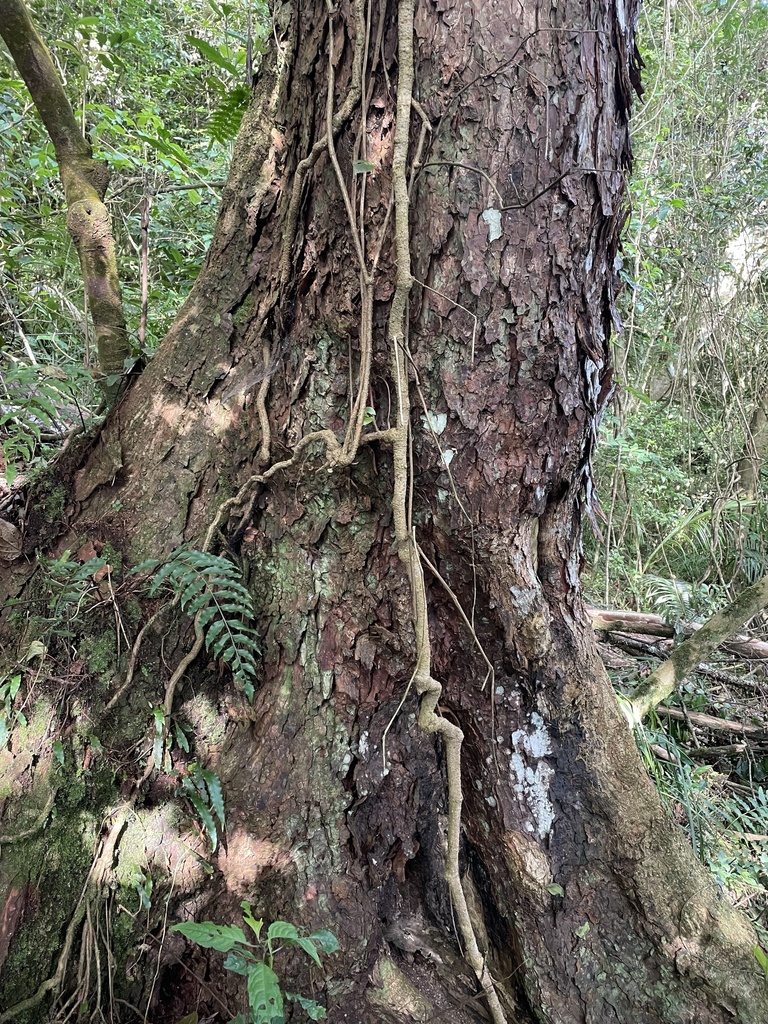
East African Camphor-Wood
Ocotea usambarensis
Kuloa usambarensis (synonym Ocotea usambarensis) is a species of tree in the laurel family (Lauraceae). It is native to eastern Africa in Kenya, Tanga Region of Tanzania, and locally in Uganda, where it occurs at 1600–2600 m elevation in high rainfall Afromontane cloud forest. Common names include East African camphorwood, mkulo (Tanzania), mwiha (Uganda), muwong, muthaiti, and maasi.
From the article Kuloa usambarensis on Wikipedia (CC BY-SA), quoted section by section
Description
It is a large evergreen tree growing to 35 m (exceptionally 45 m) tall, with fast growth (up to 2 m per year) when young. The leaves are opposite (sometimes alternate on fast-growing stems), elliptic to oval, 4–16 cm long and 2.5–9 cm wide, dark green above, pale below, with an entire margin and an acuminate apex. The foliage has a distinct scent of camphor. The flowers are inconspicuous, greenish-yellow; the fruit is a small drupe 1 cm long.
At the table
It is an important timber tree, valued for the resistance of its wood to fungal decay.
Wikipedia: “Uses”
Where it lives
Recorded sightings
—
geo-referenced records in GBIF, from museums, herbaria and field observers.
Drag the globe to turn it. Dots are where records exist, not a range map; darker means more records.
In the stacks
Searching the stacks…
Every page naming Ocotea usambarensis in the Biodiversity Heritage Library →
This page is assembled live from iNaturalist, GBIF, Wikipedia, the Source Library and the Internet Archive. It is not yet part of the hand-edited codex. iNaturalist taxon 132931.