- Animals
- ›Arthropods
- ›Hexapods
- ›Insects
- ›Winged and Once-winged Insects
- ›Beetles
- ›Water, Rove, Scarab, Long-horned, Leaf, and Snout Beetles
- ›Cucujiform Beetles
- ›Darkling Beetles and Allies
- ›Wedge-shaped Beetles
- ›Ripiphorinae
- ›Macrosiagon
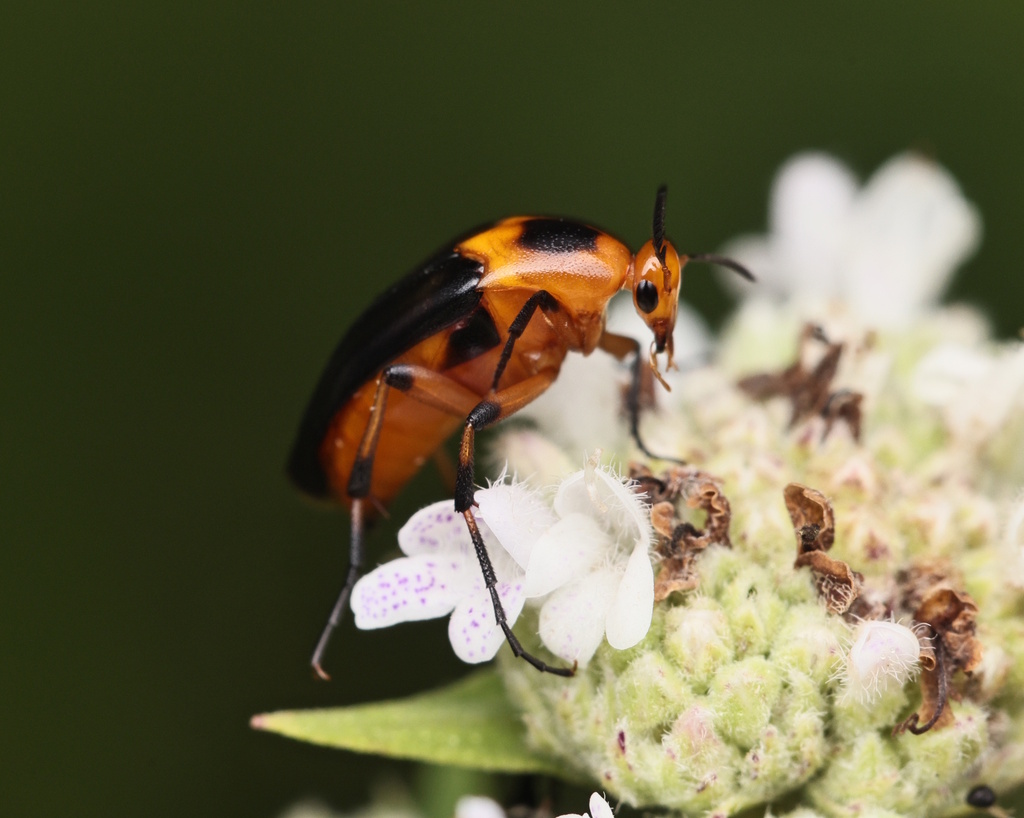
Bordered Wedge-shaped Beetle
Macrosiagon limbata
Macrosiagon limbata is a species of wedge-shaped beetle in the family Ripiphoridae. They are found across the Eastern United States, Southeastern Canada and Central America. It is likely that their range extends into South America but this currently remains unknown.
Macrosiagon limbata was first discovered in 1781 by the famous zoologist Johan Christian Fabricius. Coleopterans in the genus Macrosiagon are internal parasites of other insects at some point during their lifecycle. They go through a form of hypermetamorphosis, in which the larva goes through multiple stages of morphologically distinct instars. The female deposits eggs on flowers visited by bees and other hymenopterans. Larva of Macrosiagon limbata have been reported as parasites of the wasp family Crabronidae. The first larval instar is a planidum, an active larva that can climb on a host hymenopteran. They are then transported to the host's nest, where they act as parasitoids. The following instars don't have legs, and feed on larvae or stored pollen and nectar supplies.
Listen
Looking for field recordings…
Where it lives
Recorded sightings
—
geo-referenced records in GBIF, from museums, herbaria and field observers.
Drag the globe to turn it. Dots are where records exist, not a range map; darker means more records.
In the stacks
Searching the stacks…
Every page naming Macrosiagon limbata in the Biodiversity Heritage Library →
This page is assembled live from iNaturalist, GBIF, Wikipedia, the Source Library and the Internet Archive. It is not yet part of the hand-edited codex. iNaturalist taxon 133028.