- Plants
- ›Vascular Plants
- ›flowering plants
- ›Dicots
- ›Heathers, Balsams, Primroses, and Allies
- ›heath family
- ›enkianthuses
- ›Enkianthus
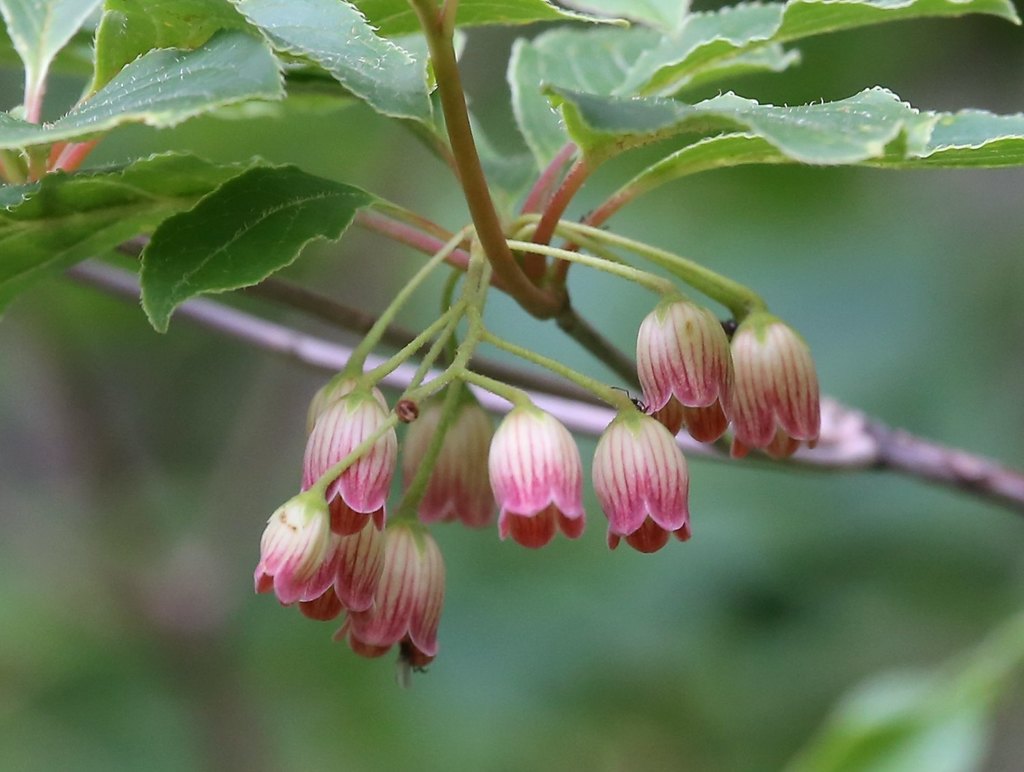
campanulate enkianthus
Enkianthus campanulatus
The hardiest of Enkianthus species is E. campanulatus (furin-tsutsuji or redvein enkianthus), a medium-sized, narrow, upright, deciduous shrub. Its bright green glossy foliage gives brilliant coppery to red fall colors. In spring it offers a profusion of bell-shaped (campanula, "little bell"), creamy white flowers with red veins, similar to those of the distantly related Pieris.
The plant was brought to England by Charles Maries, who was plant-hunting in Japan at the time for Veitch Nurseries. The shrub can exceed expectations of height under the right circumstances, as at William Robinson's Gravetye Manor, where a pair planted about the turn of the 20th century reached 15 ft (5 m).
From the article Enkianthus campanulatus on Wikipedia (CC BY-SA), quoted section by section
Description
Exposure: Full sun to part shade Spacing: 4' to 5' apart Average height x width: 10' tall x 5' wide Fertilizing: Fertilize in spring just before new growth begins Cold hardiness: -20 °F Water use: Keep soil evenly moist. Prefers acid, well-drained soil. Widely cultivated as an ornamental plant in parks and gardens, this plant has gained the Royal Horticultural Society's Award of Garden Merit.
== References ==
Wikipedia: “Characteristics”
Where it lives
Recorded sightings
—
geo-referenced records in GBIF, from museums, herbaria and field observers.
Drag the globe to turn it. Dots are where records exist, not a range map; darker means more records.
In the stacks
Searching the stacks…
Every page naming Enkianthus campanulatus in the Biodiversity Heritage Library →
This page is assembled live from iNaturalist, GBIF, Wikipedia, the Source Library and the Internet Archive. It is not yet part of the hand-edited codex. iNaturalist taxon 133385.