- Plants
- ›Vascular Plants
- ›conifers
- ›conifers
- ›cypress family
- ›Cypresses, Cedars, Junipers, and Allies
- ›Juniperus
- ›Sabina
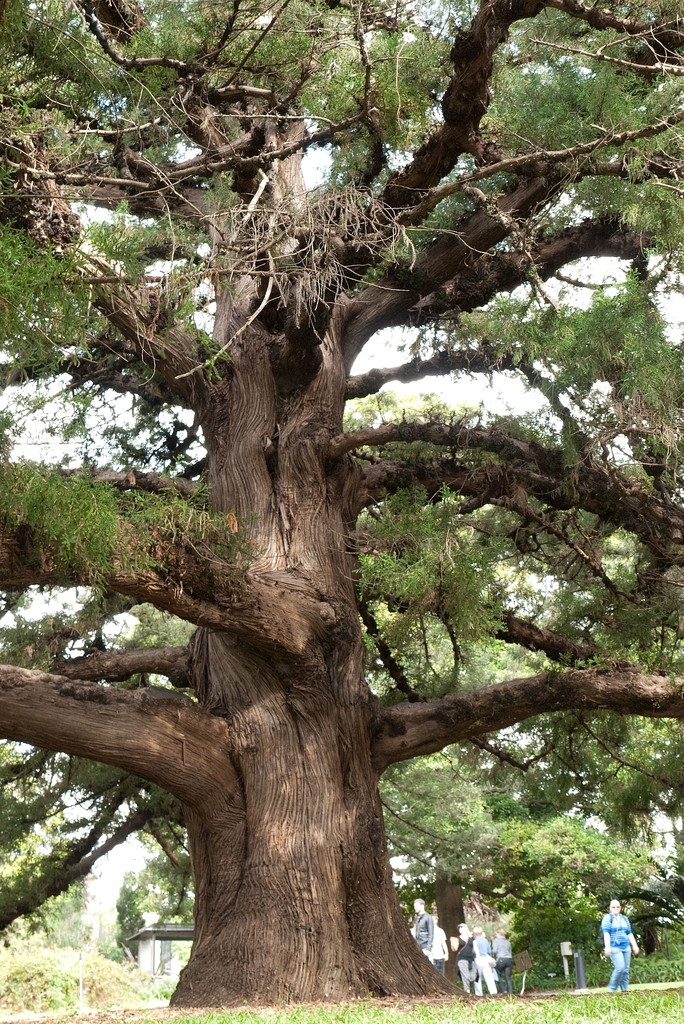
Bermuda juniper
Juniperus bermudiana
Juniperus bermudiana is a species of juniper endemic to Bermuda. This species is most commonly known as Bermuda cedar, but is also referred to as Bermuda juniper (Bermudians refer to it simply as cedar). Historically, this tree formed woodland that covered much of Bermuda. Settlers cleared part of the forest and the tree was used for many purposes including building construction and was especially prized for shipbuilding. Scale insects introduced during the Second World War construction of United States airbases in Bermuda devastated the forests, killing over 99% of the species (an event known in Bermuda as 'the Blight' or 'the Cedar Blight'). Since then, the salt tolerant Casuarina equisetifolia has been planted as a replacement species, and a small number of Bermuda cedars have been found to be resistant to the scale insects. Populations of certain endemic birds which had co-evolved with the tree have plummeted as a result of its demise, while endemic cigalas (or cicada) and solitary bees were driven to extinction.
From the article Juniperus bermudiana on Wikipedia (CC BY-SA), quoted section by section
Description
The Bermuda cedar is a medium-sized tree growing up to 15 metres (49 feet) tall with a trunk up to 60 centimetres (24 inches) thick, though larger specimens have existed in the past. It has thin bark that sheds in strips. The foliage is produced in blue-green sprays, with the individual shoots 1.3–1.6 millimetres (3⁄64–1⁄16 inch) wide, four-sided (quadriform) in section. The leaves are scale-like (1.5–2.5 mm long, up to 4 mm long on strong-growing shoots and 1–1.5 mm broad), with an inconspicuous gland. They are arranged in opposite decussate pairs, occasionally decussate whorls of three. Juvenile plants bear needle-like leaves 4–8 mm long. The cones are irregularly globose to broad pyriform (4–6 mm long and 5–8 mm broad), soft and berry-like, green at first, maturing bluish-purple about 8 months after pollination. They contain one or two (rarely three) seeds. The male cones are 4–6 mm long and begin yellow, turning brown after pollen release in early spring.
What it does
A threat to the continued existence of Bermuda's cedars arose in the mid-1940s when the species was attacked by two species of scale insects, Lepidosaphes newsteadi and Carulaspis minima, which were unintentionally introduced from the United States' mainland during the wartime construction of US airbases in Bermuda for the US Navy and Army Air Forces. By 1978, these parasites had killed 99% of Bermuda's cedars, some 8 million trees. However, the remaining 1% of the trees proved somewhat resistant to the scale insects, and efforts by Bermuda's Department of Agriculture, Fisheries and Parks to propagate scale-resistant plants throughout Bermuda have helped in protecting the trees from extinction. In the 1950s and 1960s Casuarina equisetifolia (also known as horsetail sheoak and Australian pine), native to Australia, was introduced into Bermuda to replace the Bermuda cedar's windbreak functions. C. equisetifolia have proven to be a somewhat competitive plant in Bermuda, this is due to casuarina leaf litter suppressing the germination and growth of understory plants by means of allelopathy. Similar to the Bermuda cedar, C. equisetifolia are resistant to wind and salt, features that have made C. equisetifolia a popular choice with gardeners in Bermuda. Other species introduced in an attempt to replace the cedar forest included the bay grape (Coccoloba uvifera). Along with C. …
Wikipedia: “Ecology”
At the table
It is known for its heavy, sweet aroma, useful and attractive reddish timber, significant role in Bermuda's history, and notable presence in Bermuda's historic homes. When English settlers arrived in Bermuda, forests of Bermuda cedar flourished throughout the islands, and the species continued to thrive even as settlers developed the land. The timber was utilized by settlers due to its durability and workability, particularly in construction (homes, churches, jails, shipbuilding, interior woodworking, furniture construction, coffin-making) and export for sale. In addition, the cones were used by settlers as food for both themselves and their animals, and to prepare cedarberry syrup as a treatment for toothaches and coughs. Settlers also boiled the shoots in water to create an elixir for lowering fevers. Furthermore, the timber was found to repel moths and fleas as well as prevent mildew and rot, so many Bermuda residents used the wood to line closets and drawers. The timber was especially prized by shipbuilders. It could be worked as soon as it was felled, and was naturally resistant to rot and woodworms. It was as strong as oak, but much lighter, contributing to the speed and maneuverability for which Bermudian ships were noted and prized. …
Wikipedia: “Uses and history”
Where it lives
Recorded sightings
—
geo-referenced records in GBIF, from museums, herbaria and field observers.
Drag the globe to turn it. Dots are where records exist, not a range map; darker means more records.
In the stacks
Searching the stacks…
Every page naming Juniperus bermudiana in the Biodiversity Heritage Library →
This page is assembled live from iNaturalist, GBIF, Wikipedia, the Source Library and the Internet Archive. It is not yet part of the hand-edited codex. iNaturalist taxon 135977.