- Plants
- ›Vascular Plants
- ›flowering plants
- ›Dicots
- ›myrtles, evening primroses, and allies
- ›myrtle family
- ›Myrtoideae
- ›Chamelaucieae
- ›Chamelauciinae
- ›Verticordia
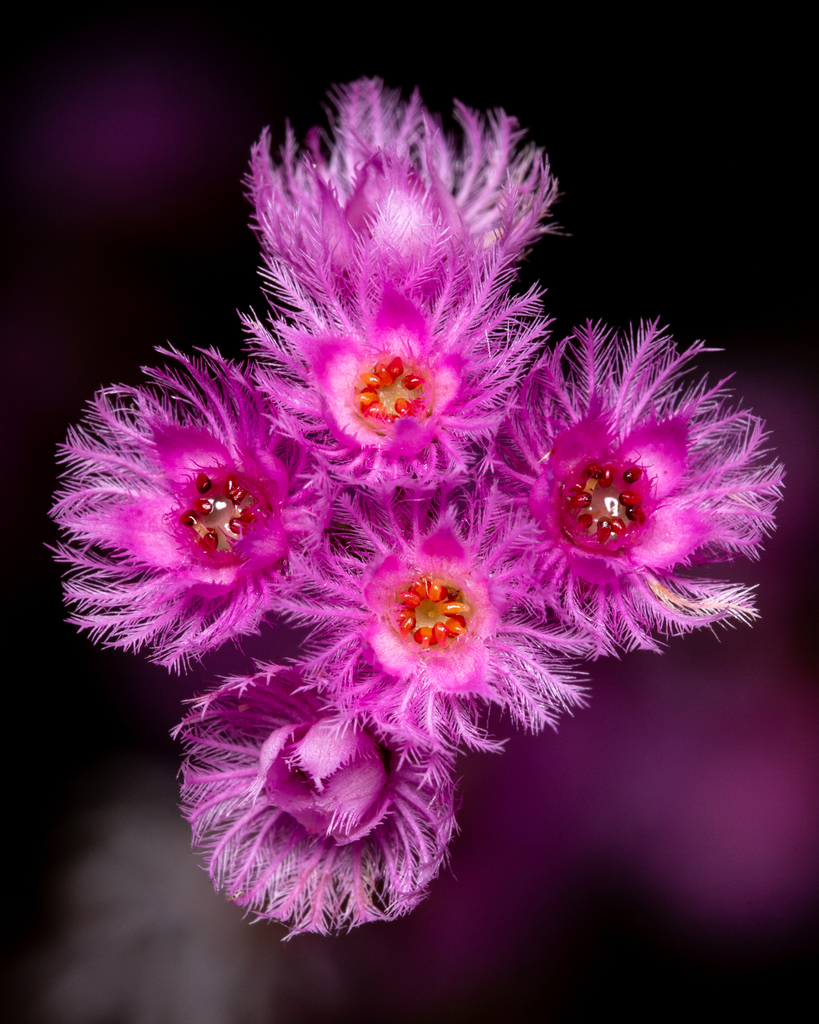
Verticordia
For the clam genus, see Verticordia (bivalve).
Verticordia is a genus of more than 100 species of plants commonly known as featherflowers, in the myrtle family, Myrtaceae. They range in form from very small shrubs such as V. verticordina to trees like V. cunninghamii, some spindly, others dense and bushy, but the majority are woody shrubs up to 2.0 m (7 ft) tall. The flowers are variously described as "feathery", "woolly" or "hairy" and are found in most colours except blue. They often appear to be in rounded groups or spikes but in fact are always single, each flower borne on a separate stalk in a leaf axil. Each flower has five sepals and five petals all of a similar size with the sepals often having feathery or hairy lobes. There are usually ten stamens alternating with variously shaped staminodes. The style is simple, usually not extending beyond the petals and often has hairs near the tip. All but two species are found in Southwest Australia, the other two occurring in the Northern Territory.
11 branches of this group, most-observed first
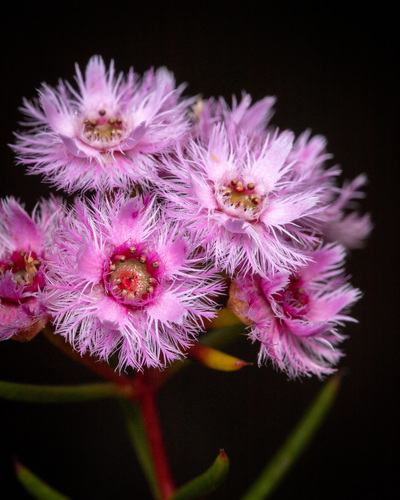
Verticordia
sectionVerticordia
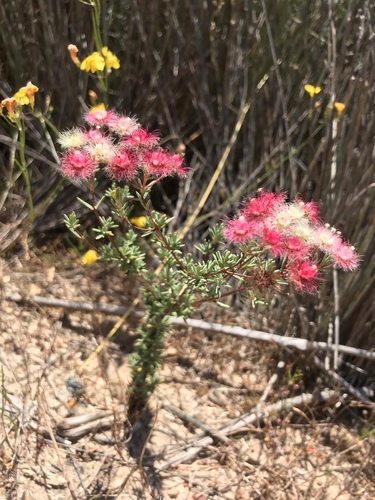
Pilocosta
sectionPilocosta
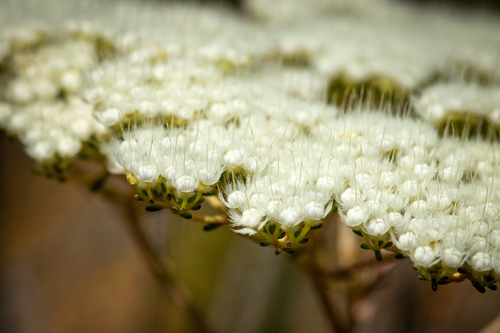
Corymbiformis
sectionCorymbiformis
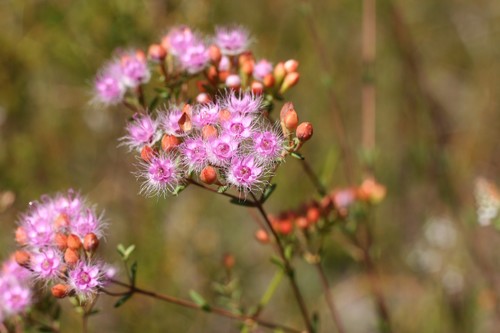
Catocalypta
sectionCatocalypta
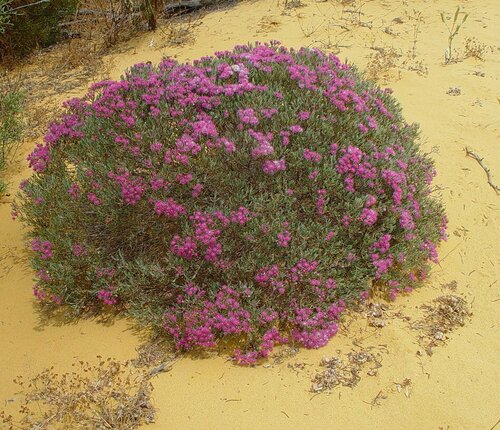
Intricata
sectionIntricata

Micrantha
sectionMicrantha
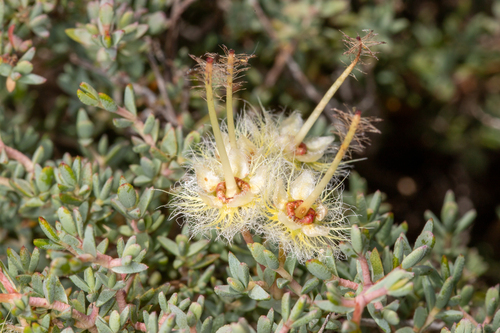
Penicillaris
sectionPenicillaris
Infuscata
sectionInfuscata
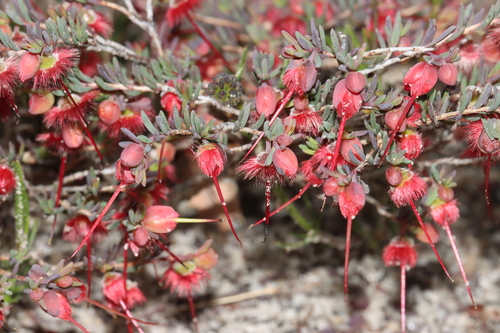
Recondita
sectionRecondita
Elachoschista
sectionElachoschista

Platandra
sectionPlatandra
Where it lives
Recorded sightings
—
geo-referenced records in GBIF, from museums, herbaria and field observers.
Drag the globe to turn it. Dots are where records exist, not a range map; darker means more records.
In the stacks
Searching the stacks…
Every page naming Verticordia in the Biodiversity Heritage Library →
This page is assembled live from iNaturalist, GBIF, Wikipedia, the Source Library and the Internet Archive. It is not yet part of the hand-edited codex. iNaturalist taxon 1364858.