- Plants
- ›Vascular Plants
- ›flowering plants
- ›Dicots
- ›Legumes, Milkworts, and Allies
- ›Legumes
- ›Faboideae
- ›Phaseoleae
- ›Cajaninae
- ›Cajanus
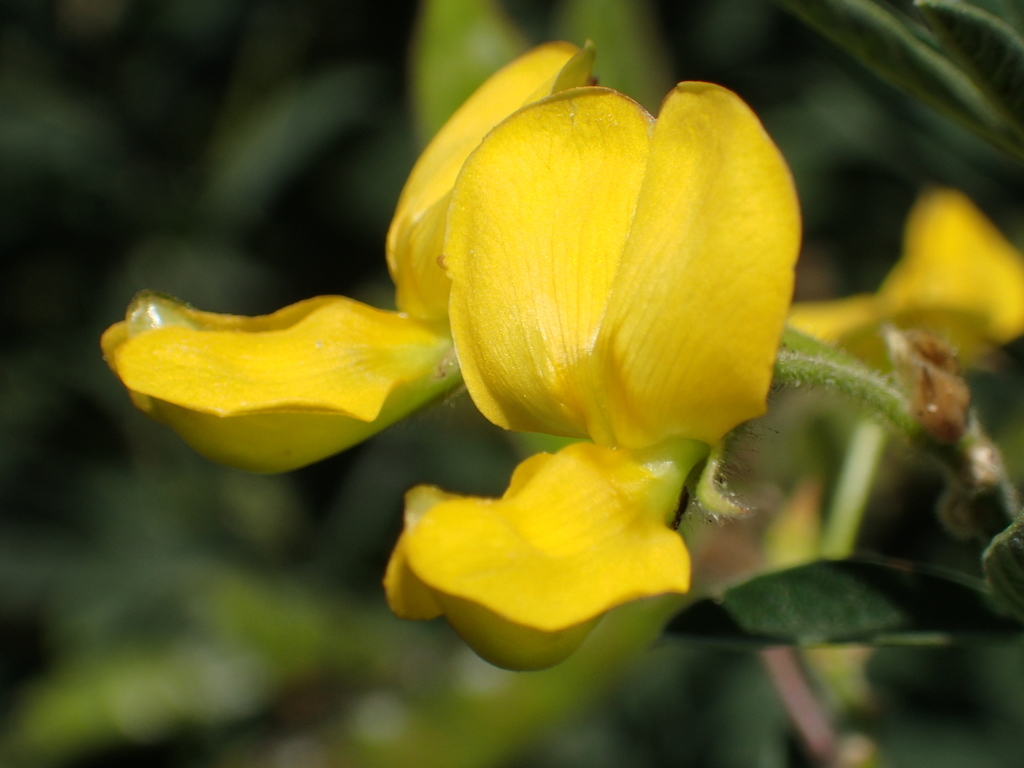
Pigeon Pea
Cajanus cajan
The pigeon pea (Cajanus cajan)and (arhar) is a perennial legume from the family Fabaceae. Since its domestication in India at least 3,500 years ago, its seeds have become a common food grain in Asia, Africa, and Latin America. It is consumed on a large scale mainly in south Asia and is a major source of protein for the population of that subcontinent.
From the article Pigeon pea on Wikipedia (CC BY-SA), quoted section by section
At the table
Pigeon peas contain high levels of protein and the important amino acids methionine, lysine, and tryptophan. The following table indicates completeness of nutritional profile of various amino acids within mature seeds of pigeon pea.
Methionine + cystine combination is the only limiting amino acid combination in pigeon pea. In contrast to the mature seeds, the immature seeds are generally lower in all nutritional values, however they contain a significant amount of vitamin C (39 mg per 100 g serving) and have a slightly higher fat content. Research has shown that the protein content of the immature seeds is of a higher quality.
Wikipedia: “Nutrition”
In medicine
Pigeon pea has been valued for its medicinal properties since prehistoric times in various regions, including Africa, Egypt and Asia. Today, different countries use different parts of the plant to treat a range of diseases as an alternative medicine. In the Republic of Congo the Kongo, Lari, and Dondo people use the sap of the leaves as an eyedrop for epilepsy. In Nigeria the leaves are used to treat malaria, while in India they are used to treat diabetes, stomach tumours and wounds. In Oman, pigeon pea is used to treat chronic diseases, and in traditional Chinese medicine it is used to relieve pain and control intestinal worms. In Africa, the seeds are used to treat hepatitis and measles. The widespread traditional medicinal use of the plant is attributed to its rich content of phenolic compounds, which have antiviral, anti-inflammatory, antioxidant, hypocholesterolemic and hypoglycaemic effects. The leaves also contain flavonoids, terpenoids, essential oils and coumarin, which further enhance its therapeutic potential in the fight against disease. There are different studies looking at how the medicinal compounds of pigeon pea could be used in future. One study, using rats, found that a pigeonpea beverage could be used as an anti-diabetic functional drink. This drink would help to reduce plasma glucose and total cholesterol levels and increase plasma antioxidant status. …
Wikipedia: “Medicinal”
How it is grown
Pigeon peas can be of a perennial variety, in which the crop can last three to five years (although the seed yield drops considerably after the first two years), or an annual variety more suitable for seed production.
Global production. World production of pigeon peas is estimated at 4.49 million tons. About 63% of this production comes from India. The total number of hectares grown to pigeon pea is estimated at 5.4 million. India accounts for 72% of the area grown to pigeon pea or 3.9 million hectares. Africa is the secondary centre of diversity and at present it contributes about 21% of global production with 1.05 million tons. Malawi, Tanzania, Kenya, Mozambique and Uganda are the major producers in Africa. Malawi's Nandolo Farmers' Association is supported by international aid via the charity Christian Aid. The pigeon pea is an important legume crop of rainfed agriculture in the semiarid tropics. The Indian subcontinent, Africa and Central America, in that order, are the world's three main pigeon pea-producing regions. Pigeon peas are cultivated in more than 25 tropical and subtropical countries, either as a sole crop or intermixed with cereals, such as sorghum (Sorghum bicolor), pearl millet (Pennisetum glaucum), or maize (Zea mays), or with other legumes, such as peanuts (Arachis hypogea). …
Wikipedia: “Cultivation”
In human culture
By at least 2800 BCE in peninsular India, where its presumptive closest wild relatives Cajanus cajanifolia occurs in tropical deciduous woodlands, its cultivation has been documented. Archaeological finds of pigeon pea cultivation dating to about 14th century BCE have also been found at the Neolithic site of Sanganakallu in Bellary and its border area Tuljapur (where the cultivation of African domesticated plants like pearl millet, finger millet, and Lablab have also been uncovered), as well as in Gopalpur and other South Indian states. From India it may have made its way to North-East Africa via Trans-Oceanic Bronze Age trade that allowed cross-cultural exchange of resources and agricultural products. The earliest evidence of pigeon peas in Africa was found in Ancient Egypt with the presence of seeds in Egyptian tombs dating back to around 2200 BCE. From eastern Africa, cultivation spread further west and south through the continent, where by means of the Trans-Atlantic slave trade, it reached the Americas around the 17th century. Pigeon peas were introduced to Hawaii in 1824 by James Macrae with a few specimens becoming naturalized on the islands, but they wouldn't gain much popularity until later. …
Wikipedia: “History”
Where it lives
Recorded sightings
—
geo-referenced records in GBIF, from museums, herbaria and field observers.
Drag the globe to turn it. Dots are where records exist, not a range map; darker means more records.
In the stacks
Searching the stacks…
Every page naming Cajanus cajan in the Biodiversity Heritage Library →
This page is assembled live from iNaturalist, GBIF, Wikipedia, the Source Library and the Internet Archive. It is not yet part of the hand-edited codex. iNaturalist taxon 139444.