- Plants
- ›Vascular Plants
- ›flowering plants
- ›Dicots
- ›Soapberries, Cashews, Mahoganies, and Allies
- ›soapberry family
- ›Diploglottis
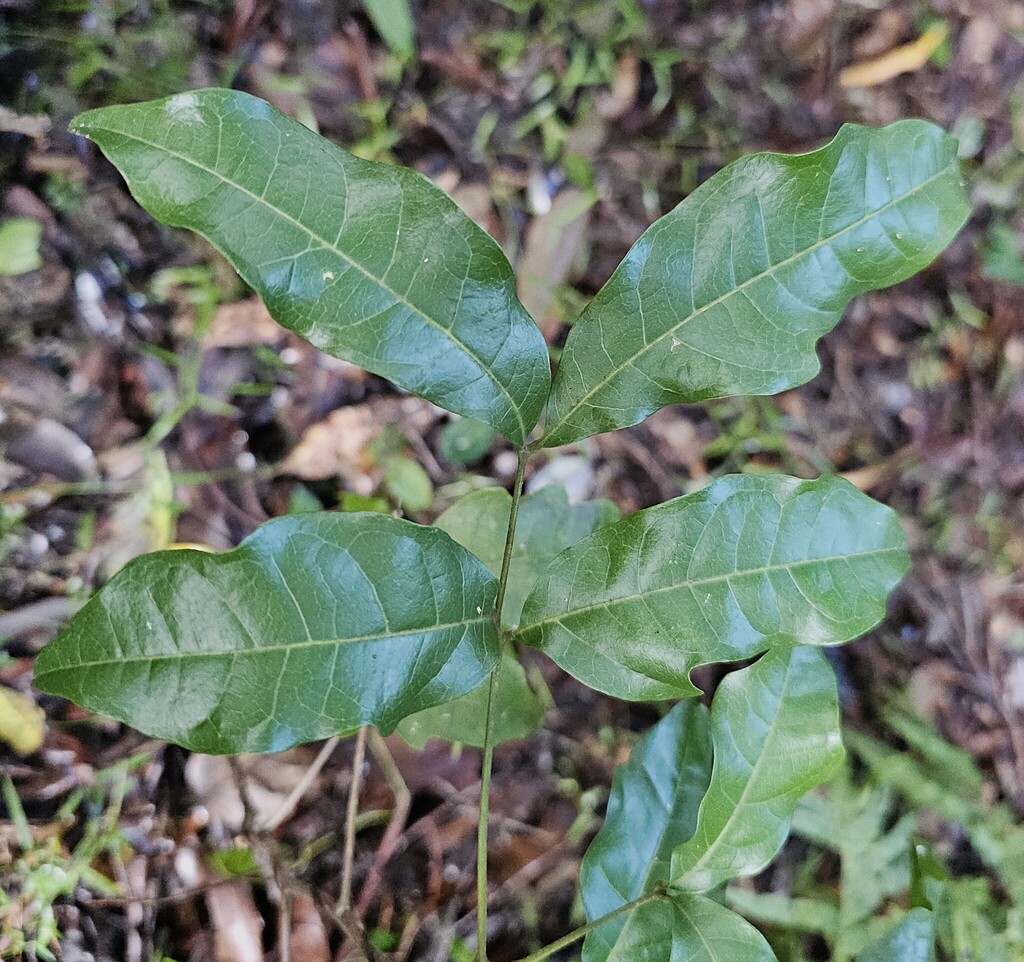
Small-leaved Tamarind
Diploglottis campbellii
Diploglottis campbellii is a rainforest tree northern New South Wales and southeastern Queensland. Growing to 30 metres tall, it is commonly known as the small-leaved tamarind. It is rare and threatened and is restricted to a small number of sites, each with a maximum of 3 trees per site. However, it is readily available from nurseries in the Northern Rivers area of New South Wales, and in south-eastern Queensland.
It has soft hairy new growth that becomes hairless with age. It has a grey brown trunk, the outer surface of live bark is green with orange to brown blotches, leaves 10–35 cm long, leaflets 4–8 cm, glossy upper surface, pale dull bottom surface
From the article Diploglottis campbellii on Wikipedia (CC BY-SA), quoted section by section
At the table
The fruit of small-leaved tamarind is edible, and has a piquant flavour. It is used in sauces and preserves. Because the tree is very rare in the wild availability of fruit was a limitation for many years. However, increased planting of small-leaved tamarind has resulted in larger volumes of fruit becoming available for food, as well as ensuring the survival of this species. The plant has proved adaptable in cultivation, being used in amenity horticulture and bushfood plantings. It is extensively planted in Lismore.
Wikipedia: “Uses”
Where it lives
Recorded sightings
—
geo-referenced records in GBIF, from museums, herbaria and field observers.
Drag the globe to turn it. Dots are where records exist, not a range map; darker means more records.
In the stacks
Searching the stacks…
Every page naming Diploglottis campbellii in the Biodiversity Heritage Library →
This page is assembled live from iNaturalist, GBIF, Wikipedia, the Source Library and the Internet Archive. It is not yet part of the hand-edited codex. iNaturalist taxon 1399684.