- Plants
- ›Vascular Plants
- ›flowering plants
- ›monocots
- ›grasses, sedges, cattails, and allies
- ›Rushes and Allies
- ›Oreojuncus
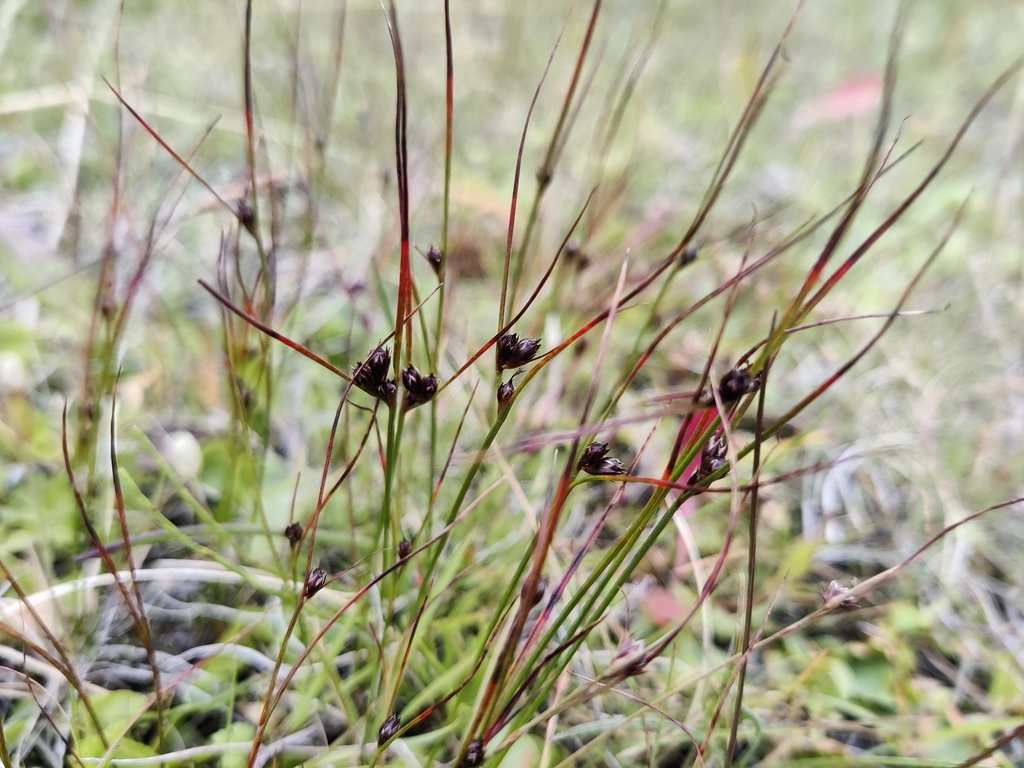
highland rush
Oreojuncus trifidus
Oreojuncus trifidus is a species of rush known by the common names highland rush and three-leaved rush. It is native to the Northern Hemisphere, where it is an arctic/montane species with an amphi-atlantic distribution.: 46
From the article Oreojuncus trifidus on Wikipedia (CC BY-SA), quoted section by section
Description
Oreojuncus trifidus is a perennial herb with tufted stems up to 40 centimeters long, growing erect or drooping. There are a few grasslike leaf blades measuring up to 12 centimeters long. The inflorescence holds one to four flowers with brown tepals and six stamens. The fruit is a capsule a few millimeters long. The plant reproduces sexually with its flowering structures and vegetatively via its rhizome, when it may form colonies.
Range & habitat
This species grows in a number of habitat types, especially in alpine environments. It can be found in talus, on cliffs and ledges, fellfields, tundra, and meadows. It grows in a wide variety of heath ecosystems. The soils may be dry to moist, calcareous, and acidic. They may be gravelly, sandy, and rich in iron. The plant is known as a pioneer on ski slopes and roadsides. It may grow alongside many types of mosses and lichens.
Wikipedia: “Habitat”
Where it lives
Recorded sightings
—
geo-referenced records in GBIF, from museums, herbaria and field observers.
Drag the globe to turn it. Dots are where records exist, not a range map; darker means more records.
In the stacks
Searching the stacks…
Every page naming Oreojuncus trifidus in the Biodiversity Heritage Library →
This page is assembled live from iNaturalist, GBIF, Wikipedia, the Source Library and the Internet Archive. It is not yet part of the hand-edited codex. iNaturalist taxon 1402722.