
euglenids
Euglenida
Euglenids or euglenoids are one of the best-known groups of eukaryotic flagellates: single-celled organisms with flagella, or whip-like tails. They are classified in the phylum Euglenozoa, class Euglenida or Euglenoidea. Euglenids are commonly found in fresh water, especially when it is rich in organic materials, but they have a few marine and endosymbiotic members. Many euglenids feed by phagocytosis, or strictly by diffusion. A monophyletic subgroup known as Euglenophyceae have chloroplasts and produce their own food through photosynthesis. This group contains the carbohydrate paramylon.
Euglenids split from other Euglenozoa (a larger group of flagellates) more than a billion years ago. The plastids (membranous organelles) in all extant photosynthetic species result from secondary endosymbiosis between a euglenid and a green alga.
10 branches of this class, most-observed first

Euglenales
orderEuglenales

Peranemida
orderPeranemida
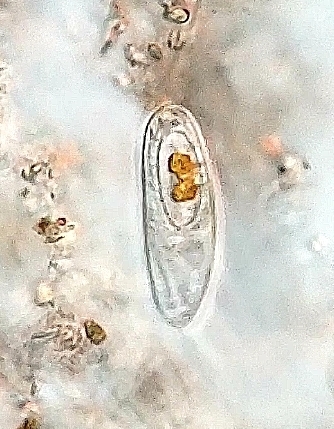
Anisonemida
orderAnisonemida
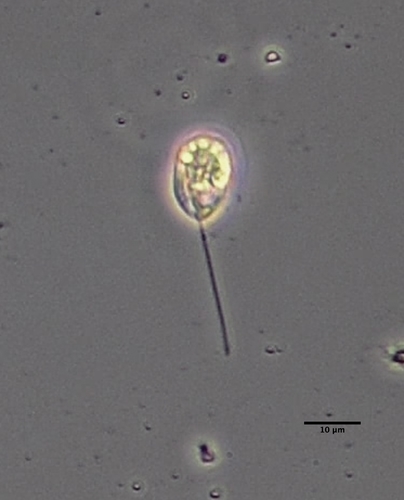
Petalomonadida
orderPetalomonadida

Aphagea
subclassAphagea
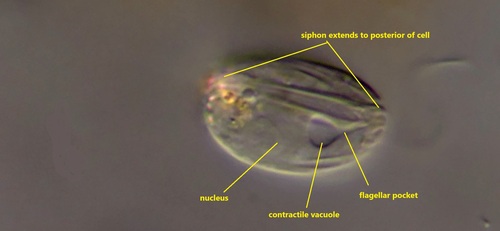
Entosiphon
genusEntosiphon
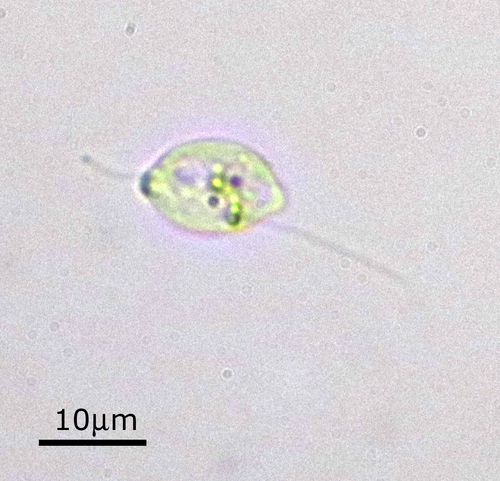
Ploeotiida
orderPloeotiida
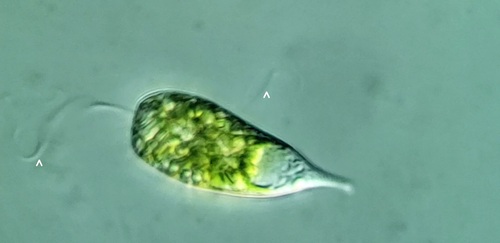
Eutreptiales
orderEutreptiales
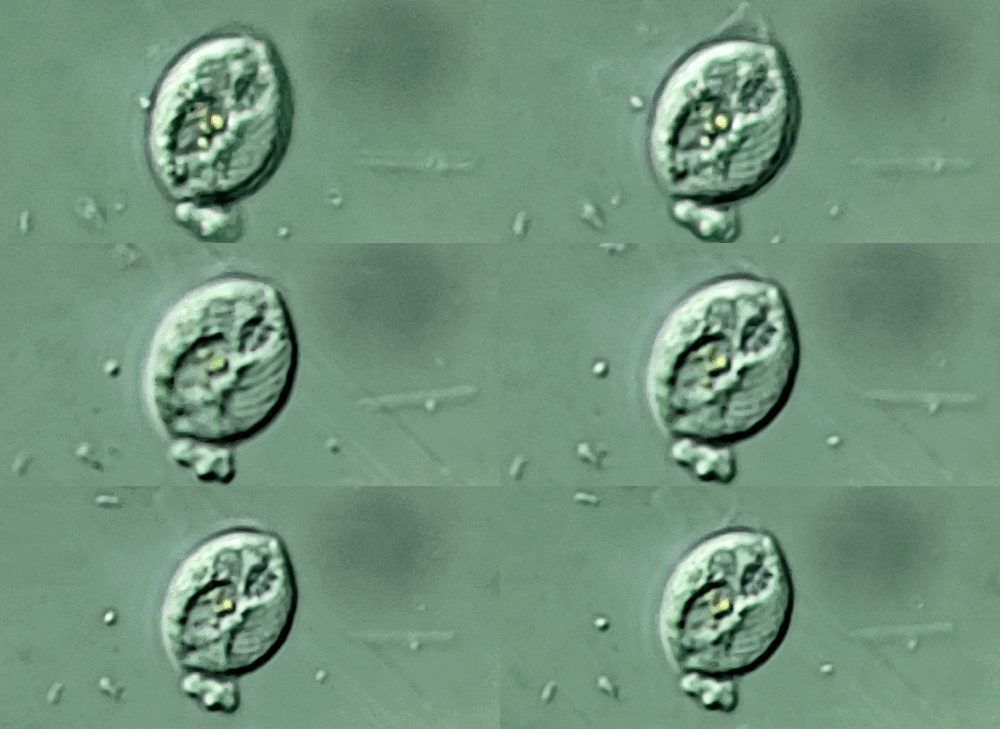
Neometanema
genusNeometanema
Rapazida
orderRapazida
Where it lives
Recorded sightings
—
geo-referenced records in GBIF, from museums, herbaria and field observers.
Drag the globe to turn it. Dots are where records exist, not a range map; darker means more records.
In the stacks
Searching the stacks…
Every page naming Euglenida in the Biodiversity Heritage Library →
This page is assembled live from iNaturalist, GBIF, Wikipedia, the Source Library and the Internet Archive. It is not yet part of the hand-edited codex. iNaturalist taxon 142257.