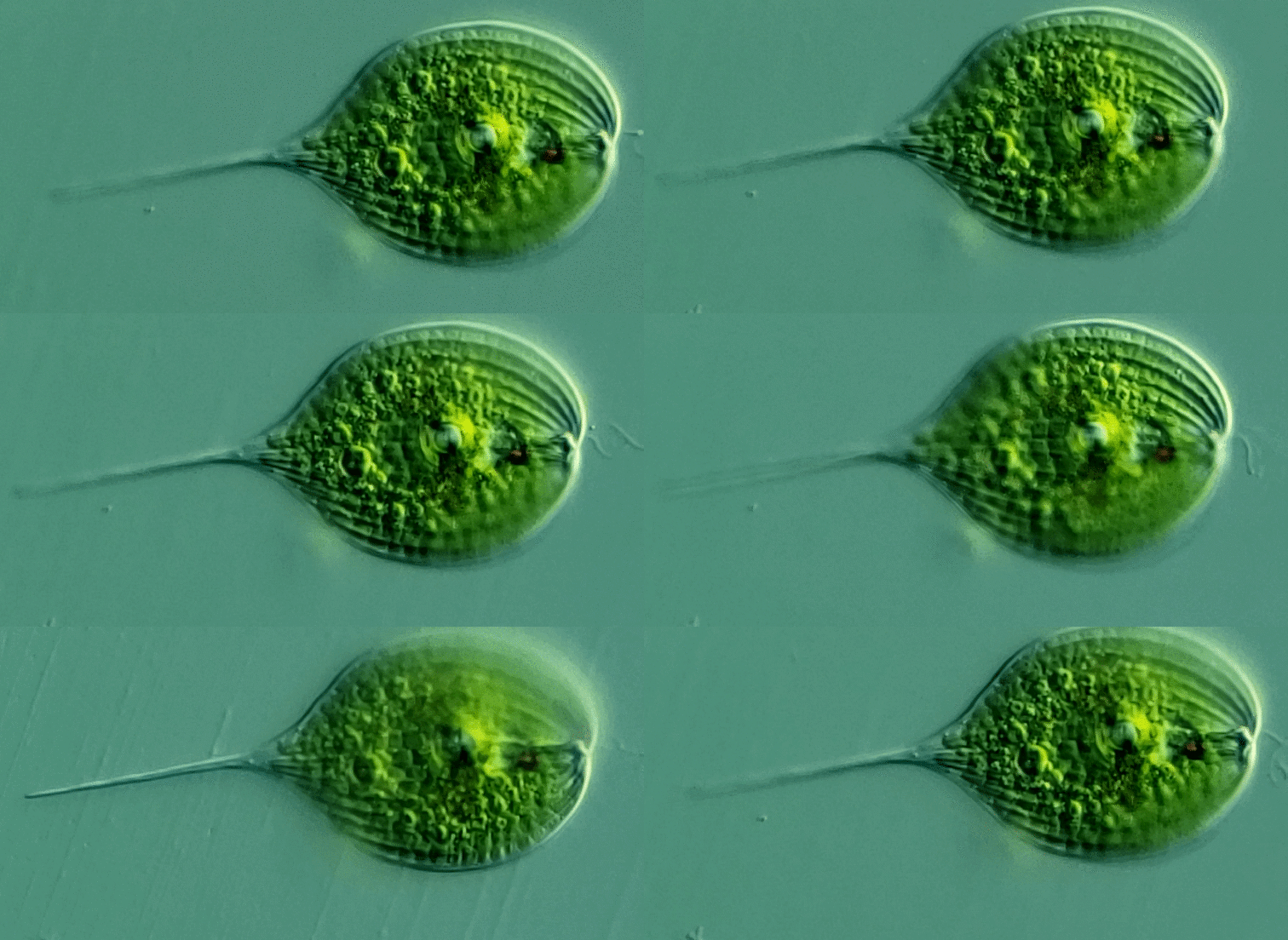
euglenoids
Euglenozoa
The euglenozoa are a large group of flagellate excavates. They include a variety of common free-living species, as well as a few important parasites, some of which infect humans. There are two main subgroups, the euglenids and kinetoplastids. Euglenozoa are unicellular, mostly around 15-40 µm in size, although some euglenids get up to 500 µm long.
5 branches of this phylum, most-observed first

euglenids
classEuglenida

Kinetoplastea
classKinetoplastea
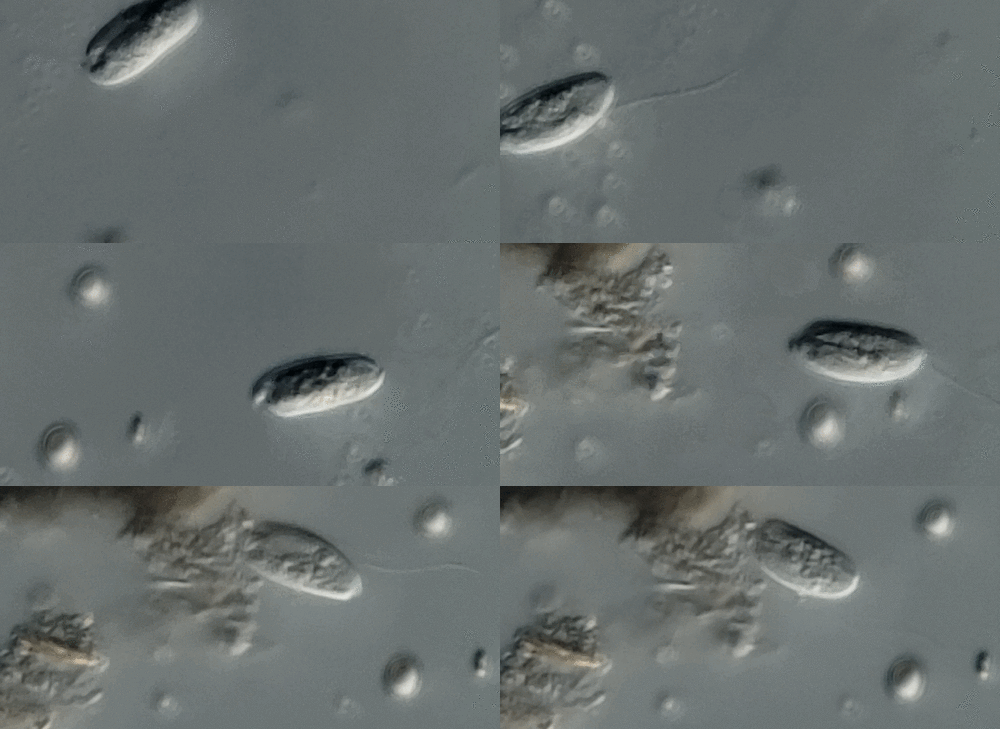
Symbiontida
classSymbiontida
Diplonemea
classDiplonemea
Hemiolia
genusHemiolia
Where it lives
Recorded sightings
—
geo-referenced records in GBIF, from museums, herbaria and field observers.
Drag the globe to turn it. Dots are where records exist, not a range map; darker means more records.
In the stacks
Searching the stacks…
Every page naming Euglenozoa in the Biodiversity Heritage Library →
This page is assembled live from iNaturalist, GBIF, Wikipedia, the Source Library and the Internet Archive. It is not yet part of the hand-edited codex. iNaturalist taxon 142256.