- Plants
- ›Vascular Plants
- ›flowering plants
- ›monocots
- ›grasses, sedges, cattails, and allies
- ›Rushes and Allies
- ›Juncus
- ›Agathryon
- ›Juncotypus
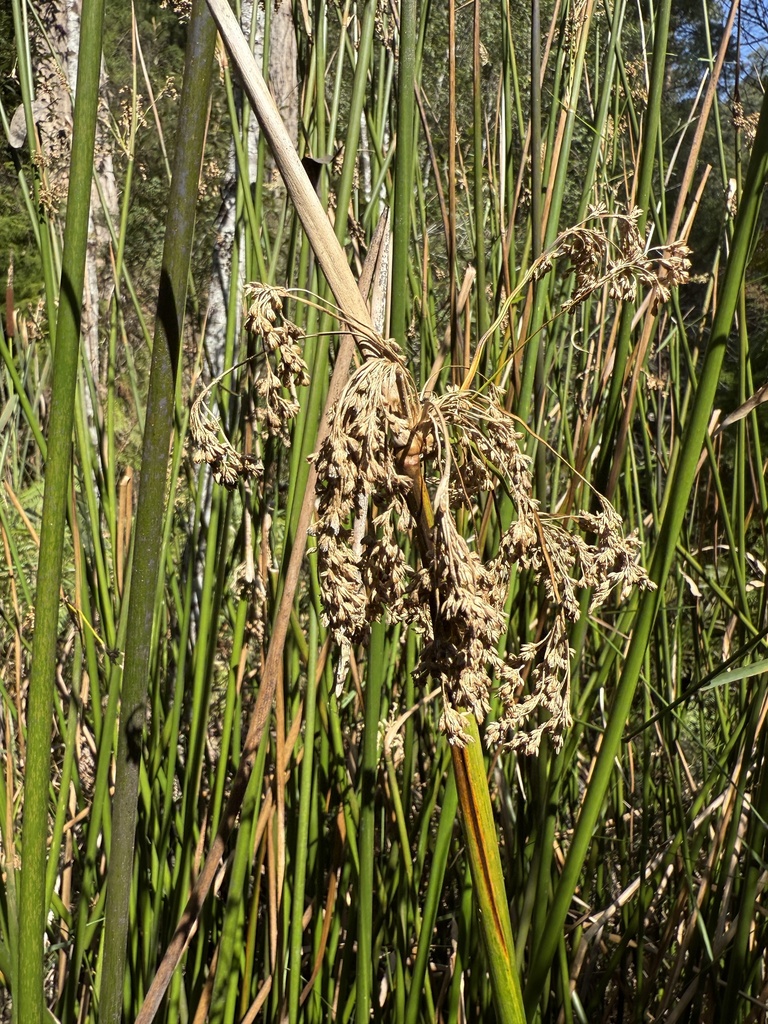
Juncus ingens
Juncus ingens, common name giant rush, is a dioecious perennial with horizontal or ascending rhizomes. The stems are erect, dull green, (1.5–2–5 m tall and 4–10 mm in diameter, cataphylls are to 40 cm or more long. The inflorescence is large and drooping, with many flowers scattered along fine branchlets. Flowers occur mostly October-January, seeds are shed mostly December-April. Juncus ingens was first described by Norman Wakefield in 1957. It is one of only two known dioecious species of Juncus native to Australia, the other being Juncus psammophilus.
Juncus ingens is native to the floodplains of southeastern Australia, occurring mainly in Victoria, forming dense stands on the margins of seasonal wetlands. Giant rush is rarely grazed by introduced herbivores such as cattle or horses, or by native herbivores such as kangaroos, and is also resistant to fire.
Where it lives
Recorded sightings
—
geo-referenced records in GBIF, from museums, herbaria and field observers.
Drag the globe to turn it. Dots are where records exist, not a range map; darker means more records.
In the stacks
Searching the stacks…
Every page naming Juncus ingens in the Biodiversity Heritage Library →
This page is assembled live from iNaturalist, GBIF, Wikipedia, the Source Library and the Internet Archive. It is not yet part of the hand-edited codex. iNaturalist taxon 1428531.