- Plants
- ›Vascular Plants
- ›flowering plants
- ›Dicots
- ›Legumes, Milkworts, and Allies
- ›Legumes
- ›Faboideae
- ›brooms, lupines, and allies
- ›Lupinus
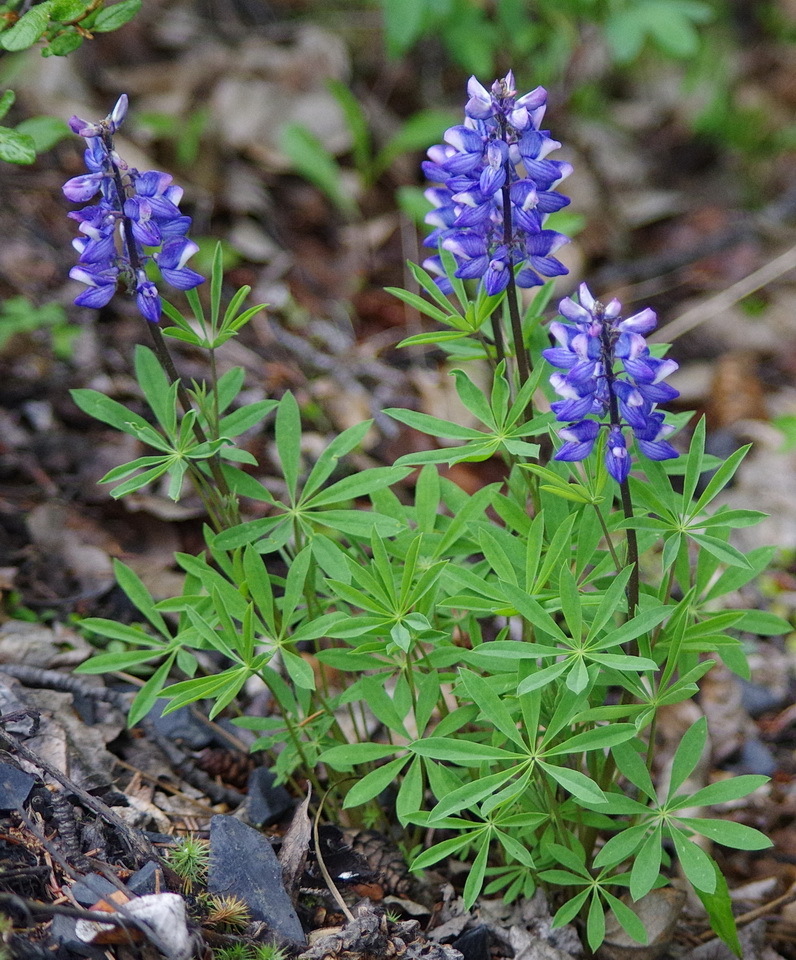
Arctic Lupine
Lupinus arcticus
Lupinus arcticus is a species of flowering plant in the subfamily Faboideae of the family Fabaceae, known by the common names Arctic lupine or subalpine lupine. It is native to northwestern North America, where it occurs from Oregon north to Alaska and east to Nunavut. It is a common wildflower in British Columbia.
This is a perennial herb growing from a taproot and producing erect stems up to 50 centimeters tall. The dark green, hairy leaves are borne upon rough, hairy petioles up to 17 centimeters long. The leaves are palmately compound, made up of 3 to 9 leaflets each measuring up to 6 centimeters long. The inflorescence is a raceme up to 15 centimeters long bearing up to 30 flowers. The flowers are usually blue, sometimes purple, and occasionally white. The banners of the pealike flowers may be tinged with pink. The fruit is a hairy, greenish to blackish legume pod 2 or 3 centimeters long. It contains up to 10 white-speckled black seeds each about half a centimeter long. The plant may hybridize with other lupine species when they grow together.
Where it lives
Recorded sightings
—
geo-referenced records in GBIF, from museums, herbaria and field observers.
Drag the globe to turn it. Dots are where records exist, not a range map; darker means more records.
In the stacks
Searching the stacks…
Every page naming Lupinus arcticus in the Biodiversity Heritage Library →
This page is assembled live from iNaturalist, GBIF, Wikipedia, the Source Library and the Internet Archive. It is not yet part of the hand-edited codex. iNaturalist taxon 143688.