- Animals
- ›Arthropods
- ›Hexapods
- ›Insects
- ›Winged and Once-winged Insects
- ›Ants, Bees, Wasps, and Sawflies
- ›Narrow-waisted Wasps, Ants, and Bees
- ›Proctotrupomorpha
- ›Gall Wasps and Allies
- ›Gall Wasps
- ›Cynipinae
- ›Oak Gall Wasps
- ›Amphibolips
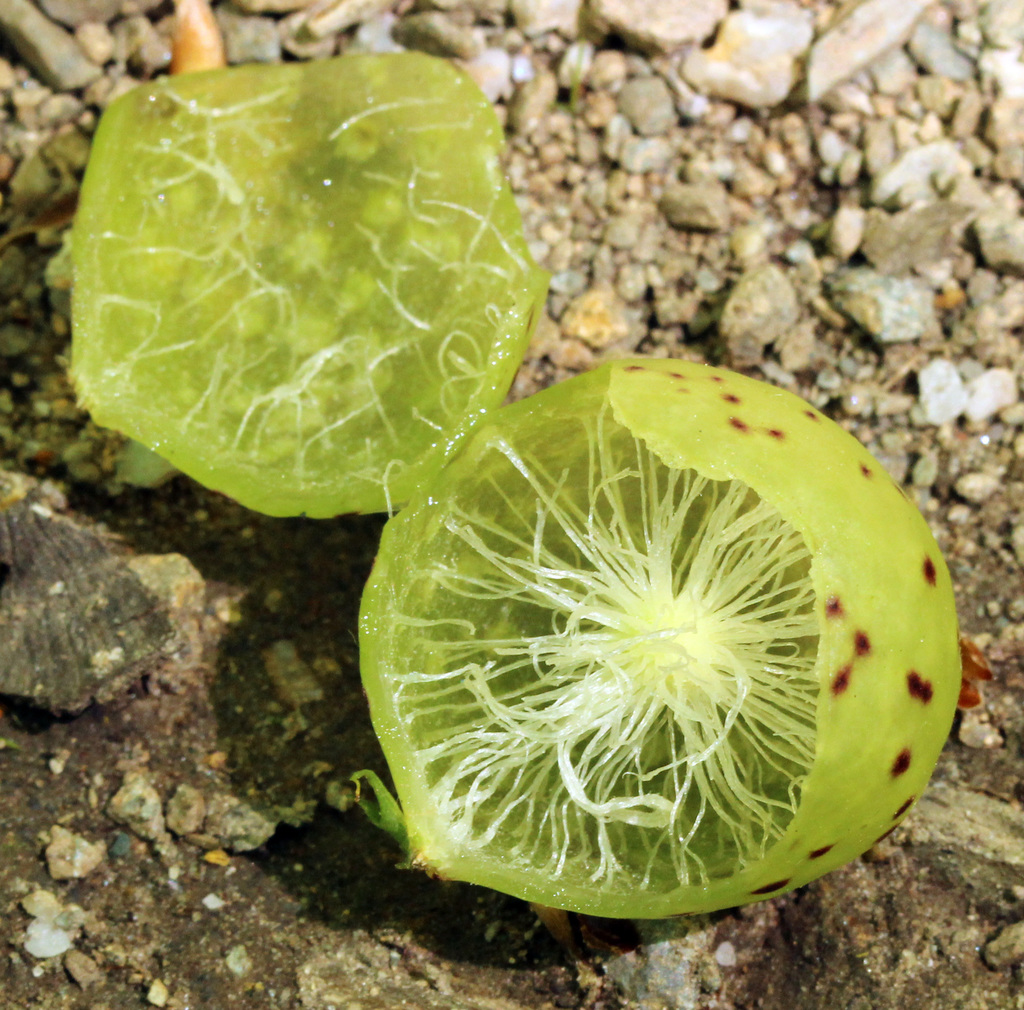
Larger Empty Oak Apple Wasp
Amphibolips quercusinanis
Amphibolips quercusinanis, known generally as the larger empty oak apple wasp, is a species of gall wasp in the family Cynipidae.
From the article Amphibolips quercusinanis on Wikipedia (CC BY-SA), quoted section by section
What it does
Range is central and eastern North America. Larvae induce galls on the leaves of host red oaks, including Quercus coccinea and Quercus rubra.
Gall formation occurs on host leaf buds in the spring.
Galls are apple-sized, up to 2" in diameter, with a bumpy, hairless, spotted texture. Internally, the larva resides in a central chamber with radiating white fibers called nutritive tissue which feed the larva with nutrients supplied by the host. As the gall matures its external color changes from green to brown. After the adult wasp emerges, the gall becomes brittle and "empty" when the nutritive fibers disintegrate.
== References ==
Wikipedia: “Ecology”
Listen
Looking for field recordings…
Where it lives
Recorded sightings
—
geo-referenced records in GBIF, from museums, herbaria and field observers.
Drag the globe to turn it. Dots are where records exist, not a range map; darker means more records.
In the stacks
Searching the stacks…
Every page naming Amphibolips quercusinanis in the Biodiversity Heritage Library →
This page is assembled live from iNaturalist, GBIF, Wikipedia, the Source Library and the Internet Archive. It is not yet part of the hand-edited codex. iNaturalist taxon 143876.